Healnest Journal · Nepal · Prayer
Mountains That
Hold the Unsaid
A quiet story of altitude, breath, humility, and the Himalayan art of allowing silence to do what language cannot.
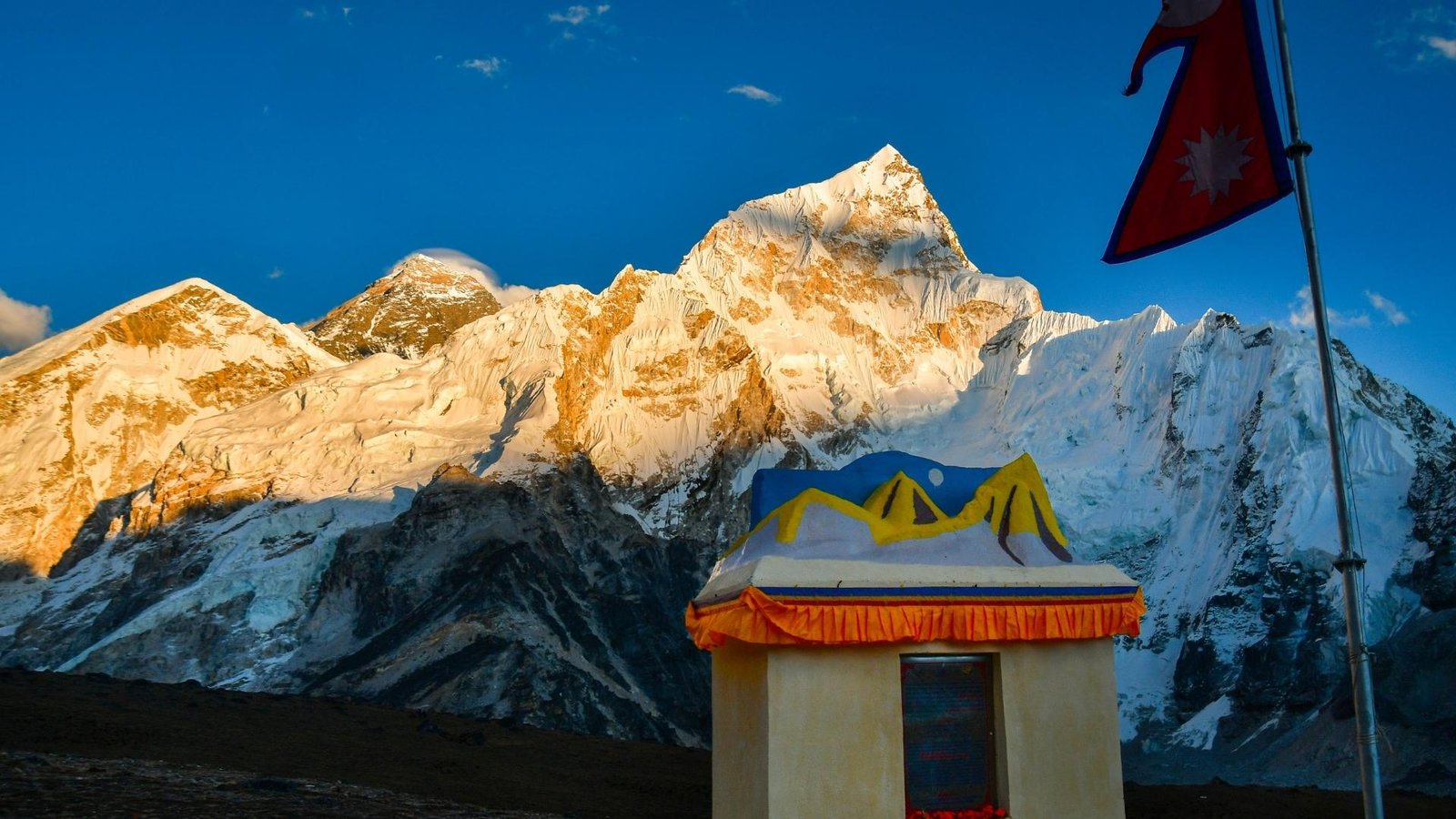
Nepal does not introduce itself loudly. It lets the mountains do the opening paragraph.
And what a paragraph it is: snow, stone, wind, prayer flags, tea steam, temple bells, narrow paths, old faces, young porters, and that strange Himalayan light that makes even an ordinary morning look as if the universe had carefully edited it overnight.
There are destinations that behave like salesmen. They wink, sparkle, announce, upgrade, package, and insist on being unforgettable. Nepal is less needy. Nepal stands there with a cup of tea and a mountain behind it, quietly suggesting that perhaps your nervous system has been living like a poorly managed airport.
This is not a place that demands instant understanding. It asks for patience. It asks for slower footsteps. It asks, rather inconveniently, that you stop treating silence as an empty room.
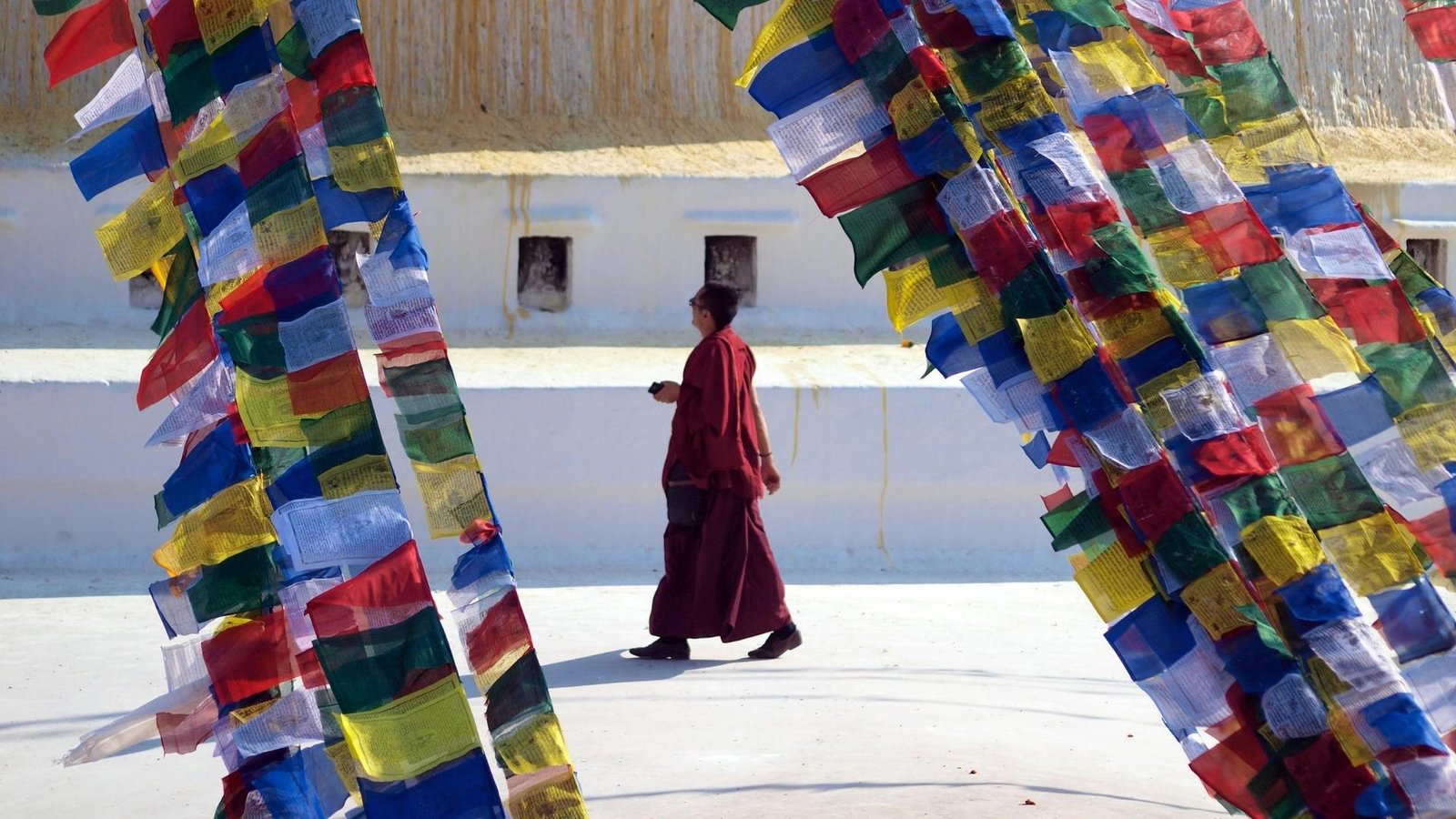
The story begins with wind
Prayer, but not as performance
In Nepal, prayer often appears before explanation. It is tied across ridgelines, printed on cloth, carved into stone, spun by hand, whispered in monastery courtyards, and carried by wind with a seriousness that makes modern noise seem slightly embarrassing.
Those colored flags stretched between rooftops, trails, stupas, and high mountain passes are often called prayer flags. They are especially associated with Tibetan Buddhist culture across the Himalayan world. Traditionally, they are not decoration in the casual sense, though tourists have done their heroic best to turn almost everything meaningful into “nice color for Instagram.”
The flags are printed with mantras, prayers, sacred symbols, and images. As the wind moves across them, the blessings are believed to spread outward — not toward one private wish, not toward a single household, but toward all beings. This matters. The generosity is built into the object itself. The prayer is not meant to become a personal trophy.
Some traditions connect prayer flags to older Bon practices in Tibet, where colored cloth and mountain winds had ritual significance long before modern travel brochures discovered the phrase “authentic experience.” Over time, Buddhist symbolism, mantras, and woodblock printing shaped the flags into the forms now seen across the Himalayas.
In Nepal’s mountain regions, especially where Tibetan Buddhist influence is strong, these flags become part of the visual grammar of the land. They do not interrupt the landscape. They converse with it. The mountain holds still; the flag moves. The stone remains; the cloth fades. Together, they form one of the world’s most elegant arguments against permanence.
The faded flag is not failure. It is the ritual doing its work. Color softens. Edges fray. Weather enters. The prayer is not preserved in museum condition. It is offered. And the offering changes because the world changes. A rather inconvenient idea for those of us who expect even our emotional growth to come with cloud backup.
The wind does not read the prayers. And yet, it carries them.Nepal · Prayer
A landscape of symbols
Flags, stones, wheels, silence
The sacred ordinary
A country where the path remembers
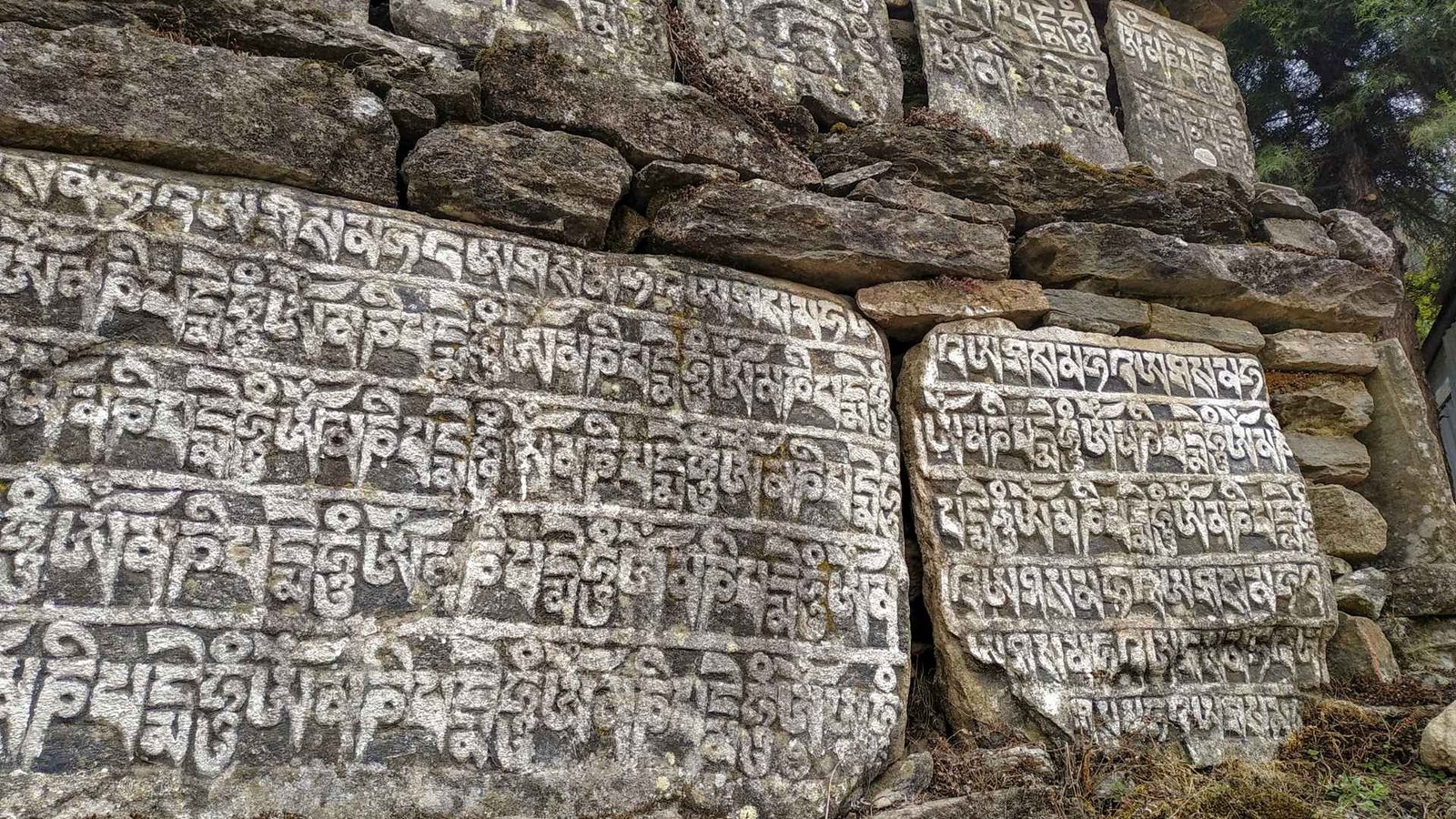
Along Himalayan trails, one may encounter mani stones — stones carved with sacred mantras, often the famous “Om Mani Padme Hum.” They sit beside paths, near villages, at crossroads, around chortens, and in places where walking becomes more than transportation.
The modern traveler, trained by airports and app notifications, tends to walk as if moving from one checkpoint to another. Trailhead. Tea house. Viewpoint. Photo. Caption. Achievement unlocked. The Himalayan path has older ideas. It asks the walker to pay attention.
Mani walls are not simply scenic objects placed for atmosphere, though they are extremely good at atmosphere. They are reminders of compassion, protection, awareness, and continuity. They suggest that a path is not only something under the feet. It is also something shaping the mind.
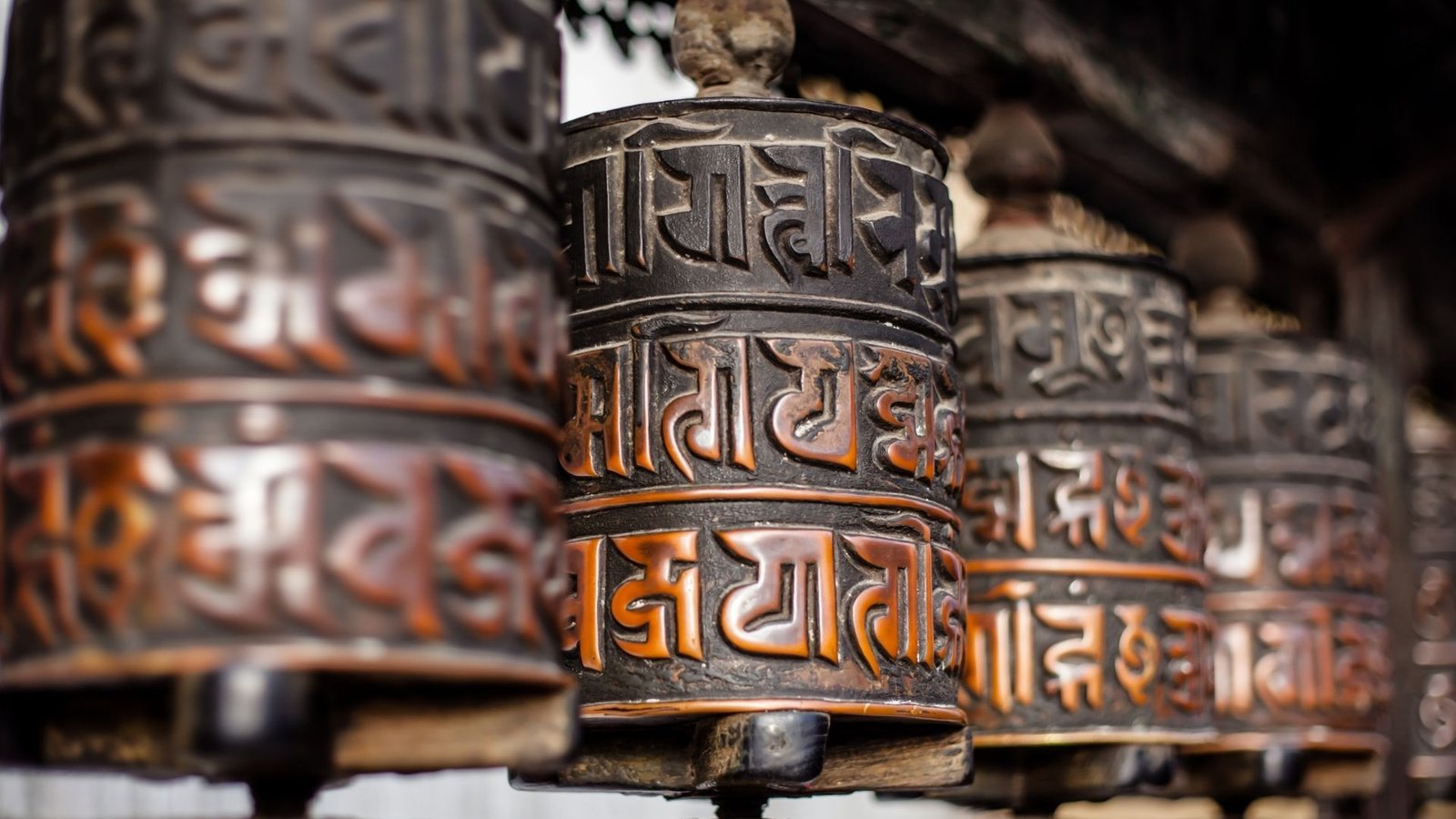
Prayer wheels carry another kind of movement. Cylindrical, often metal or wood, they are turned by hand in monasteries, temples, and village spaces. In Tibetan Buddhist practice, turning the wheel is associated with the movement of mantras and merit, the physical act becoming a devotional gesture.
There is something profoundly humane about this. Not everyone can read scripture deeply. Not everyone can sit in perfect meditation while looking like a brochure for inner peace. Some of us are, frankly, held together by caffeine and postponed decisions. But a hand can turn a wheel. A body can walk slowly. A person can pause.
Nepal’s spiritual culture often appears not as grand instruction but as repeated gesture. Turn the wheel. Walk clockwise. Touch the stone. Offer tea. Bow slightly. Wait. Breathe. Continue. The teaching is not hidden. It is everywhere. The difficulty is that one must become quiet enough to notice it.
Tea, altitude, and humility
The luxury of not rushing
At altitude, the body becomes honest. Breath, usually the most ignored employee in the company of self, suddenly becomes senior management.
You cannot hurry elegantly in the Himalayas. You may attempt it, of course. Many do. They arrive with new boots, ambitious schedules, and the confidence of people who believe cardio machines have prepared them for metaphysical correction. Then the mountain smiles politely and removes oxygen from the meeting.
The result is not defeat. It is education. Steps shorten. Speech softens. Pride becomes inefficient baggage. In the thin air, humility stops being an abstract virtue and becomes practical survival.
This is where Nepal begins to feel deeply connected to the Healnest spirit: not through dramatic transformation, but through return. Return to breath. Return to proportion. Return to the strange comfort of being small beneath something vast and unbothered.
History without museum glass
Where belief lives outdoors
Nepal’s spiritual landscape cannot be reduced to one tradition, one symbol, or one neat explanation. That would be convenient, and convenience is often where culture goes to become boring.
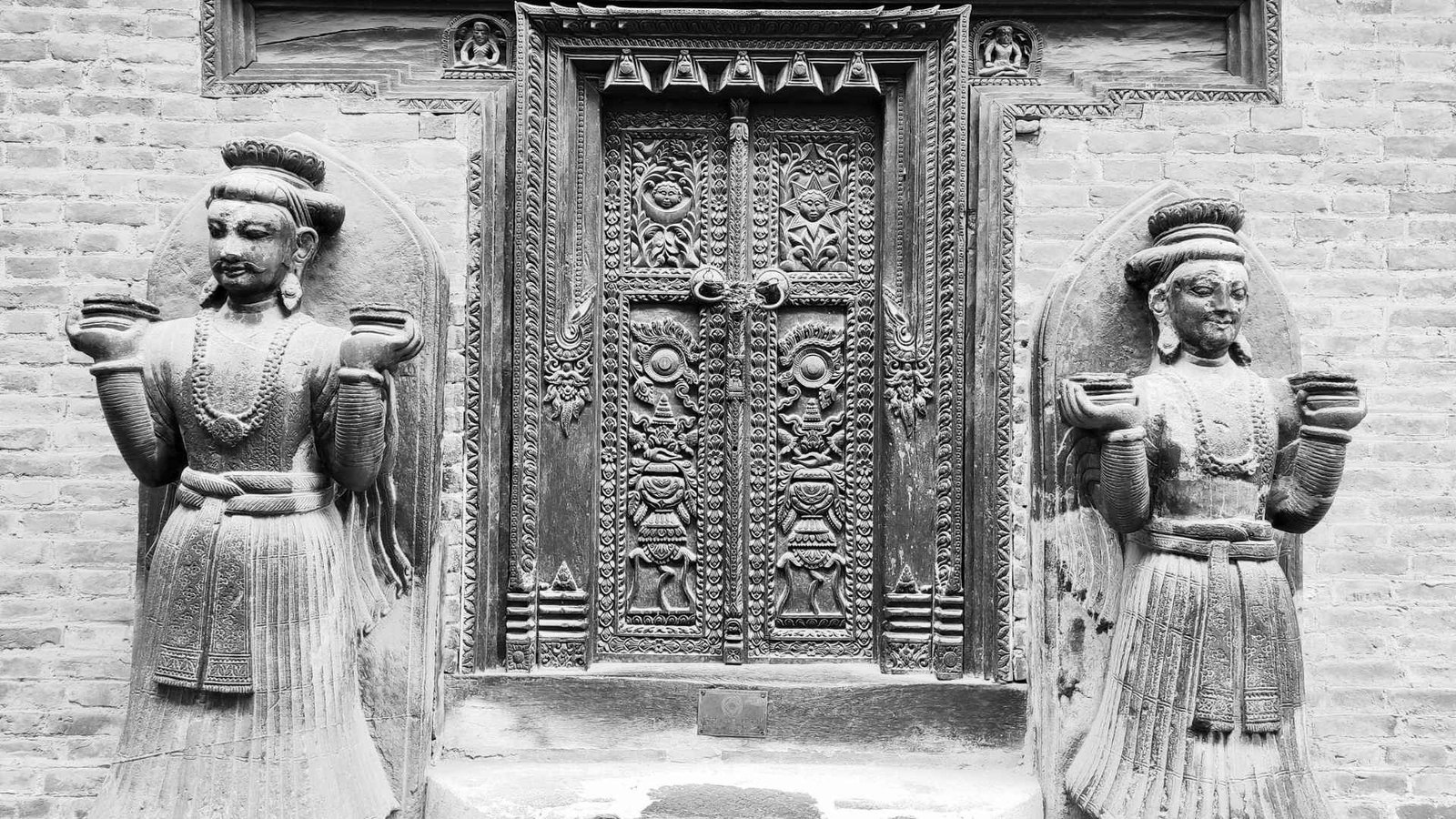
The country is shaped by Hindu and Buddhist traditions, by mountain communities, Newar artistry, Tibetan influence, local deities, pilgrimage routes, festivals, family rituals, village customs, and the daily negotiations of modern life. Sacredness here is not always separated behind a velvet rope. It spills into streets, courtyards, kitchens, thresholds, riverbanks, rooftops, and mountain passes.
A visitor may see prayer flags and think first of beauty. That is understandable. They are beautiful. But beauty is only the doorway. Behind it is an ethic: that blessings should travel, that compassion should not be hoarded, that weathering is part of offering, that the world is not healed by private achievement alone.
There is a quiet resistance in this. In a century obsessed with visibility, Nepal’s mountain prayer culture reminds us that some of the most meaningful gestures are not performed for applause. A flag fades without complaint. A wheel turns without spectacle. A carved stone waits by the path for people who may never know who placed it there.
This is perhaps why the Himalayas hold the unsaid so well. They are not sentimental. They do not flatter human drama. They have seen empires, traders, pilgrims, monks, storms, avalanches, weddings, grief, ambition, devotion, and probably several thousand travelers dramatically discovering themselves after one difficult staircase.
And still, every morning, they stand. Snow catches light. Smoke rises from a village stove. A bell rings somewhere. Tea is poured. The wind begins again.
Healnest Journal
What the mountains keep
Nepal does not ask you to become someone else. It asks, more gently and more dangerously, whether you might stop performing the person you thought you had to be.
The mountains hold what we cannot say. The flags carry what we cannot explain. The stones remember what we forget. And somewhere in that old conversation between wind and silence, healing begins to feel less like fixing and more like returning.
Not loudly. Not perfectly. Not with the glamorous efficiency promised by modern wellness culture.
Just one breath at a time.