Global Cover Story · Nepal · Altitude, Prayer & Silence

Mountains That
Hold the Unsaid

A quiet story of altitude, breath, humility, and the strange way the Himalayas make people hear themselves more clearly.

There are places in Nepal where silence feels taller than language.

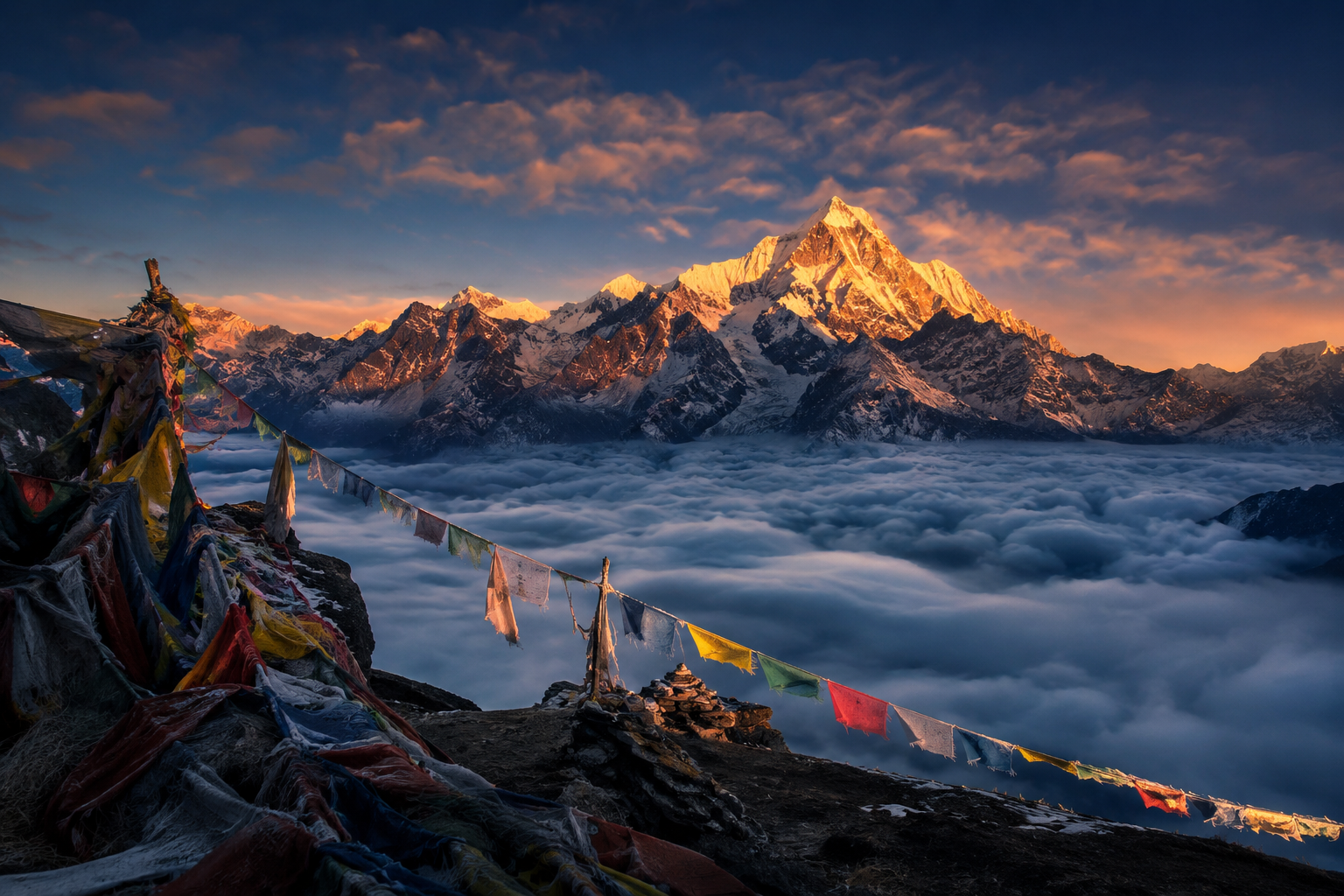
Before sunrise in the Himalayas, the world becomes almost weightless. Snowlight slowly appears on distant ridges. Wind moves through prayer flags tied between stone walls and mountain paths. Somewhere far below, a bell sounds once in the cold air and disappears into mist.

At high altitude, human voices soften. Breath becomes slower. Thought becomes quieter. The mountains do not demand speech. They ask for attention.

In Nepal, the Himalayas are not experienced merely as scenery. They are scale made emotional. Their presence rearranges the nervous system. Travelers arrive expecting beauty and often leave speaking instead about humility.

The first lesson of altitude is smallness.

The mountains do not make a person feel insignificant. They make a person feel honest.

Across the Himalayan regions of Nepal — from Khumbu to Mustang, from the Annapurna trails to remote stone villages hidden beyond cloud lines — people have long lived with an understanding unfamiliar to much of the modern world: silence itself can be sacred.

Here, quiet is not emptiness. Quiet is presence.

The mountains absorb noise the way snow absorbs footsteps. Conversations slow naturally. Faces soften. Visitors who spend enough time at altitude often begin noticing things they had ignored for years: the sound of breath, the rhythm of walking, the emotional exhaustion they carried unknowingly into the mountains.

In the Himalayas, even the wind seems to move with restraint.

Clouds drift across entire mountain faces like passing thoughts. Prayer flags fade slowly under sun and snow. Footsteps become quieter with altitude. Somewhere above the tree line, the world begins speaking less and revealing more.

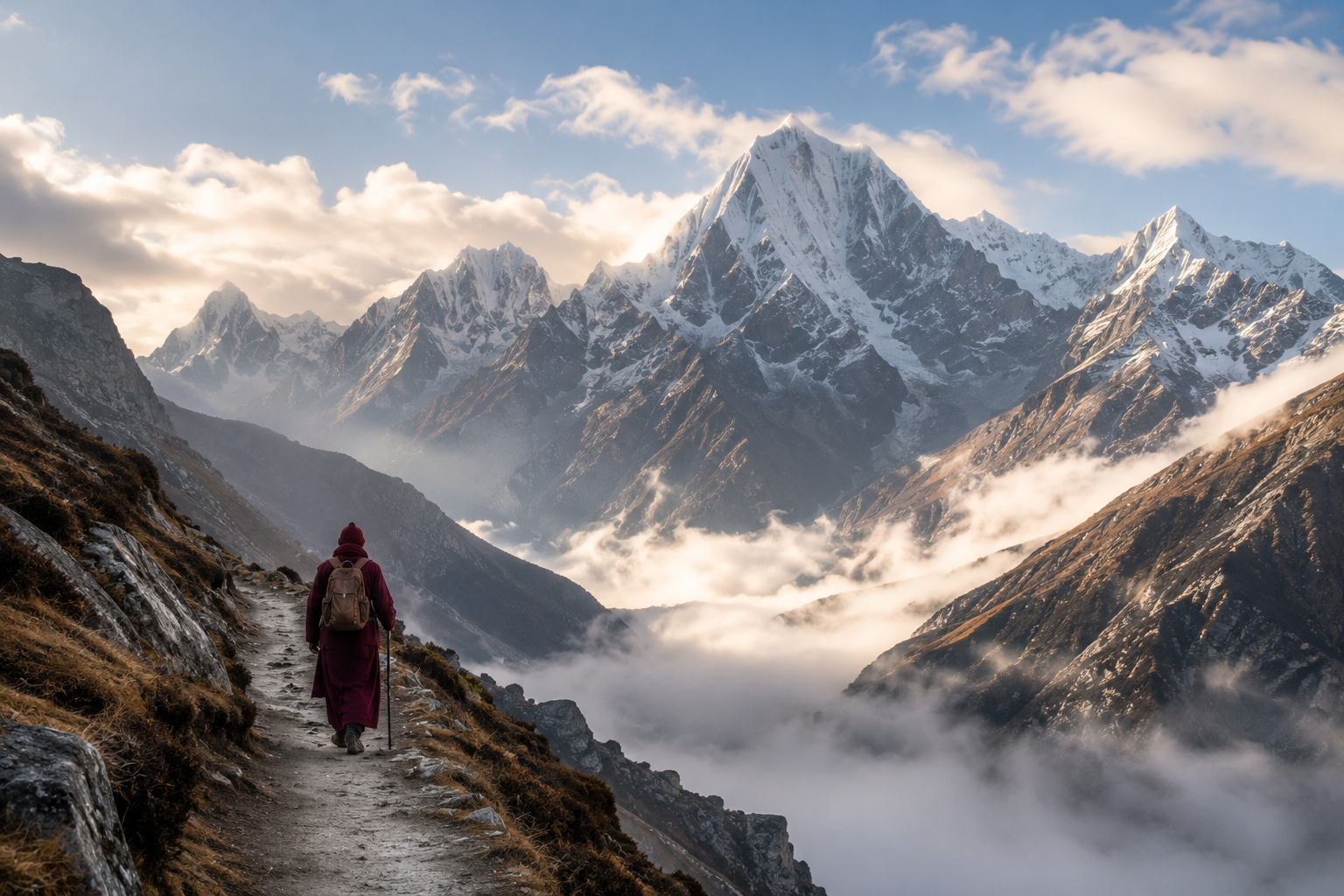
A lone traveler on a Himalayan trail, partially framed by mist and mountain ridges
Altitude & Breath

At high altitude, every breath becomes visible to the self.

In cities, people often move faster than their own awareness. But the Himalayas slow the body down to something elemental. Climbing requires patience. Thin air refuses arrogance. A person cannot rush the mountain.

And slowly, without announcement, the mind changes pace too.

Travelers speak about this transformation quietly. Somewhere between steep trails, cold mornings, yak bells and long silences, emotional noise begins falling away.

Human Scale

The trail teaches proportion before it teaches arrival.

On Himalayan paths, the human figure becomes small without becoming meaningless. A person walking through mist is not conquered by the landscape; they are placed back inside it.

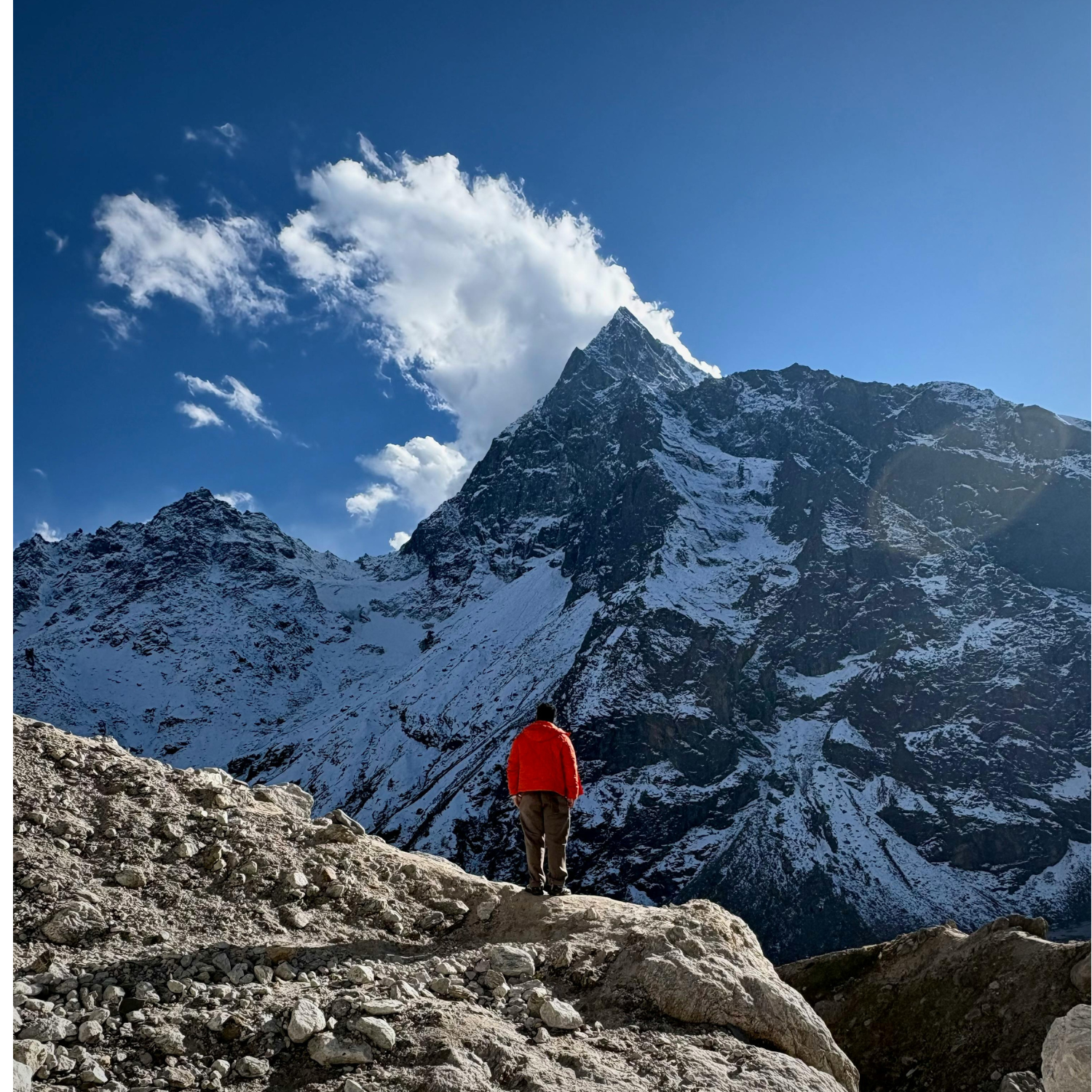
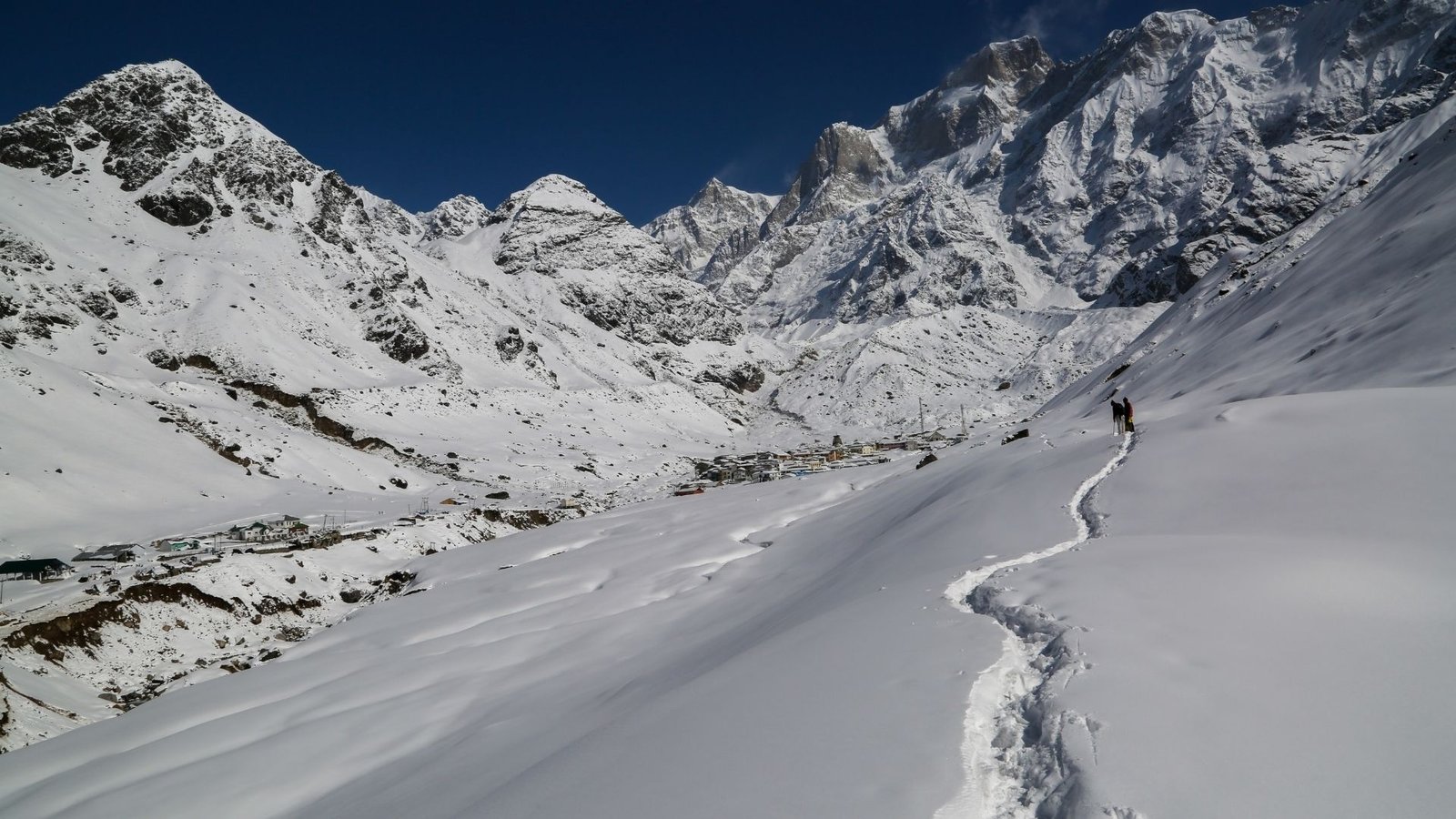
A rough snow trail crossing a high Himalayan pass

The Himalayas are not only geography. They are emotional weather.

Nepal’s mountain culture has long been shaped by humility before landscape. Villages were built knowing the mountain would always remain larger than human ambition. Paths were walked slowly because survival itself required rhythm, cooperation, endurance and awareness.

In many Himalayan communities, life has traditionally moved according to weather, light, seasons and altitude rather than modern urgency. This slower relationship with time changes how emotion is carried too.

The mountains teach restraint. They teach listening. They teach the strange emotional clarity that appears when distraction disappears.

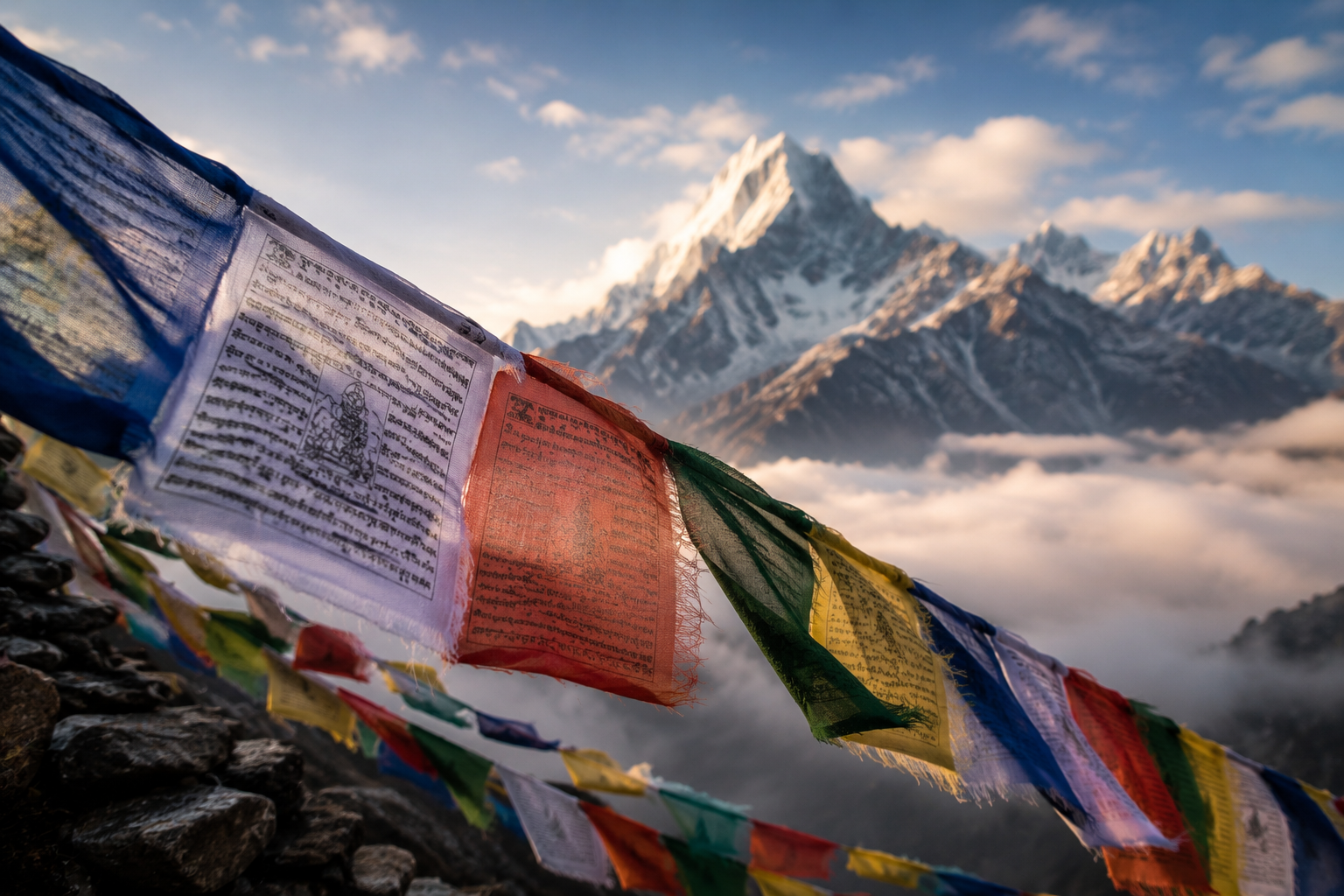
Prayer flags cut by the edge of the frame against Himalayan mountains
Silence & Prayer

Some prayers are never spoken aloud.

Across Nepal’s mountain paths, prayer flags move continuously in the wind — faded reds, blues, yellows and whites carrying years of weather within their fabric.

Yet the deeper emotional atmosphere of the Himalayas is not performance. It is stillness. A traveler sitting alone beside a ridge at dawn may feel something impossible to explain afterward: not revelation exactly, but relief.

The relief of no longer needing to pretend importance before the scale of the earth.

A high Himalayan pass with snow, rough stone and distant cloud
A trail does not explain humility. It makes the body understand it.
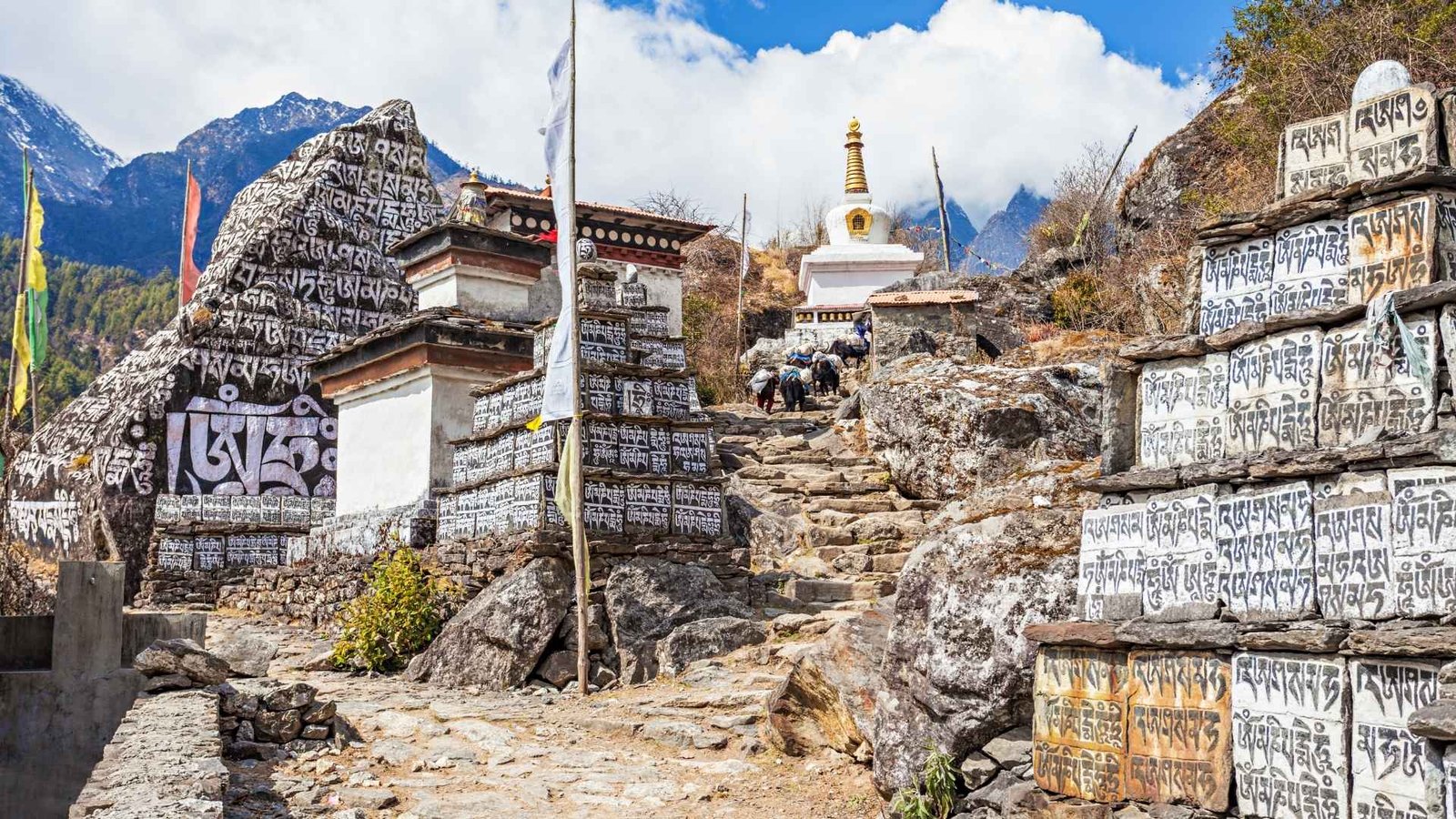
A Nepalese stone village and mountain shrine beneath snow peaks
Stone villages hold weather, memory and the patience of altitude.
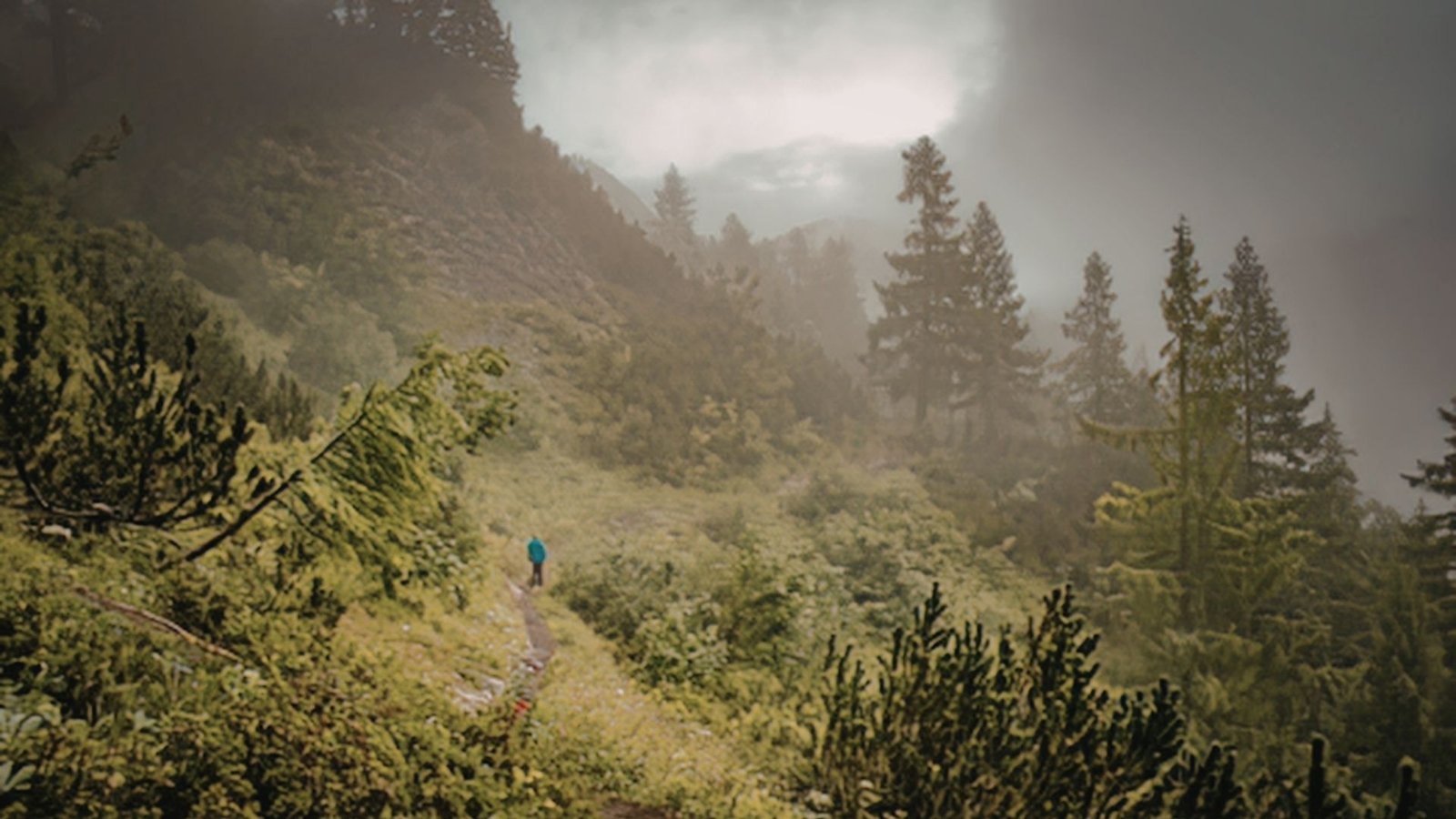
A solitary walker disappearing into fog on a Himalayan trail
In fog, the destination disappears and walking becomes enough.

The emotional architecture of the mountains.

The Himalayas alter perception not because they are loud, but because they are immense enough to quiet everything unnecessary.

A person climbing in Nepal begins noticing details ignored elsewhere: snow melting from dark stone, distant avalanche echoes, ravens crossing white sky, yak caravans moving through fog, boots pressing rhythmically against frozen earth.

These moments appear small, but together they create something profound — a return to attention.

The mountains do not heal by speaking. They heal by removing everything that prevents listening.

This is why travelers often cry unexpectedly in the Himalayas. Not because something dramatic occurs, but because emotional exhaustion finally finds enough silence to surface.

The modern world rarely gives people space to feel slowly. Nepal’s mountains do.

“At altitude, even the unsaid begins to breathe.” The Quiet Himalayas
Himalayan sunrise panorama with soft cloud and distant snow peaks
Humility

The greatest luxury in the Himalayas is not comfort. It is perspective.

Luxury travelers often arrive searching for remoteness, beauty or exclusivity. Yet what stays with them most deeply is usually something quieter: the emotional simplicity of mountain life.

In Nepal, humility is not weakness. It is alignment with reality. The mountains remain unmoved by status, speed or performance. Snow falls equally on everyone.

And within that indifference, many people experience freedom for the first time in years.

Why the world needs places like this now.

The modern world is saturated with stimulation but starved of stillness. People move constantly between screens, deadlines, opinions and noise while carrying private fatigue too deep to explain.

Nepal’s Himalayas offer something increasingly rare: emotional spaciousness.

Not escape from life, but distance from unnecessary noise long enough to hear life again properly.

The mountains ask nothing except presence. And for many travelers, that becomes transformative.

Mountains that hold the unsaid.

There are emotions too large for ordinary language. Grief that remains unfinished. Longing without destination. Fatigue no vacation can solve. Questions people carry silently for years.

The Himalayas do not answer these things directly.

They simply create enough silence around them that the heart can finally hear itself honestly.

Sometimes healing is not finding new words. Sometimes it is standing somewhere vast enough that words are no longer necessary.
The Final Silence

The Mountains
Keep Listening

Evening falls slowly across the Himalayas. Snow peaks fade from gold to blue. Wind moves through prayer flags one final time before night.

Far below, village lights begin appearing like scattered embers beneath the mountains.

Somewhere along a cold ridge, a traveler stops walking and simply stands still.

For the first time in a very long time, nothing inside them is rushing.