Healnest Journal Reflection
Falling Is Part of Standing
The world has never expected perfection from anyone except human beings.
A child falls, and everyone cheers. An adult falls, and suddenly the whole soul files a complaint.
The child stood in the middle of the room with the seriousness of a tiny emperor inspecting unstable territory.
Two hands rose into the air.
One foot moved forward.
The other foot considered the proposal and resigned immediately.
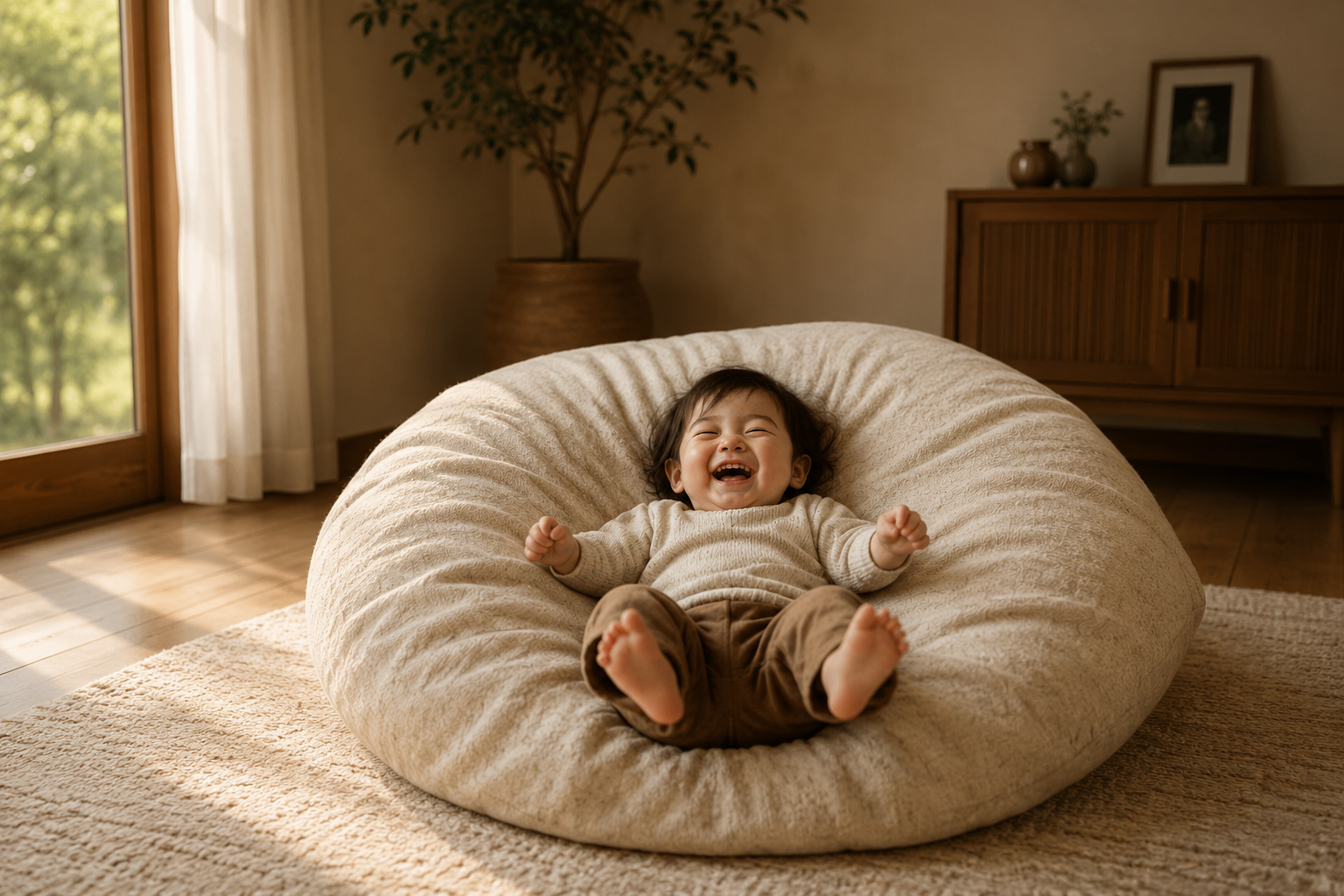
The child wobbled, gasped, fell backwards onto a cushion, and laughed with the full permission of someone who had not yet been introduced to embarrassment.
The room exploded with joy.
Mother clapped. Grandfather laughed. Someone said, “Again, again.”
No one leaned over the child and whispered, “This is a serious failure. Perhaps walking is not your field.”
No one suggested a five-year recovery plan.
No one said, “You have disappointed the family name.”
The child fell.
Everyone celebrated.
Then something strange happened.
The child grew.
And years later, the same human being stumbled in love, work, money, friendship, health, hope, or direction — and suddenly gave the fall a new name.
Failure.
The universe, which had been watching quietly, blinked.
“Humans are fascinating. They applaud babies for falling, then spend the next sixty years pretending they never should.”
Gravity said nothing.
Gravity has been doing exactly the same job for billions of years.
Humans still act surprised.
A leaf loosened from a branch outside the window.
It did not write an apology.
It did not call itself unproductive.
It simply fell into autumn, and the whole world called it beautiful.
Nature has never been ashamed of falling.
Rain falls. Snow falls. Night falls. Seeds fall. Leaves fall. Stars fall.
Waterfalls fall all day and somehow remain tourist attractions.
A river interrupted.
“If I refused to fall, I would never reach the sea.”
A mountain cleared its ancient throat.
“I lose stones every day. Oddly enough, people still call me a mountain.”
A tree swayed in the wind with the quiet dignity of something that had survived many opinions.
“I have been bending in storms for centuries. No one has ever accused me of lacking confidence.”
Perhaps perfection was invented by people who never watched children play.
Children fall with astonishing honesty.
They do not fall diplomatically.
They do not fall while maintaining a professional image.
They fall with elbows, socks, surprise, outrage, and crumbs.
Then, if nothing is broken, they rise with the moral clarity of a sunrise.
Adults are different.
Adults fall once and immediately open a court case against themselves.
They collect evidence. They call witnesses. They replay the moment at 2:17 in the morning.
The prosecution is severe.
The defence is usually asleep.
Rain · Leaves · Breath · Again
Yet the body knows something kinder.
Every step you have ever taken was a small negotiation with falling.
Scientists have a less poetic way of saying it: walking is controlled falling. Balance is not stillness. Balance is the nervous system making thousands of tiny corrections so quickly that pride takes credit for it.
Your inner ear, your eyes, your muscles, your brain, your bones — all of them are quietly adjusting, correcting, recovering, returning.
You stand because you are always almost falling.
You walk because you keep catching yourself.
This is astonishing.
The body has been forgiving you all along.
Balance has never meant never falling. Balance is the art of returning before the world has finished counting.
History, too, is full of people who fell badly before they stood beautifully.
Explorers became lost before anyone called them brave.
Inventors made rooms full of mistakes before one small light stayed on.
The Wright brothers lifted themselves into the air only after gravity had rejected many earlier drafts.
Ancient craftsmen broke pottery before their hands learned how clay wished to be held.
Musicians missed notes. Painters destroyed early canvases. Writers filled baskets with pages that never deserved sunrise.
And still, the world remembers the flight, the bowl, the song, the painting, the sentence.
It forgets the floor covered in broken attempts.
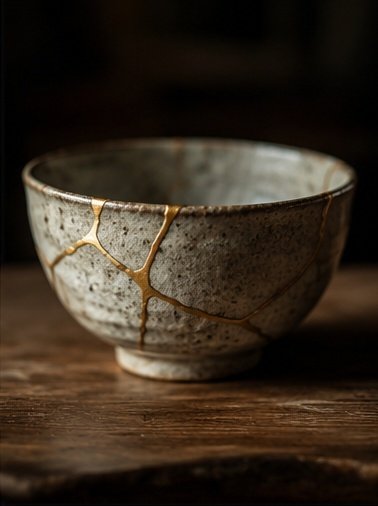
Japan, with its old tenderness toward imperfection, kept one beautiful answer.
When pottery breaks, it need not be hidden.
In kintsugi, the crack is joined with gold.
The bowl does not pretend it was never broken.
It becomes honest enough to be more beautiful.
The broken bowl, if it could speak, might say: “I was not ruined. I was interrupted.”
How many people need to hear that?
You were not ruined.
You were interrupted.
By grief. By illness. By betrayal. By a choice you wish you had not made.
By a door that closed too loudly.
By a season that took more from you than you knew how to explain.
The earth has never once apologised for winter.
Why do people apologise for having difficult seasons?
Somewhere, a woman is learning to smile again after losing the person who knew how she took her tea.
Somewhere, a father is apologising to a grown child with hands that do not know where to rest.
Somewhere, an athlete is standing at the edge of a training room, afraid of the body that once obeyed without question.
Somewhere, an old man is learning how to use a phone, and the tiny glowing screen has become more intimidating than most wars he survived.
Somewhere, an artist has painted over the same canvas seven times and still cannot find the blue she meant.
Somewhere, a friend is typing “I’m sorry” and deleting it, typing it again, deleting it again, because the heart sometimes needs several rehearsals before honesty can walk.
Somewhere, someone is trusting again.
Not loudly. Not triumphantly. Not with a dramatic soundtrack and excellent lighting.
Just quietly.
Which is often how the bravest things happen.
This is the part where the jokes soften.
Because falling is funny when a toddler lands on a cushion and laughs.
It is less funny when an adult falls in a room no one sees.
It is less funny when the fall has a diagnosis, a divorce, a debt, a silence, a rejection, a farewell.
And yet.
Even then.
Especially then.
Falling is not the opposite of standing.
Falling is the hidden part of standing that no one taught us to respect.
What if your greatest mistake was not falling?
What if your greatest mistake was believing you had to hide it?
There is a strange loneliness in pretending to be unbroken.
People admire the mask.
But they cannot love what they cannot see.
We spend years polishing our standing places while hiding the ground that taught us how to rise.
But the people who save us are rarely the perfect ones.
They are the ones who say, “Yes. I fell there too.”
And suddenly the room has air again.
Perhaps today’s practice is not about balance. Perhaps it is about making peace with wobbling.
Healnest has no interest in asking you to become perfect.
The world has already tried that, with questionable results.
Perhaps today is simpler.
Perhaps today asks only this:
Can you wobble without declaring the whole journey ruined?
Can you begin again without making a speech about it?
Can you let one difficult season be a season, not a sentence?
Balance has never been stillness.
Balance is falling beautifully, over and over again.
Not always gracefully.
Sometimes with noise.
Sometimes with tears.
Sometimes with one sock missing and your dignity somewhere under the sofa.
Still, the body returns.
The breath returns.
The morning returns.
And you, in ways you may not yet respect, return too.
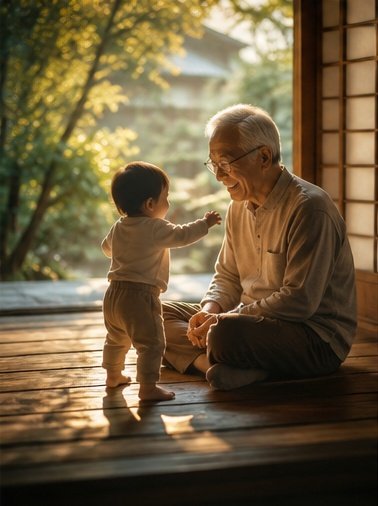
Near the window, many years after that first child fell and laughed, an elderly grandfather watches another child learning to walk.
The child stands.
Wobbles.
Takes one step.
Falls.
The grandfather smiles.
Not because the child never falls.
Because the child still believes standing again is the most natural thing in the world.
For a moment, the old man remembers.
Perhaps he, too, is still learning to walk.
Perhaps we all are.
You did not fail because you fell.
You are still here.
That is already a kind of standing.
Standing is not the absence of falling. It is the courage to return.
🌿 Today’s Quiet Remedy
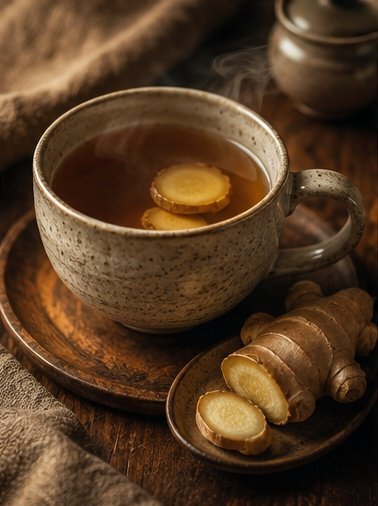
Warm ginger tea has waited in kitchens after difficult days for generations.
Not as medicine. Not as advice. Simply warmth.
A small cup held between two hands, reminding the body that it does not have to solve everything before it is allowed to soften.
🎵 Today’s Quiet Companion
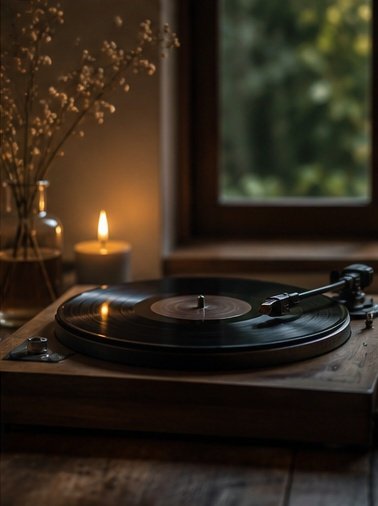
Music that feels like someone patiently waiting beside you while you try again.
Not rushing. Not correcting. Not asking when you will be better.
Only staying close enough for courage to remember its own name.
🌅 Continue Gently
If today reminded you that wobbling is part of becoming…
perhaps take one more gentle step.
Not perfect. Just yours.