Sacred Spaces of Meditation
You do not need a perfect sanctuary before you begin. A corner, a chair, a window, a plant, a cup of tea, or one quiet object can become enough.
The space you enter slowly becomes the space inside you.
Light changes attention. Sound changes breath. Warmth changes the nervous system. Order changes the mind. Beauty is not decoration here; it is a quiet signal to the body that it may finally stop defending itself.
Your First Sanctuary
No expensive objects required. Begin with simple things that help the body understand: this moment is different.
One Chair
Stable, kind, ordinary. A chair can become a monastery if you arrive properly.
One Light
Morning light, lamp light, candlelight, or softened evening shade.
One Object
A stone, book, flower, cup, bead, photograph or empty bowl.
One Breath
The only thing absolutely required. Everything else is hospitality.
One Sound
Rain, flute, bell, silence, wind, or the quiet hum of life continuing.
One Texture
A blanket, linen, cushion, shawl, wood, paper or warm floor.
One Boundary
A small sign to yourself: here, I stop performing for a few minutes.
One Intention
Not to become perfect. Just to return kindly.
Space teaches the nervous system.
A cluttered, harsh, noisy room can keep the mind alert. A softer space can gently signal safety.
Meditation does not require luxury, but it benefits from care. The body notices when the world around it becomes less aggressive.
A sanctuary is not made by money. It is made by attention.
Empty space is not empty.
Japanese aesthetics understand something modern life forgets: space has meaning. A quiet corner, a simple flower, a clean surface, and natural light can say more than a room full of decoration.
The sanctuary breathes because it is not crowded.
When the room stops shouting, the mind can lower its voice.
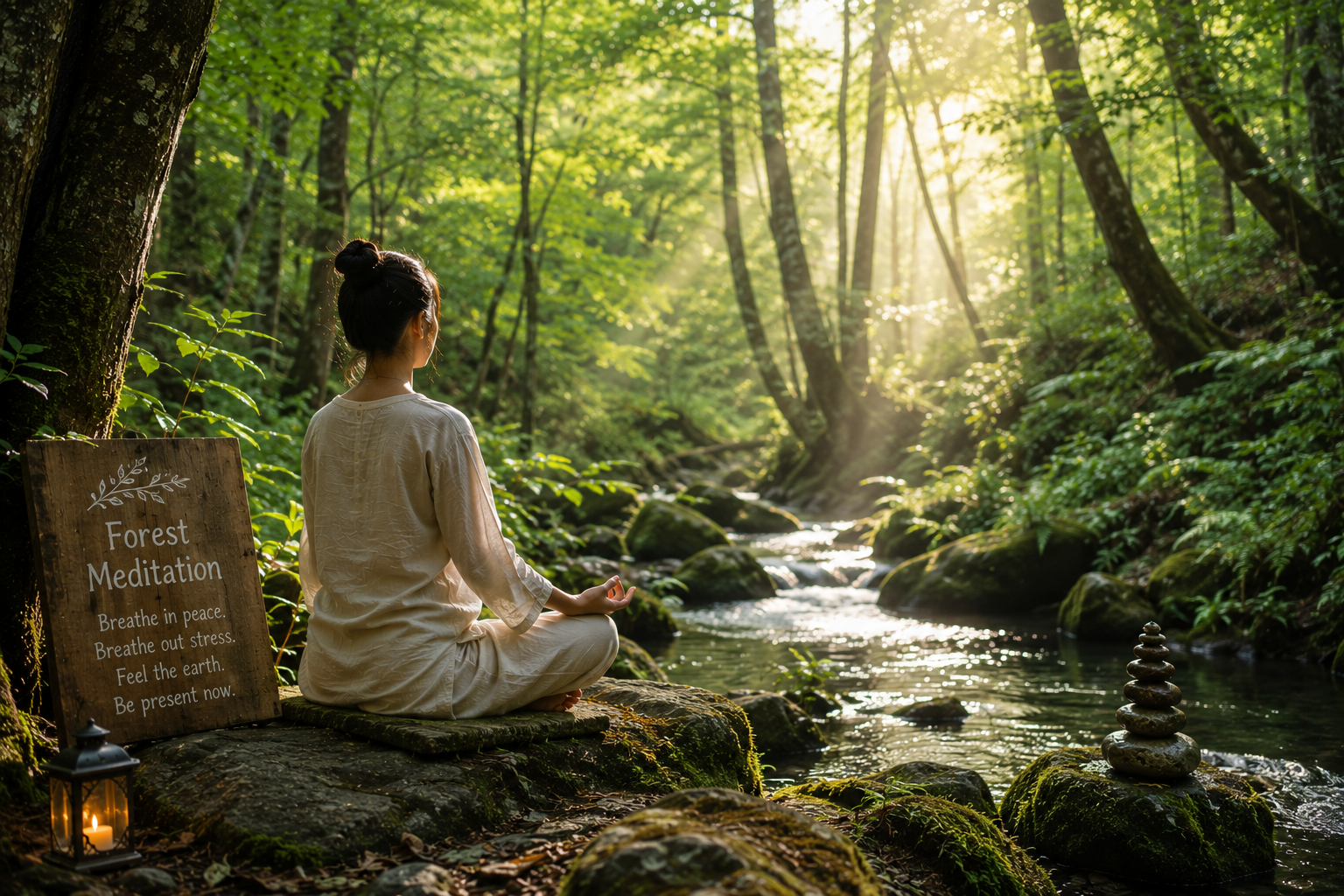
The original sanctuary had trees.
Before temples, cushions and apps, there were forests, rivers, caves, mountains, firelight and stars.
Nature teaches attention without making a curriculum. Wind moves. Birds call. Leaves fall. The mind slowly remembers that it is part of something older than its worries.
The forest does not need to be peaceful. It simply is.
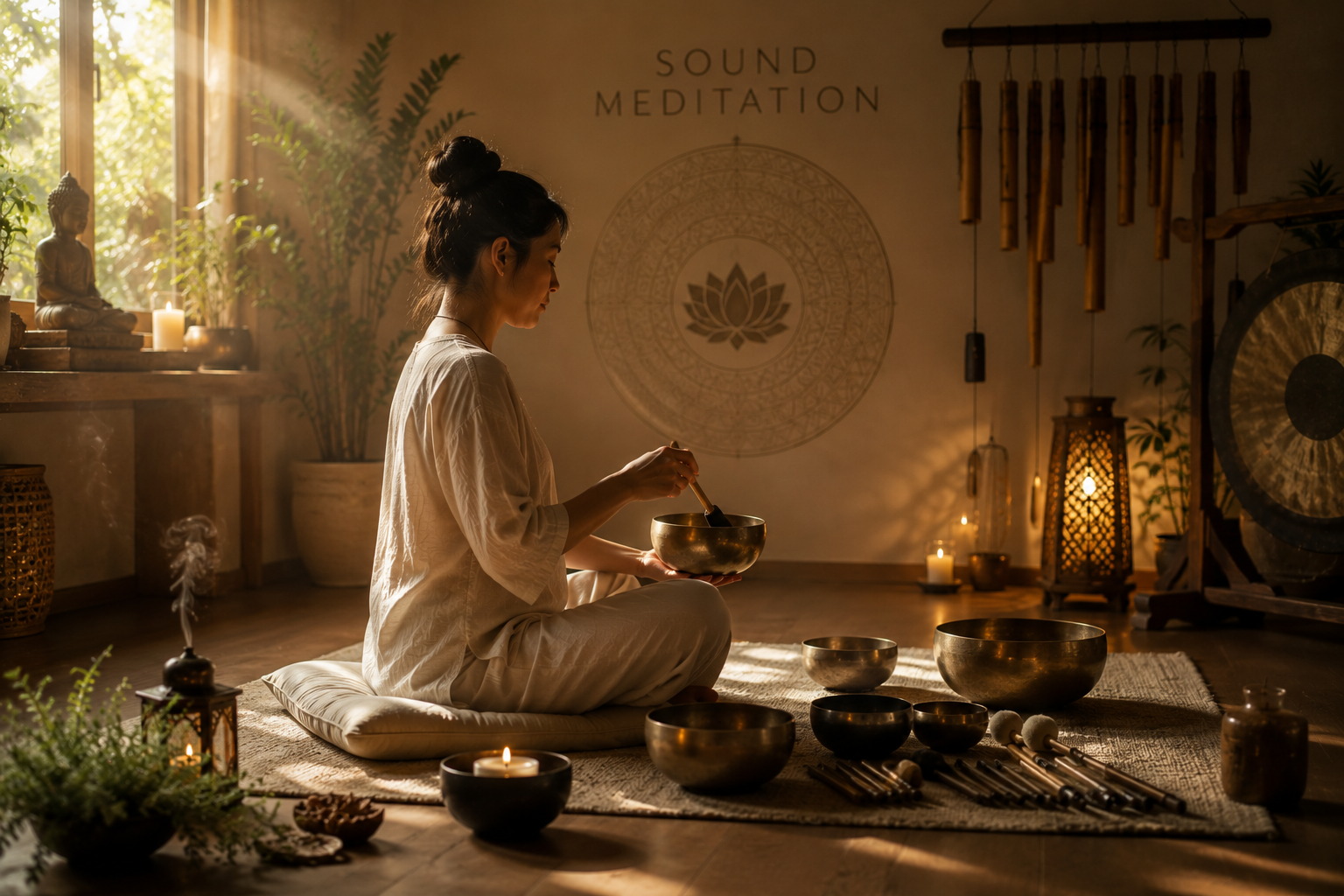
Every sacred place has a sound.
Temple bells, prayer chants, rain, wind, singing bowls, footsteps, birds, silence — sound shapes the atmosphere of meditation.
Some people need quiet. Others need gentle sound to feel safe enough for quiet. Both are welcome.
Sound can become a bridge into silence.
Choose fewer things, more meaning.
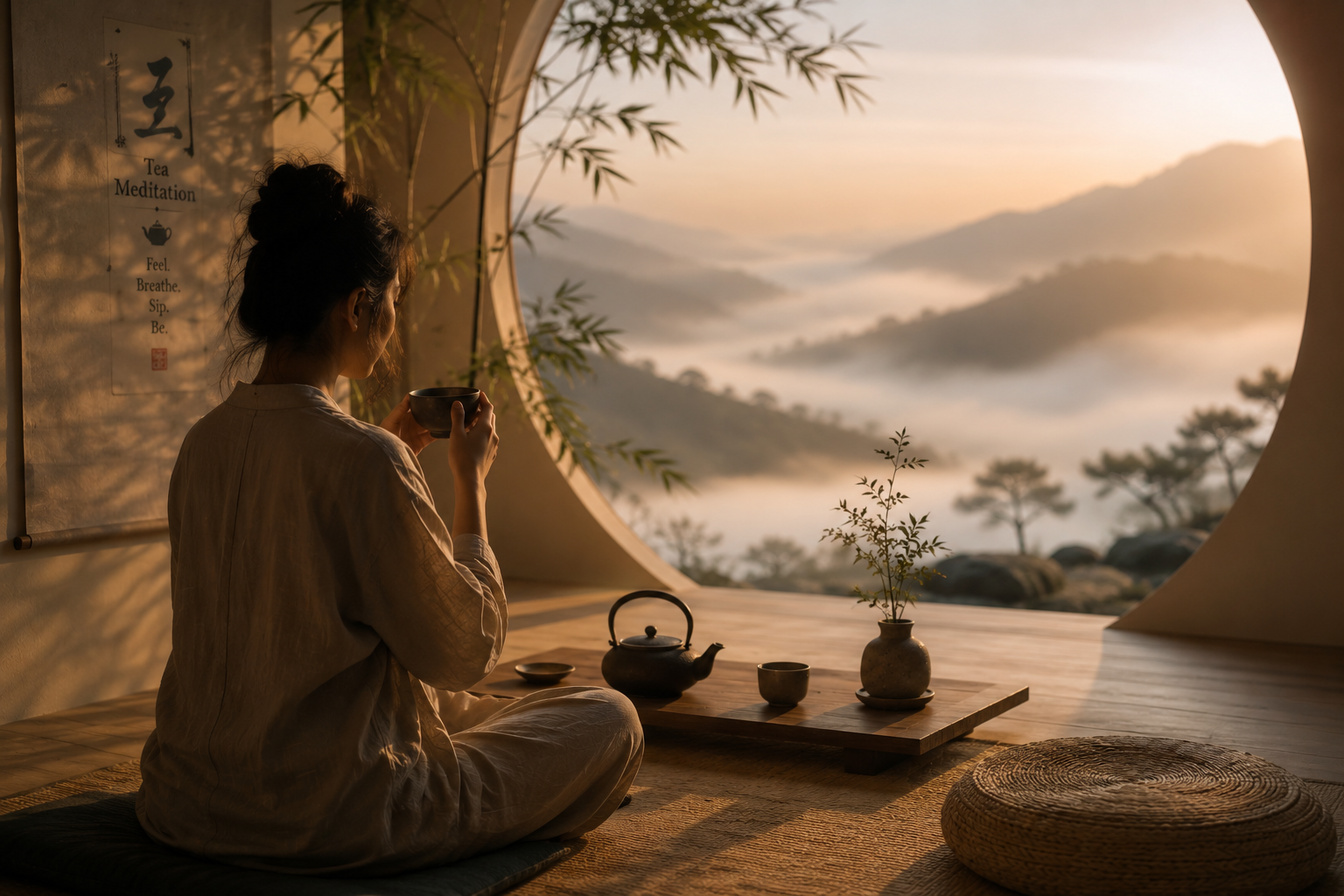
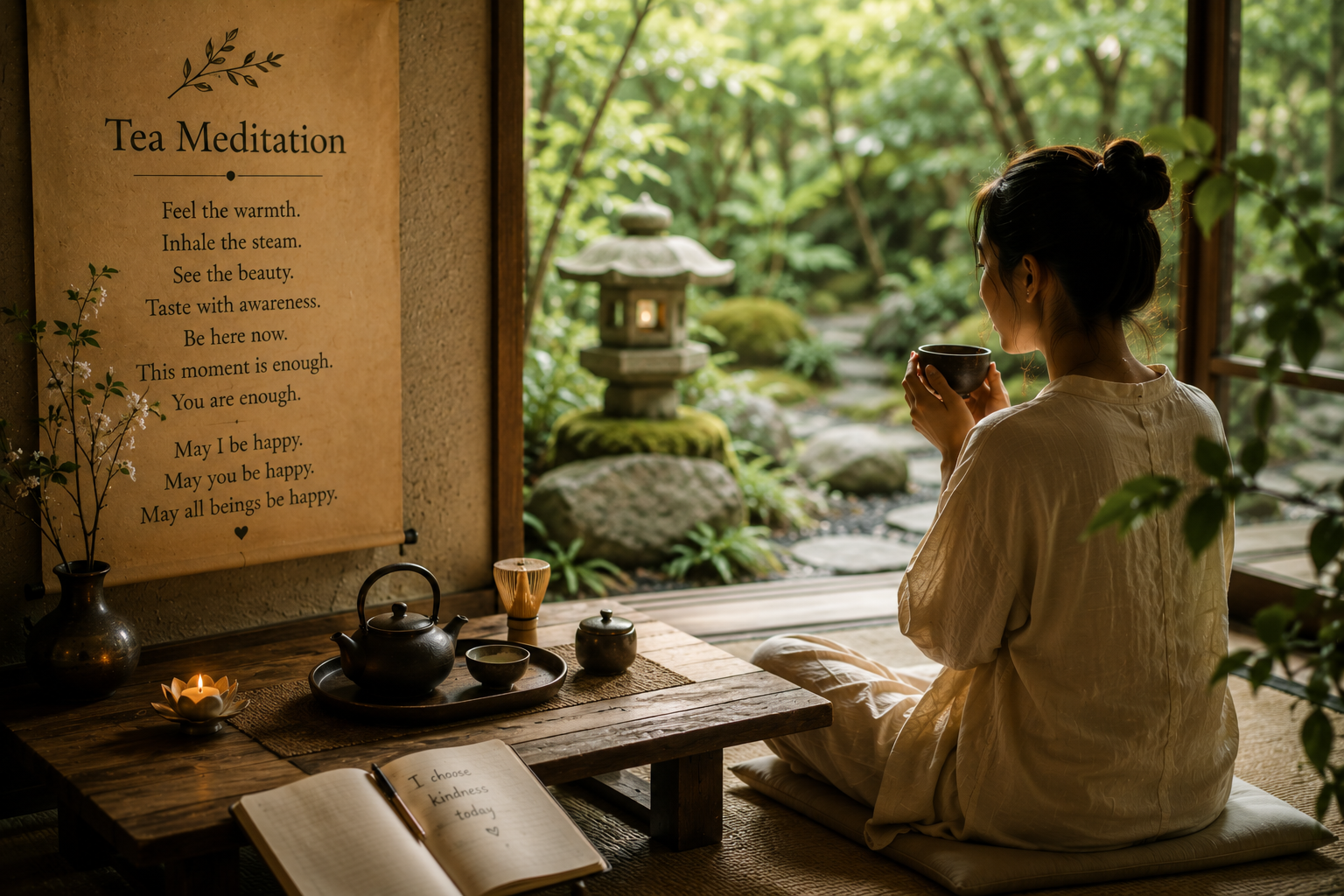
A cup of tea, a flower, a stone, a journal, a small candle, a blanket, a photograph of someone loved — these objects are not decoration when chosen with care.
They help the mind cross from ordinary speed into quiet attention.
One meaningful object is better than twenty spiritual souvenirs.
The office chair can also become a chapel.
Not everyone can disappear to a mountain cabin. Some people have work, children, trains, invoices, hospitals, or a hotel room with aggressively beige curtains.
Healnest teaches portable sanctuary: one breath, one posture, one boundary, one minute.
If you can arrive, the space can change.
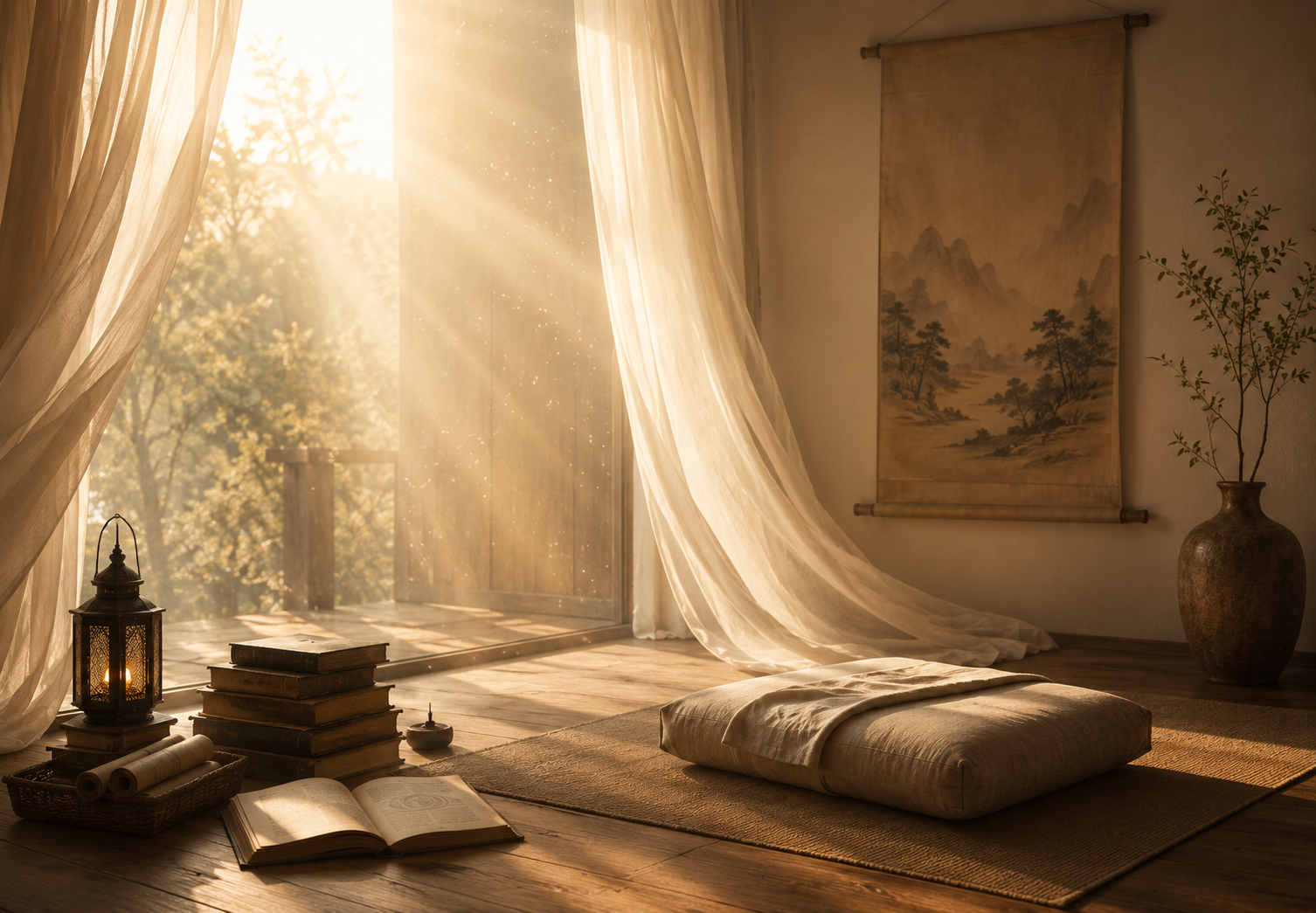
Gallery of Quiet Spaces
Not perfection. Possibility.
Beautiful places do not create meditation.
They simply remind us that beauty has always been available.


Healnest Sanctuary Builder
Choose your life situation, then create a sanctuary that actually belongs to your reality.
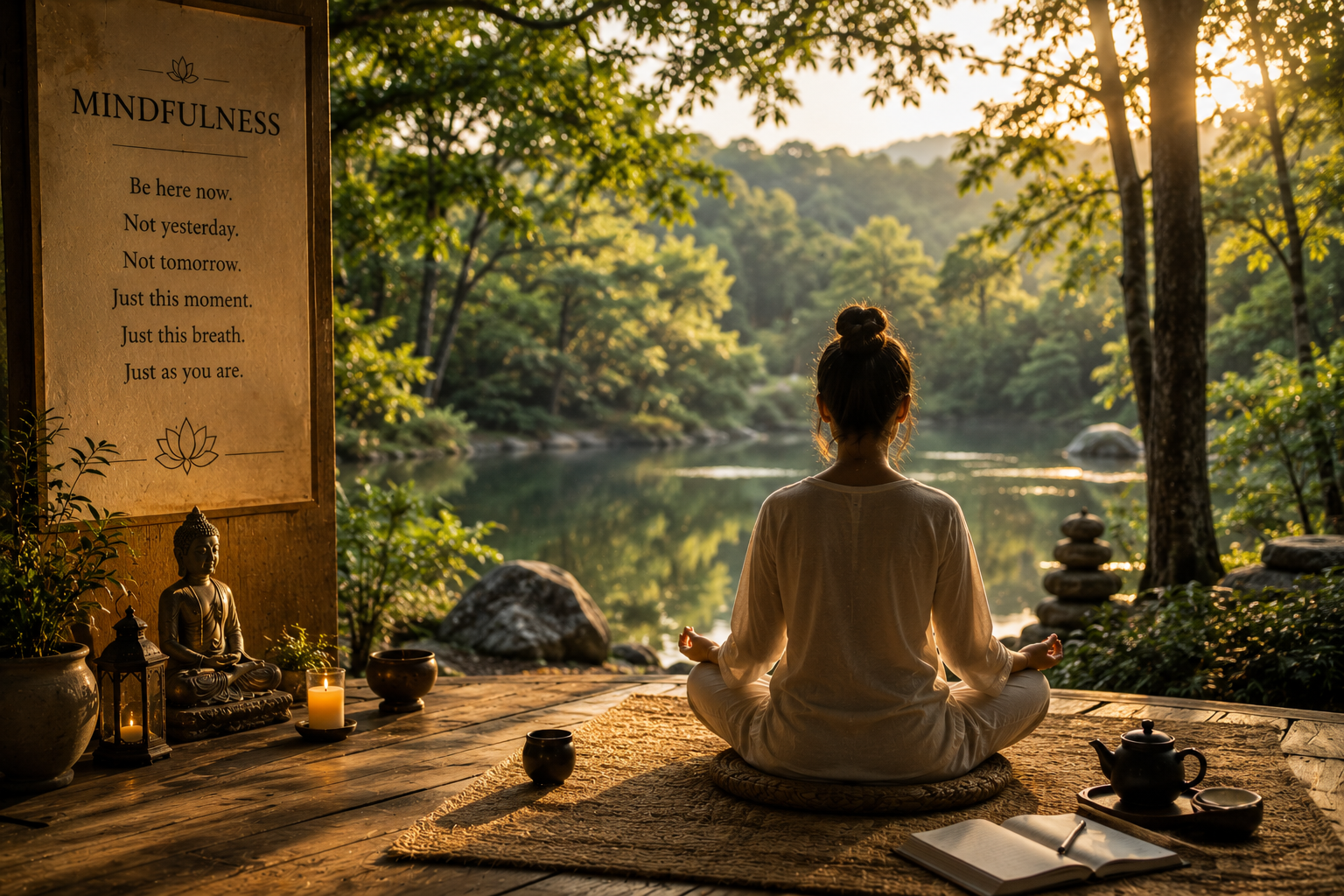
You do not need to find a sacred place. You can slowly teach one place to become sacred.
Begin where you are.
Continue the Journey
After preparing the space, move into breath, sound, tea and guided practice.
 Breathe
 Listen
 Soften
 Practice