The Art of Sitting
Most meditation instructions say “sit comfortably,” then abandon you like a badly written furniture manual. Healnest begins more gently: every body is welcome, and comfort is allowed to be intelligent.
Sitting is not a test of spiritual discipline. It is a conversation between body and silence.
If your hips hurt, your back collapses, your feet go numb, or your shoulders are holding three decades of emails, you are not failing meditation. The body is simply asking to be included. The art of sitting begins when posture stops being punishment.
Build Your Meditation Seat
There is no single holy shape. There is only a position where your body can feel safe enough to stay.
Supported
Feet on the floor, spine alive, body held without drama.
Grounded
Cushion beneath hips so knees and back are not forced into heroics.
Assisted
A wall is not cheating. It is architecture being useful.
Gentle
For illness, exhaustion, seniors, grief, or nights when the body needs softness.
Kneeling
Useful when hips dislike cross-legged ambition.
Real Life
Because not everyone lives inside a minimalist monastery catalogue.
Welcome
Meditation belongs to awareness, not furniture.
Portable
Airport chairs, train seats, hotel rooms — the seat travels with breath.
The body remembers modern life.
Most bodies arrive carrying chairs, phones, stress, long workdays, old injuries and the mysterious human talent for clenching the jaw while pretending everything is fine.
Sitting becomes easier when we stop blaming the body and start preparing it.
The body is not an obstacle to meditation. It is the doorway.
Not military straight. Alive.
A meditation spine is not a rigid pole. It is more like a young tree: upright, flexible, breathing, responsive.
Let the pelvis settle. Let the chest open naturally. Let the crown of the head rise without turning your neck into a royal flagpole.
Upright does not mean tense. Soft does not mean collapsed.
Age, pain and support belong here.
Some visitors will sit on the floor. Some on chairs. Some in bed. Some with back pain, numbness, tremor, fatigue, illness or aging joints.
A sanctuary that only welcomes flexible people is not a sanctuary. It is a furniture advertisement with incense.
The best posture is the one that lets you stay with kindness.
The small details matter.
Hands can rest in the lap, on the knees, or lightly together. Eyes may be closed, half-open, or gently lowered.
Closed eyes turn attention inward. Half-open eyes can help if sleepiness or anxiety appears. There is no single correct door.
Let the hands stop working. Let the eyes stop hunting.
Prepare the world around you.
Lighting, temperature, sound, tea, blanket, cushion, plant, candle, or a quiet corner can help the nervous system understand: this is not another task.
You do not need luxury. But you do need care. Even one clean corner can become a chapel of ordinary attention.
A room becomes sacred when the body feels safe inside it.
Choose what helps you arrive.
Some people need silence. Some need rain, flute, singing bowl, wind, or soft instrumental music to cross the bridge into stillness.
Sound is not a weakness. For many nervous systems, it is a handrail.
Sometimes silence enters through sound first.
Arrive before you begin.
Many people rush into meditation as if late for a train to enlightenment. The body needs a few moments to arrive.
Feel your feet. Soften the belly. Release the jaw. Notice the room. Let the breath become less ceremonial and more honest.
Meditation begins before the timer starts.
Common Sitting Problems
Almost everyone meets these. They are not proof that you are bad at meditation.
Back pain
Use a chair, cushion, wall, or shorter sessions. Pain is not a spiritual achievement.
Numb legs
Change position before numbness becomes the main meditation teacher.
Sleepiness
Try half-open eyes, brighter light, or sitting more upright.
Restlessness
Begin with walking meditation or three slow breaths before sitting.
Noise
Let sound become part of awareness, or use gentle music as support.
Thinking
Thinking is not the enemy. Returning is the practice.
The Five-Minute Arrival Ritual
A Healnest ritual for entering meditation gently — through light, tea, breath, body and stillness.
Continue the Journey
Now that the body has been welcomed, enter breath, sound, guided practice or tea.
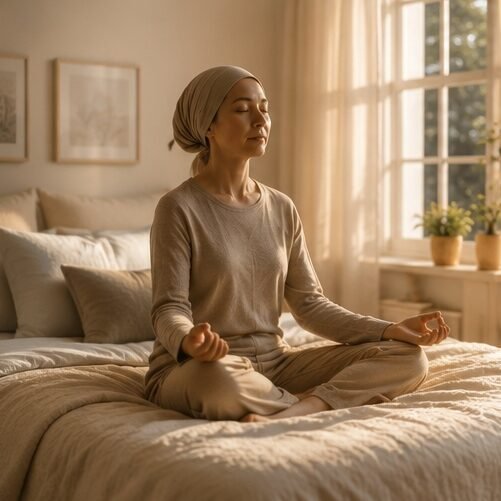 Practice
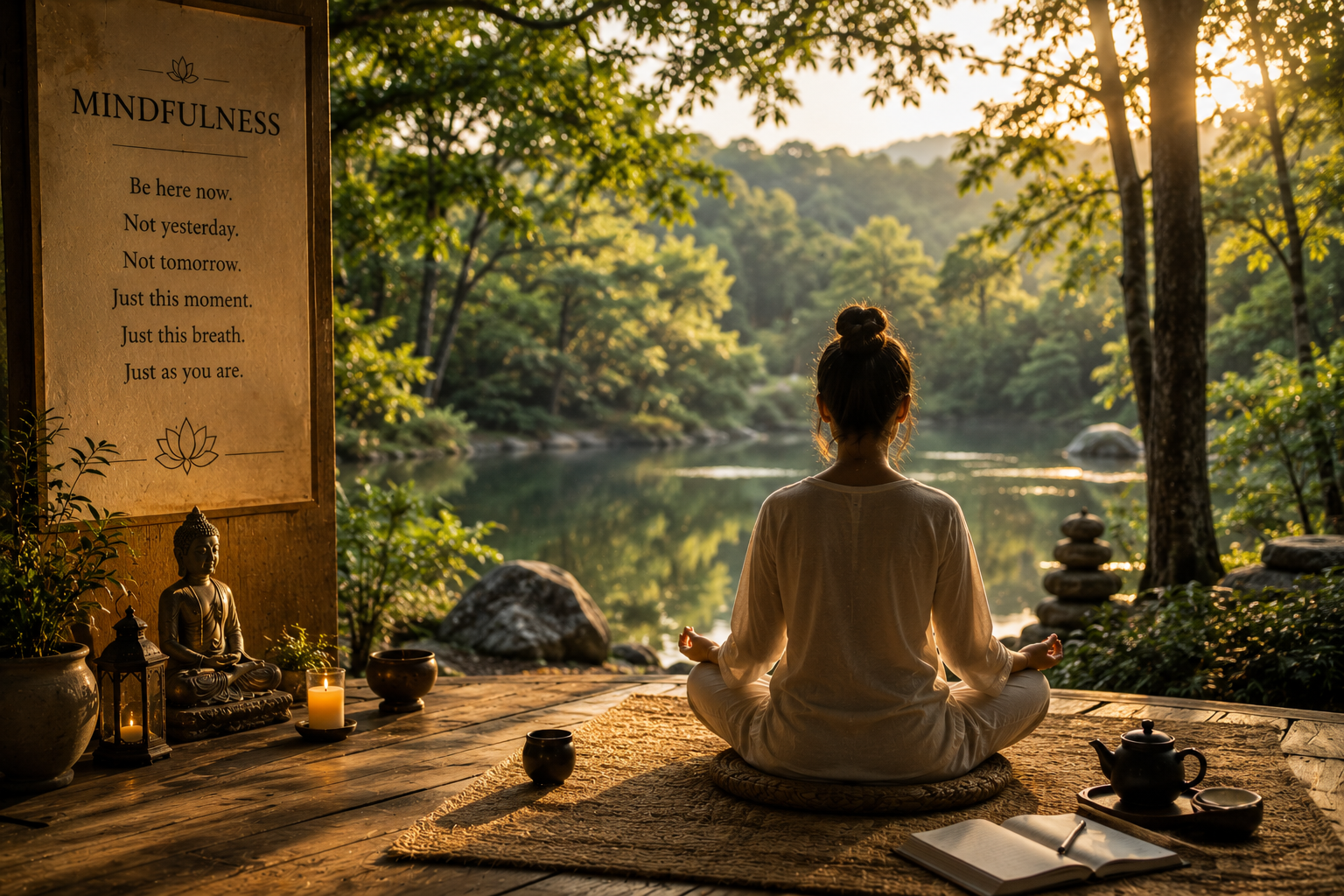 Breathe
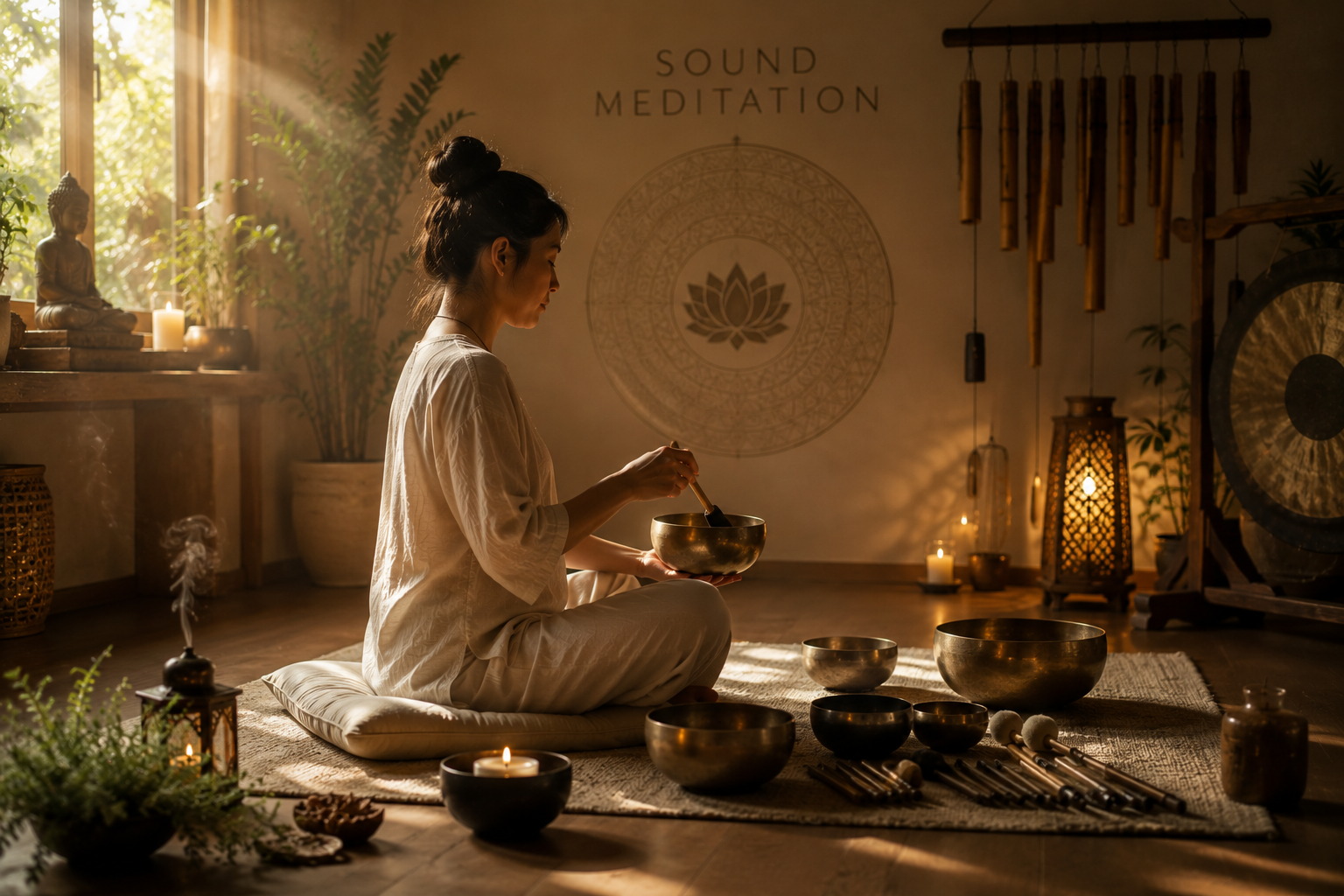 Listen
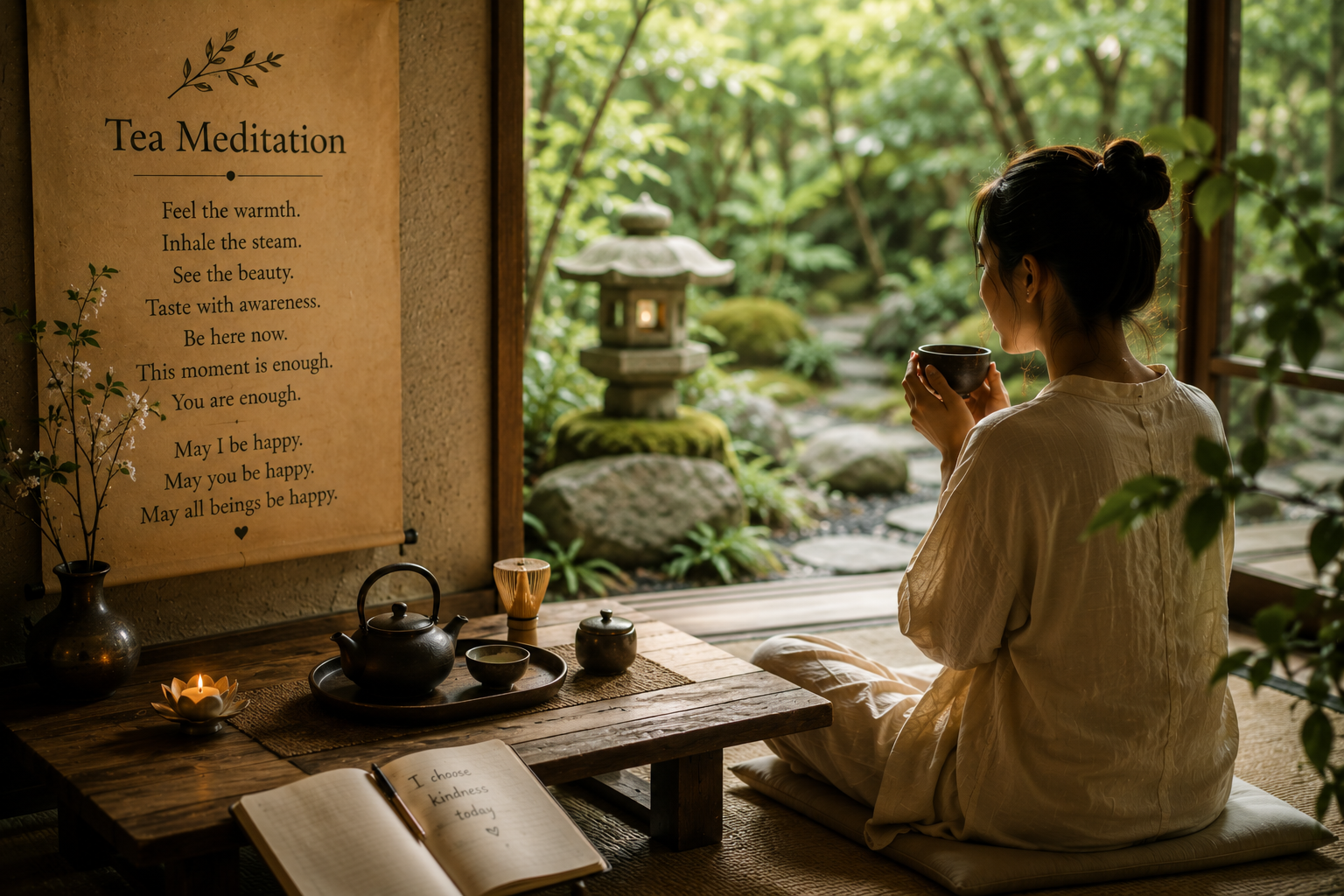 Soften