Walking Meditation
Walking meditation is not ordinary walking with poetic language attached. It is a disciplined contemplative practice where the movement of the body becomes the object of attention.
Walking meditation exists because not every mind becomes quiet by sitting still.
Some bodies are restless. Some backs hurt. Some people become sleepy when seated. Some nervous systems feel safer with gentle movement. Walking meditation gives awareness a clear, grounded anchor: lifting, moving, placing, feeling, breathing, turning, returning.
What Walking Meditation Is
It is slow, deliberate walking in which attention rests on the body, the feet, the ground, breath, balance, and the act of returning.
The Step
The foot lifting, moving and touching the ground becomes the meditation object.
Slow
Slow enough to notice. Not theatrical. Not stiff. Simply clear.
Embodied
Awareness moves from thinking into sensation: pressure, weight, balance, contact.
Again
When thought wanders, the next step becomes the place of return.
Upright
Spine natural, shoulders soft, gaze lowered or open, hands relaxed.
Natural
Breath may coordinate with steps, but it should never be forced.
Short
A 5–10 meter path is enough. Walk, pause, turn, walk back.
Presence
The goal is not distance. The goal is intimate contact with this step.
A path worn by attention.
In forest monastic traditions, walking meditation is often practiced on a simple path. The practitioner walks slowly back and forth, not to go anywhere, but to return awareness to the body again and again.
This connects beautifully with the Thai forest spirit we should later develop in the Quiet Journal: humility, patience, nature, repetition, silence, and practice without decoration.
The path becomes sacred because awareness walks it repeatedly.Read Thai Forest Reflection
Sitting and walking belong together.
In Zen practice, walking meditation is not a casual break from sitting. It is a continuation of meditation in movement.
The body rises, steps slowly, breathes, turns, and returns to sitting. Stillness and movement are not enemies; they train the same awareness in different forms.
The cushion teaches stillness. The step tests whether stillness can move.Explore Zen Meditation
The body becomes the teacher.
Choose a quiet path. Stand at one end. Feel both feet. Let the arms rest naturally. Keep the gaze soft and slightly lowered.
Begin slowly. Notice the intention to lift the foot, the lifting, the moving, the placing, and the shifting of weight. When the mind leaves, return to the next physical sensation.
Walking meditation is not thinking about walking. It is directly knowing walking.
Beginner Practice · 5 Minutes
This is the basic Healnest walking meditation. It is serious, simple, and safe enough for most beginners.
Breath may support the rhythm, but sensation leads.
Some people find it helpful to breathe naturally with the steps. Others should ignore counting and stay with the feeling of the feet.
For anxious visitors, longer exhale can be added gently. For restless visitors, the physical sensation of contact with the ground may be more helpful than counting.
Do not turn the practice into arithmetic. Let the body teach rhythm.Breath Before Meditation
Nature deepens attention without needing explanation.
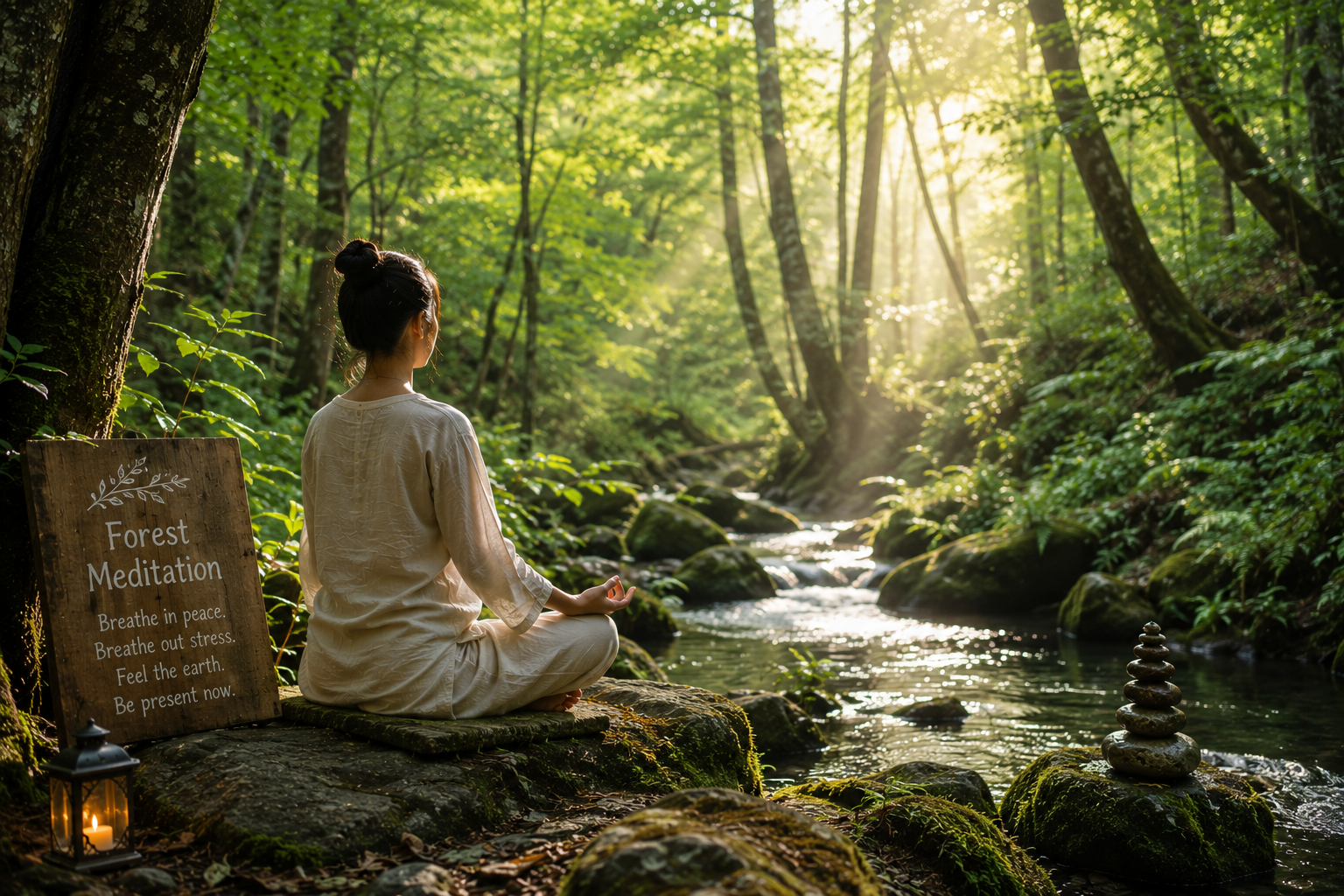
Forest walking meditation uses the same method, but the atmosphere supports attention: soil, leaves, wind, birds, light, shade, temperature, and natural silence.
This should become one of the most beautiful Healnest integrations: Walking Meditation connected to Forest Meditation and Thai Forest reflections in the Journal.
The forest does not decorate meditation. It strips away unnecessary noise.Forest Meditation
Deeper Practice · 15 Minutes
For visitors ready to practice more seriously, use three phases: grounding, detailed sensation, and open awareness.
Who Walking Meditation Helps
It is not a decorative add-on. It answers real human needs.
Restless mind
Movement gives attention a physical anchor when sitting feels too difficult.
Sleepiness
Walking can keep awareness awake when seated meditation becomes dull.
Anxiety
Ground contact and repeated steps can help the body feel less unmoored.
Grief
Gentle walking allows sorrow to move through the body without being forced into words.
Seniors
When done safely, very small mindful walking can support dignity, balance and presence.
Long sitting pain
Walking meditation allows practice to continue without demanding painful stillness.
The practice must respect the body.
For seniors, people with pain, fatigue, dizziness, disability or balance concerns, walking meditation must be adapted carefully.
Use a wall, rail, chair, walking aid, or very short path. If walking is unsafe, practice seated awareness of foot sensation or gentle hand movement instead.
A practice that ignores the body is not wisdom. It is ego in spiritual clothing.
Use sound carefully, not as decoration.
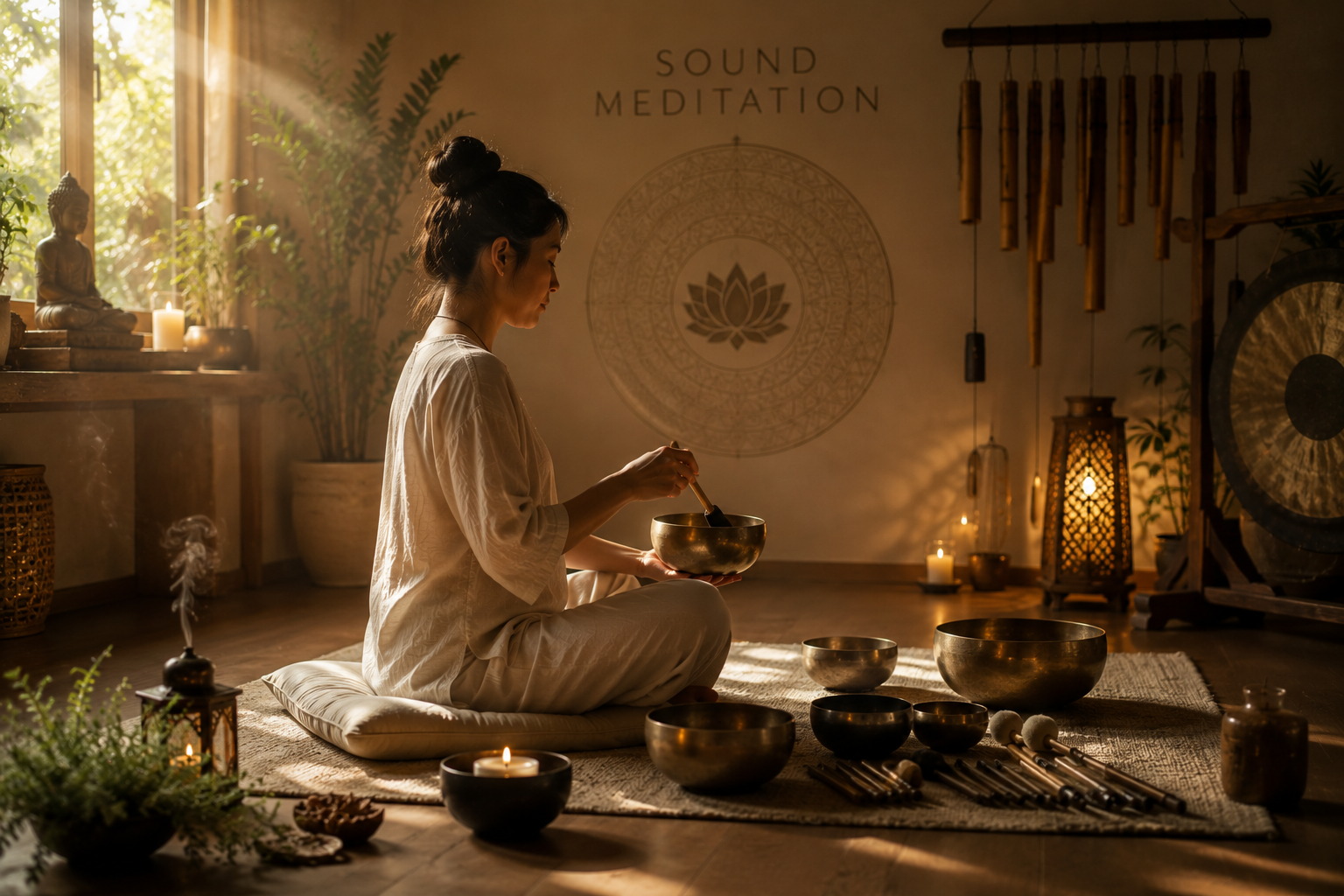
Some visitors practice best in silence. Others may benefit from soft forest sound, low bells or gentle ambient music.
Sound should never overpower the step. It should support the atmosphere while the feet remain the main object of awareness.
In walking meditation, sound is the room. The step is the practice.Sound Meditation
After walking, do not rush away.
Stand still for one minute. Notice the breath, body temperature, emotion, mental speed and quality of attention.
Then write one honest sentence in the journal: “My feet felt heavy.” “My mind resisted.” “The forest helped.” “I felt calmer after turning back.”
Practice becomes deeper when experience is quietly understood.Meditation Journal
Practice Notes and Safety
Reliability matters. Healnest should never make meditation look careless.
Choose safety
Practice only in a stable, clear place. Avoid stairs, traffic, slippery paths or crowded areas.
Do not force slowness
Walking too slowly can feel artificial or unstable. Use a pace that is mindful and safe.
Respect dizziness
If dizzy, unsteady or unwell, stop and sit. Awareness should never override basic care.
Connected Healnest Rooms
Walking Meditation now connects properly to serious practice, forest reflection, breath, sound and journal.
 Nature
 Breathe
 Listen
 Reflect