
Argentina
Tango for the Brokenhearted
How identity, embrace, and movement turn heartbreak into belonging.
Where loneliness does not vanish, but returns as music through the valley.
In Romania’s mountain country, sorrow becomes mist crossing a valley at dawn. It becomes smoke above wooden roofs, sheep bells fading into distance, and sometimes, if the evening is quiet enough, the sound of a shepherd’s flute moving through the dark like a human voice that finally stopped pretending to be strong.
The first thing the Romanian mountains taught me was not how to be happy. They taught me how to be honest.
The road into the highlands does not arrive suddenly. It unwinds slowly through forests dark with pine and rain, past villages where old women sit beside painted gates watching weather move across the hills as though it were part of the family.
Nothing there rushes. Even sadness seems to take its time.
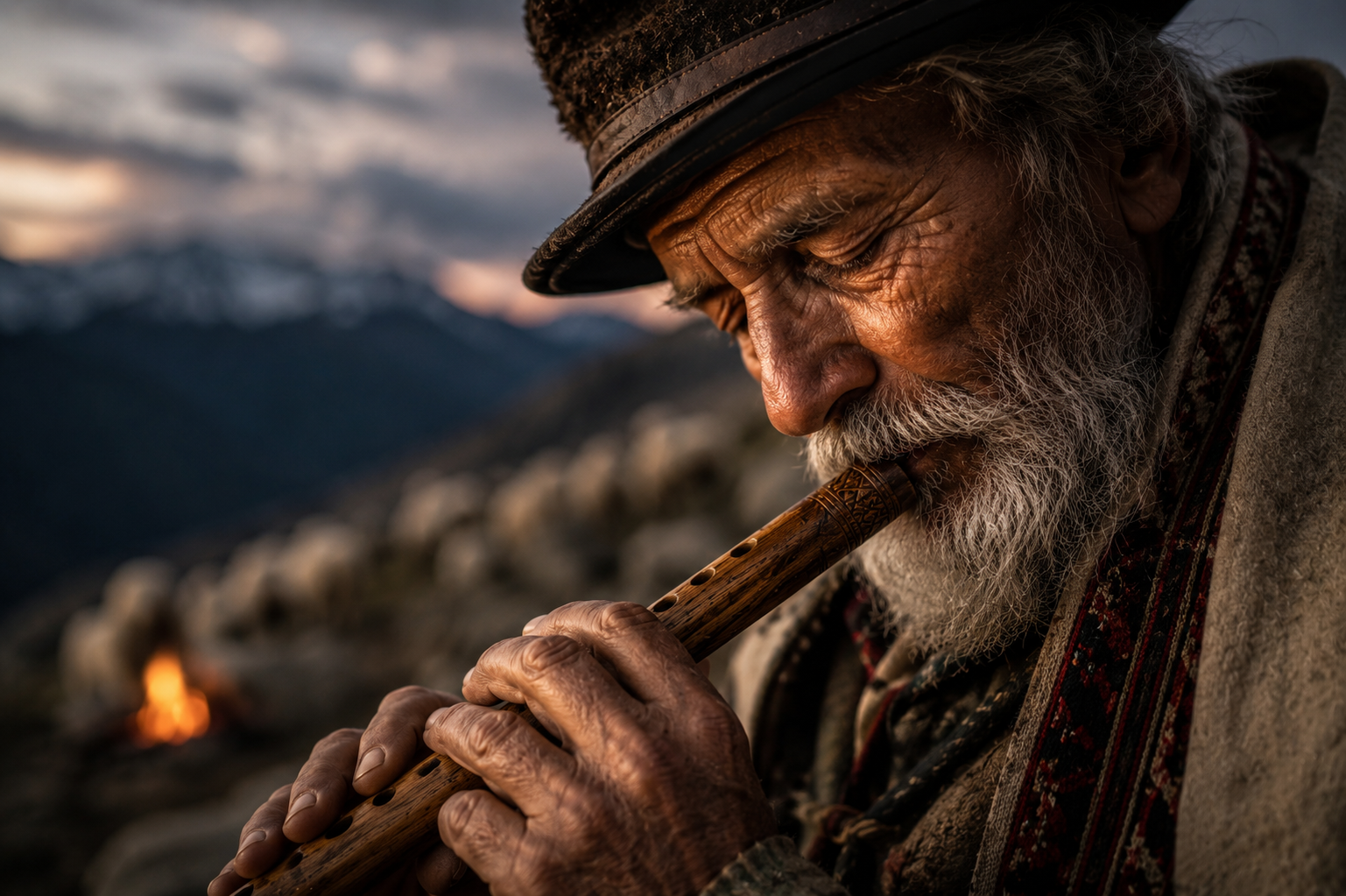
The first shepherd I met did not introduce himself with a story. He nodded once, quietly, then returned to carving a small piece of wood with a knife worn smooth from years of use. Behind him, sheep drifted across the grass like clouds torn apart by wind.
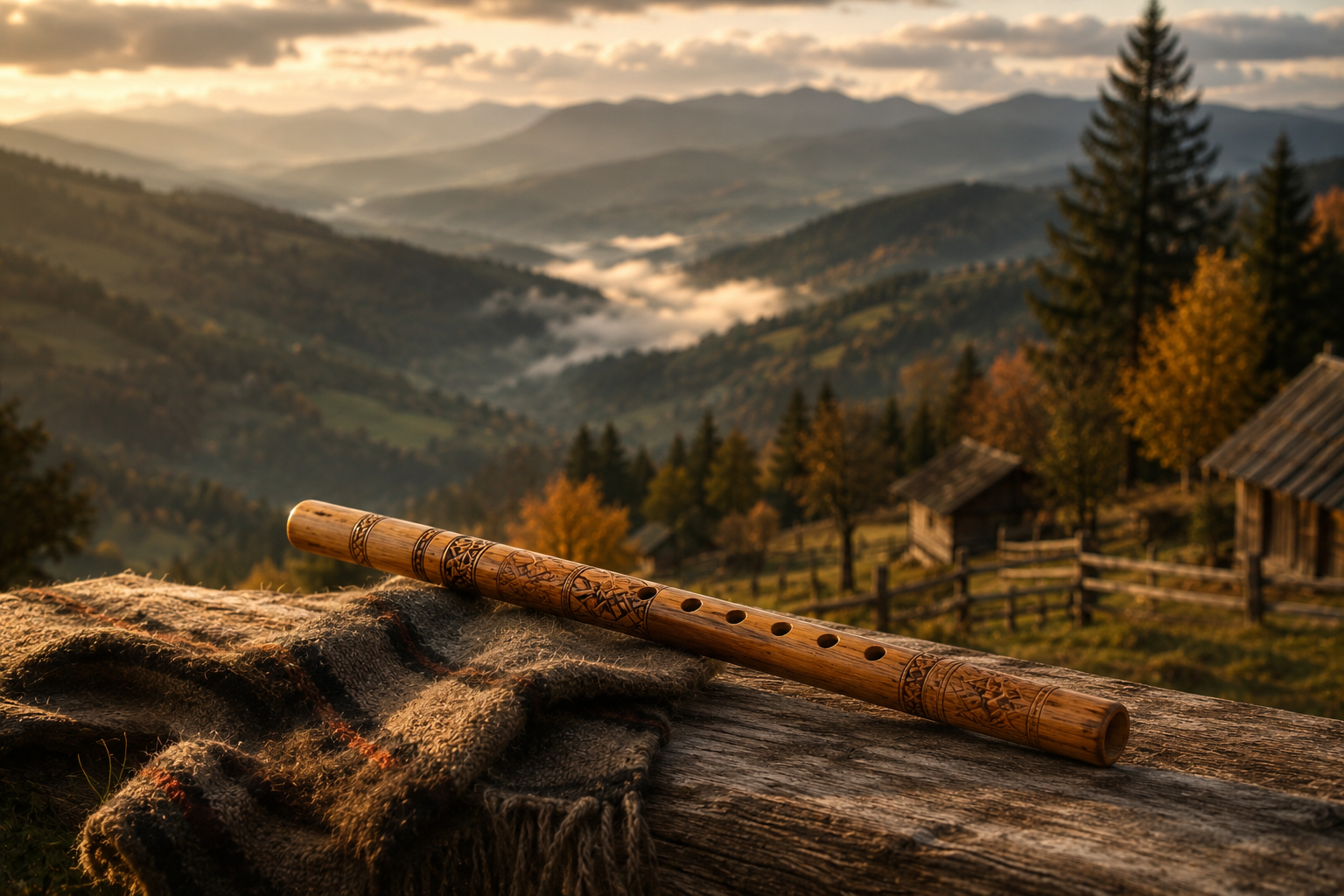
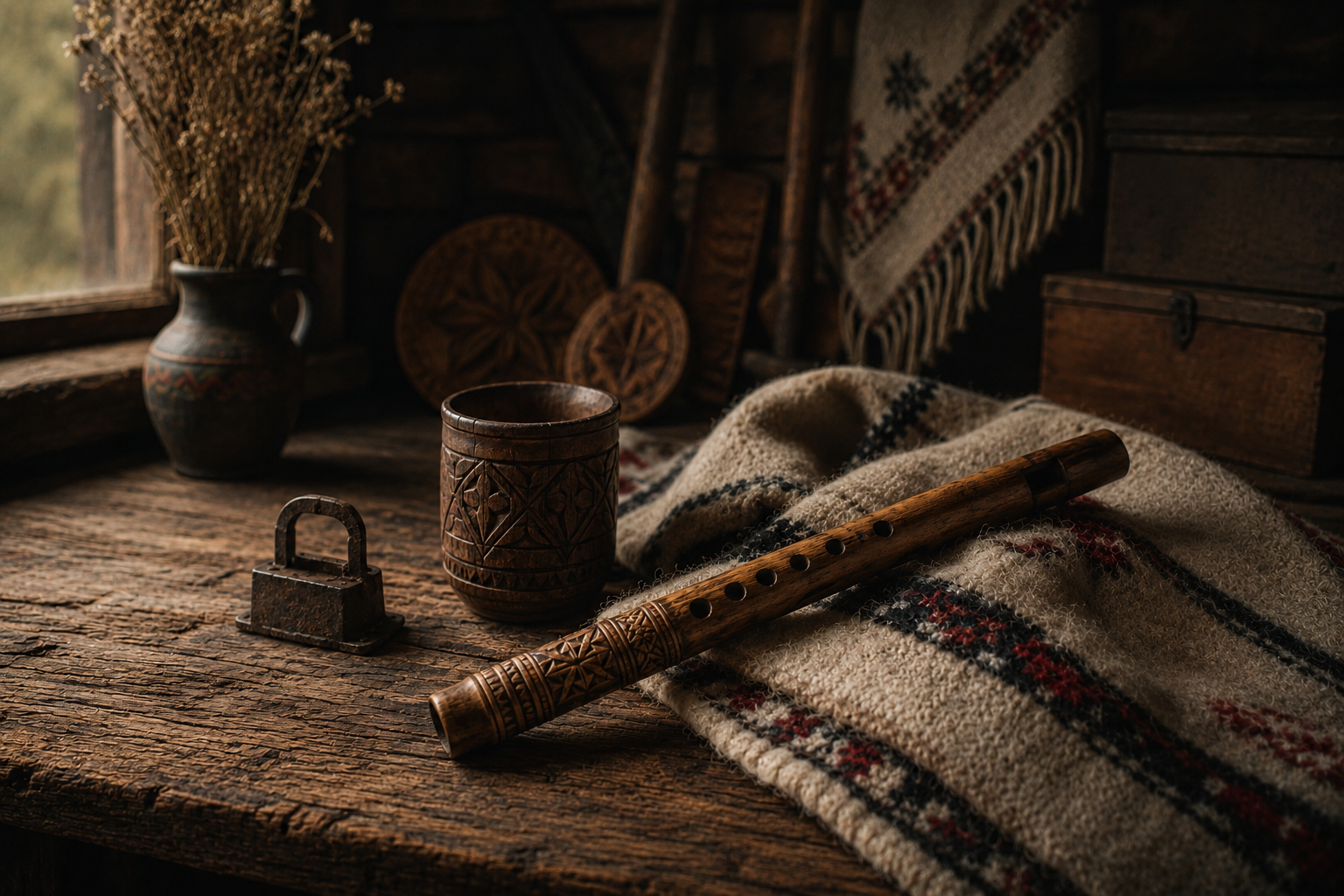
Hanging from a fence beside him was the flute.
Simple. Narrow. Handmade. The kind of object the modern world would overlook in seconds.
By nightfall, that little wooden flute no longer felt like an object. It felt like memory made audible.
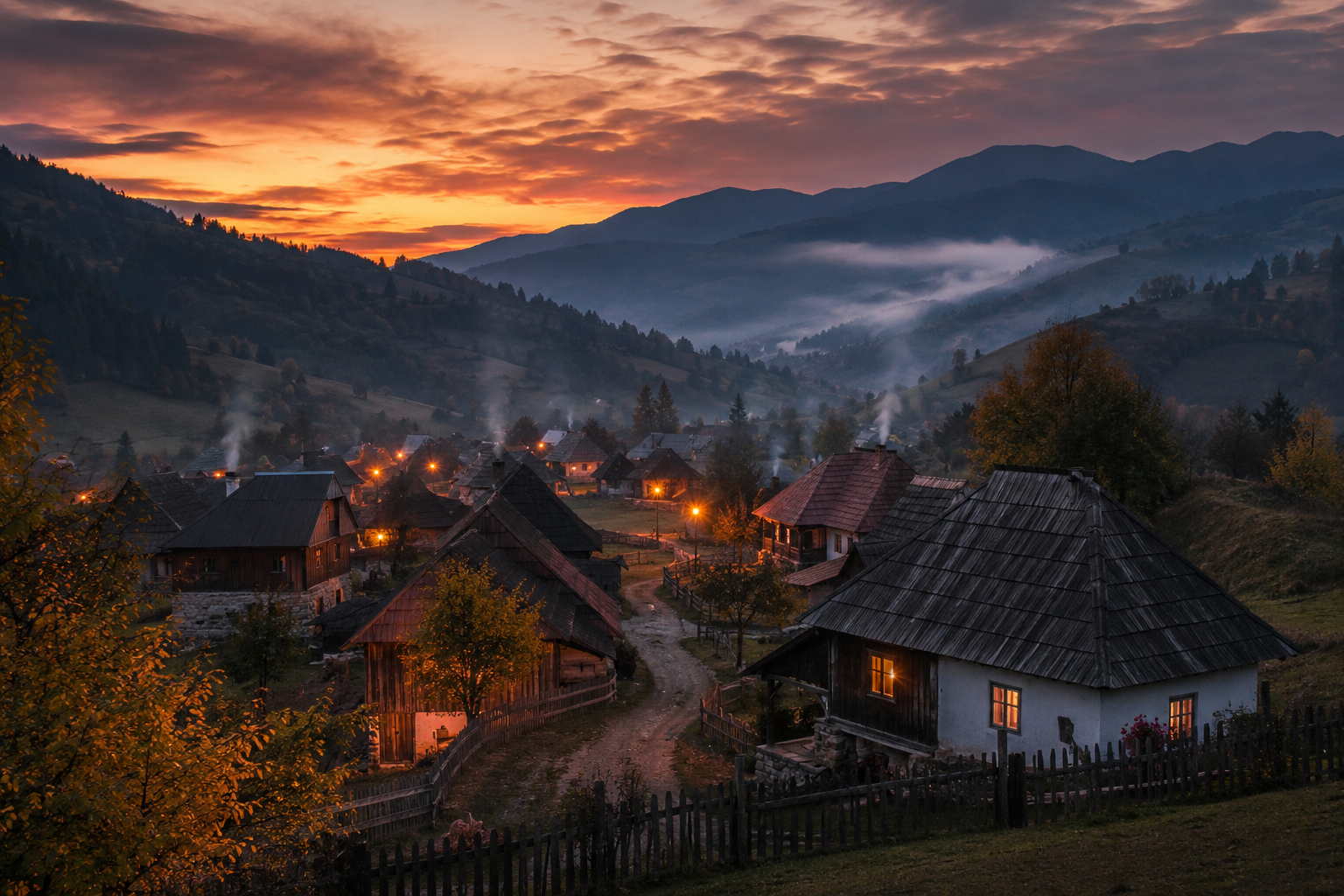
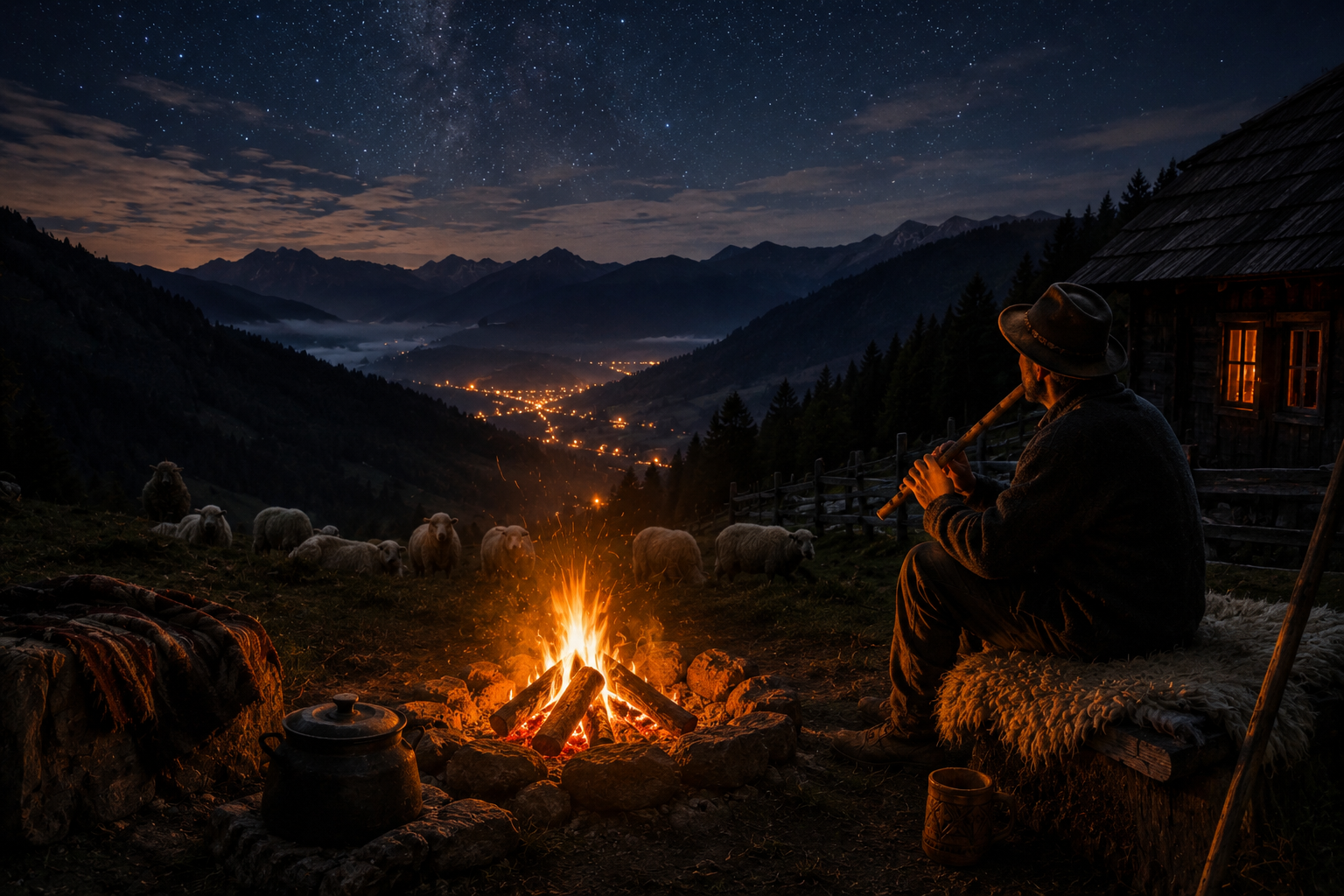
When the sun disappeared, the valley turned blue. Smoke rose from chimneys. Somewhere far below us a dog barked once, then silence folded back over the hills.
The shepherd lifted the flute.
And then came the sound.
It was not music in the way cities understand music. There was no performance in it, no polished rhythm designed for applause, no cleverness, no decoration.
It sounded like someone had opened a door inside the evening and let the heart speak first.
Some songs do not comfort us by removing loneliness. They comfort us by sitting beside it.Romania · Mountain Listening
The melody wandered slowly through the cold air, pausing and returning, trembling at the edges as though even the notes carried loneliness inside them. Some phrases rose suddenly like longing. Others collapsed softly into exhaustion.
Nobody around the fire spoke.
Not because the music demanded silence, but because it recognized something inside every person listening.
Something unfinished. Something aching. Something human.
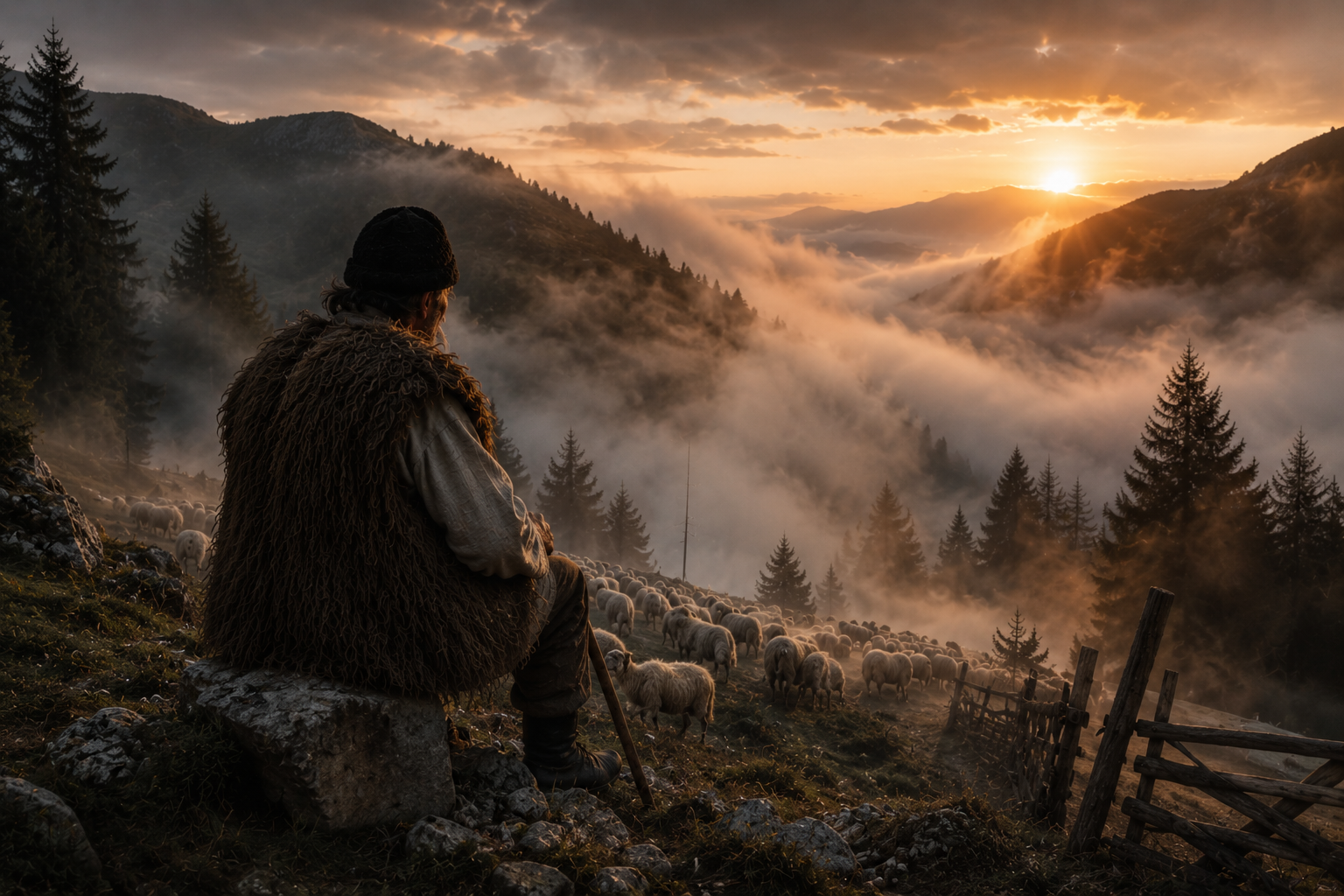
In Romania’s mountain traditions, the shepherd flute was never merely entertainment. It belonged to isolation, distance, weather, and waiting.
For centuries, shepherds spent long stretches high in the mountains, alone with animals, storms, hunger, and their own thoughts.
There were no glowing screens. No distractions loud enough to drown the mind. Only wind, breath, memory, and the terrifying intimacy of being alone with oneself.
The flute became companionship. Prayer. Confession. A way to survive silence without becoming empty inside it.
What moved me most was not sadness. It was tenderness.
These mountain traditions were born from difficult lives — hard winters, physical labor, separation, migration, hunger, grief — yet somehow the music never hardened into bitterness.
It remained soft.
Even wounded, it stayed soft.
Suffering did not remove their ability to feel beauty.
A shepherd who spent months alone could still stop to watch fog moving through pine trees as though witnessing something sacred. A man exhausted from work could still carve delicate patterns into a flute by candlelight. A grandmother carrying decades of loss could still hum softly while bread baked in the oven.
The mountains did not teach numbness. They taught emotional endurance.
Do not visit the Romanian highlands only in the bright tourist afternoon. Stay until the valleys begin turning blue and the world feels suspended between memory and darkness.
Sit outside if you can. Listen carefully. Somewhere in the distance, if the mountains are kind, you may hear it: a flute carried through cold air, a human being letting loneliness leave the body without shame.
Long after I left Romania, the sound remained with me.
Not perfectly. Not clearly. More like an emotional imprint.
Sometimes now, in crowded cities far from mountains, I still think about that shepherd standing alone against the evening sky, lifting a wooden flute toward the dark as though speaking directly to silence itself.
And I think about the echo returning.
Softer. Warmer. Less alone than before.
Like grief after someone finally listens to it.
The shepherd flute does not promise that loneliness will vanish. It offers something more honest: a way to let the heart speak into distance and discover that even the valley has a memory.
In that echo, the alone person becomes less alone.
How identity, embrace, and movement turn heartbreak into belonging.
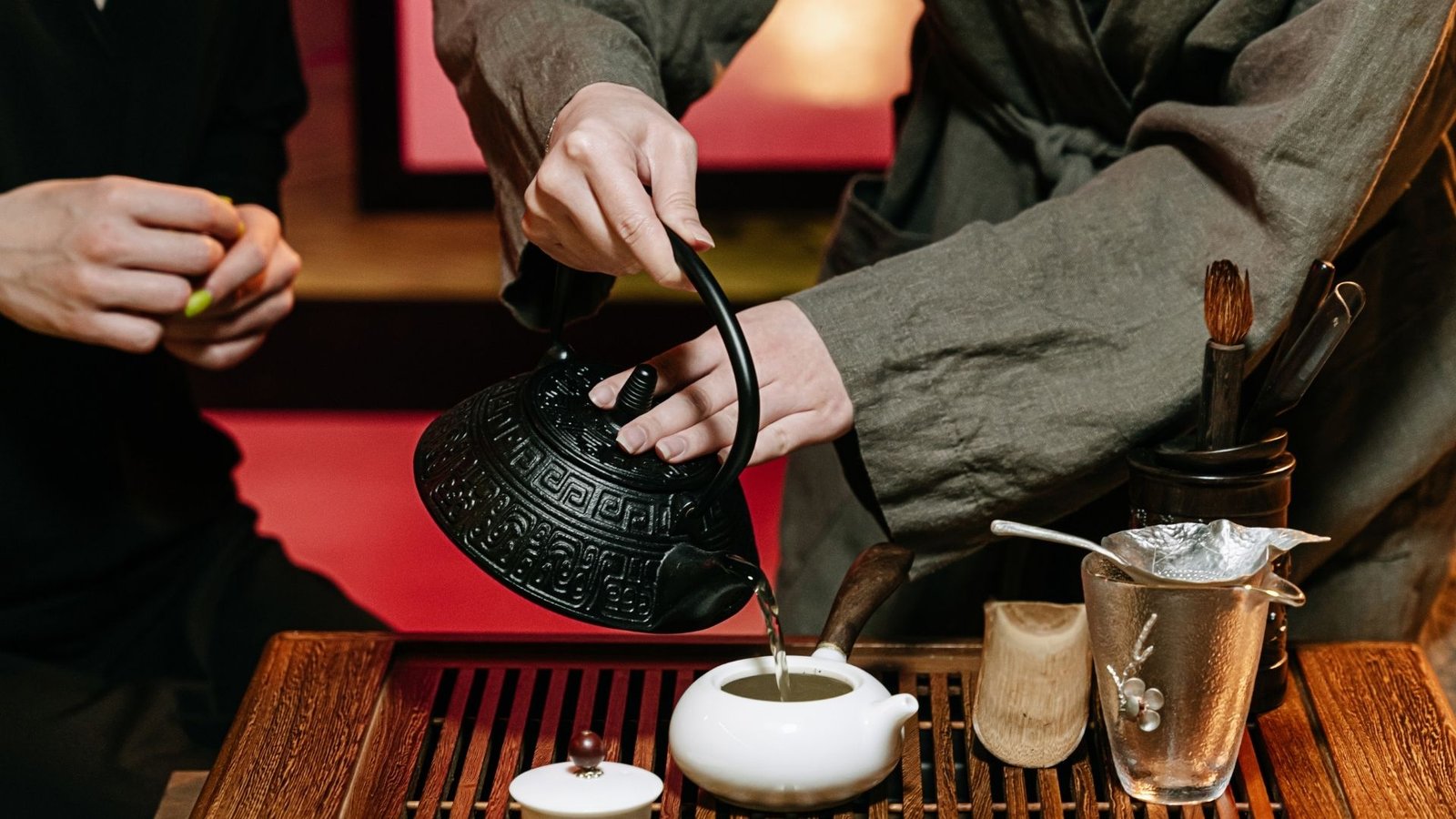
A ritual of restraint, presence, and the beauty of leaving space.
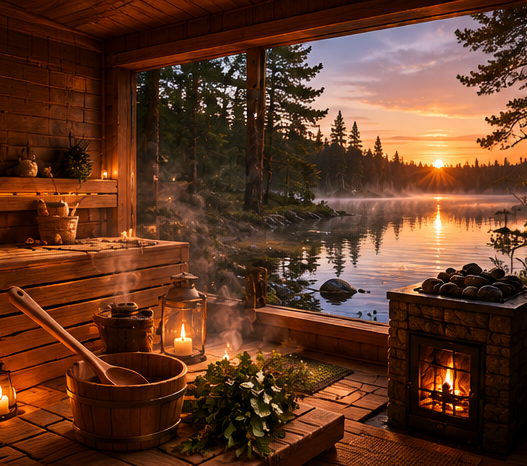
Where heat, silence, and winter teach the nervous system to release.