The Body Keeps What the Mind Forgets
Why healing sometimes begins in places we never realised were still holding yesterday.
Long after the mind has changed the subject, the body may still be sitting quietly with the old story. It remembers in the shoulders, in the jaw, in the breath, in the hands that do not know what to do when rest finally arrives.
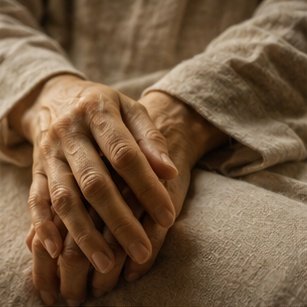
“The body does not keep records to punish us. It keeps them because, once, it had to protect us.”
The Weight We Learn to Carry
There are people who enter a room smiling while carrying an entire season inside their chest. They answer politely. They remember birthdays. They prepare meals. They make trains on time. They ask others how they are. They say, “I am fine,” not because it is true, but because the day has not left enough space for a more honest sentence.
The world often praises such people. Reliable people. Strong people. Useful people. People who do not collapse in public. People who keep going when everyone else assumes keeping going is proof of peace.
But the body is less easily impressed.
The body knows when the smile arrived late. It knows when sleep did not soften the heart. It knows when a person has been brave for so long that bravery has become another kind of loneliness.
What the Mind Misplaces
The mind is a remarkable housekeeper, but not always an honest one. It folds memories and places them in drawers. It changes the labels. It says, “That was long ago,” and closes the cupboard. It decides that certain griefs have expired because the calendar has moved on.
Yet a song can open the drawer.
A smell of rain on hot stone. A railway platform. A school corridor. The sound of steel vessels in a morning kitchen. The particular perfume someone wore twenty years ago. A letter found between old books.
Suddenly, the body remembers what the mind had carefully misplaced.
Not as a paragraph. Not as explanation. As sensation. A tightening in the throat. A sudden warmth behind the eyes. A heaviness in the palms. A silence that arrives before thought can name it.
“Memory does not live only in the past. Sometimes it waits inside the body for a safe moment to speak.”
The Shoulders of the World
Look at shoulders and you will learn much about a life. Some shoulders rise as if listening for danger. Some slope with old fatigue. Some hold invisible bags long after the journey is over. Some carry families, debts, duties, unsaid apologies, and the quiet pressure of being needed.
Many of us were never taught to put things down. We were taught to continue. To manage. To behave. To understand. To be reasonable. To not make a fuss. To be grateful even when tired. To forgive before we had finished hurting.
The body heard all of it.
It became the archive of our obedience.


A Cultural Memory
In many old homes, there is a cupboard no one opens often. Inside are photographs curled at the edges, letters written in careful hands, certificates, prayer beads, a watch that no longer works, perhaps a sari or shawl folded with reverence. These things are not used anymore, yet no one throws them away.
They hold something ordinary life cannot translate.
Across cultures, human beings have always kept small vessels for memory. A family altar. A grave visited with flowers. A lamp lit at dusk. A bowl repaired rather than discarded. A song sung at the same festival every year. These gestures admit what modern efficiency often forgets: that what has passed is not always gone.
The body is one such vessel.
It carries the unframed photograph. The unfinished conversation. The warmth of a hand once held. The old fear that kept us careful. The love that had nowhere to go after someone left.
The Rain Inside the Body
Rain knows how to return. It falls on roofs that have heard generations of worry. It darkens the soil. It gathers in the small places. It makes old wood release its scent.
Some memories are like that. They do not arrive loudly. They return through atmosphere.
We may not even know why a certain evening makes us quiet. Why one piece of music opens a door. Why a familiar street suddenly feels tender. Why a tiredness comes over us that does not belong only to today.
The body has its weather. Some days it carries clear sky. Some days, rain.
The Kindness of Noticing
It is easy to become impatient with the body. We ask it to be energetic when it is grieving, graceful when it is afraid, calm when it has spent years standing guard. We criticize the very places that have worked hardest to protect us.
But a clenched jaw may once have kept a person from saying something unsafe. A shallow breath may have learned to live quietly in a house where emotions were too large. Restless hands may be carrying years of waiting. A heavy chest may not be weakness at all, but love with nowhere to rest.
There is a great tenderness in seeing the body this way.
Not as a problem. Not as a machine. Not as an object to improve. But as an old companion that has walked every mile with us, even when we forgot to thank it.

How Nature Remembers
A tree remembers wind in the direction of its branches. A river remembers stone by the shape of its curve. A mountain remembers rain in its lines and valleys. Even the earth keeps the trace of what has passed through it.
Nothing living is untouched by what it has endured.
Yet nature rarely calls this damage. It calls it form.
Perhaps we too are shaped by what we carried, not ruined by it. The scar, the hesitation, the sensitivity, the sudden tears, the need for quiet — these may not be signs that something is wrong. They may be evidence that something mattered.
The People Who Smiled Anyway
Every family has them. The person who cooked while grieving. The parent who worked through pain because school fees did not wait. The elder who spoke little but held the house together like an old beam. The friend who laughed easily and changed the subject before anyone noticed the sadness.
Many people are carrying lives that are heavier than they look.
Sometimes the body becomes the only honest witness. It records what no one asked about. It remembers the years of swallowing words. It remembers being needed before being comforted. It remembers the nights when sleep came late and morning came anyway.
And still, people continue. Not because they are untouched, but because love often keeps walking even when tired.
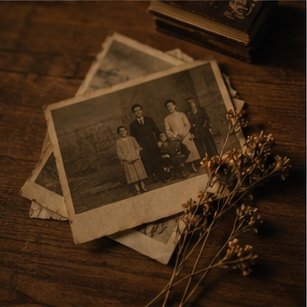

When Remembering Becomes Gentle
Healing is often imagined as forgetting. As if peace means becoming untouched by what happened. As if the body should erase every trace and return itself clean, bright, and convenient.
But perhaps healing is not the body forgetting.
Perhaps healing is the body remembering without fear.
The memory remains, but its grip changes. The shoulders lower. The breath travels farther. The hands stop searching for something to hold. The old door inside opens, not because the past has disappeared, but because the present has become kinder.
“The body softens not when yesterday is erased, but when today finally feels safe.”
A Small Beginning
Near the end of a reflection like this, advice would be too loud. The body has heard enough instructions. It has carried enough expectations. It does not need a speech about becoming better.
It may only need a little room.
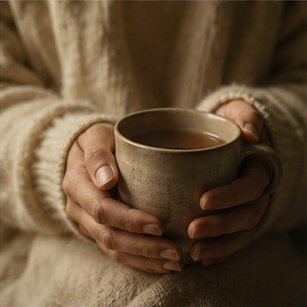
A slower breath. A warmer cup. A quieter evening. A hand resting gently where the heart has worked for years. A walk beneath trees. A song that allows tears without asking them to explain themselves.
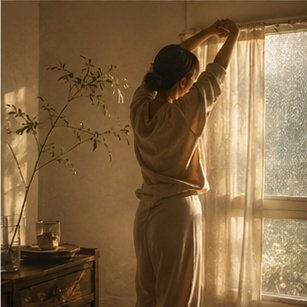
Perhaps this is why healing sometimes begins with something unexpectedly simple: a softer movement, a stretch that does not demand, a breath that does not perform.
If today’s Healnest practice meets you there, let it be only that — not a correction, not a test, but a quiet conversation with the body that has been waiting to be heard.
What Remains
Somewhere in you, the body is still holding what the mind had to set down.
Not to accuse you. Not to keep you trapped. Not to reopen every door at once.
Only to say: this mattered. You mattered. The years you survived were real.
Sit with that gently.
Let the evening come without asking anything more of you.

Today’s Quiet Remedy
Chamomile tea, not as a cure, but as a warm companion for a body that has carried the day.
Chamomile TeaToday’s Quiet Companion
Soft Echoes — a melody for people who wish to sit with themselves a little longer.
Listen SlowlyContinue Gently
If your body feels ready, today’s gentle practice continues this conversation through movement.
Continue