 01
01
The Brewing
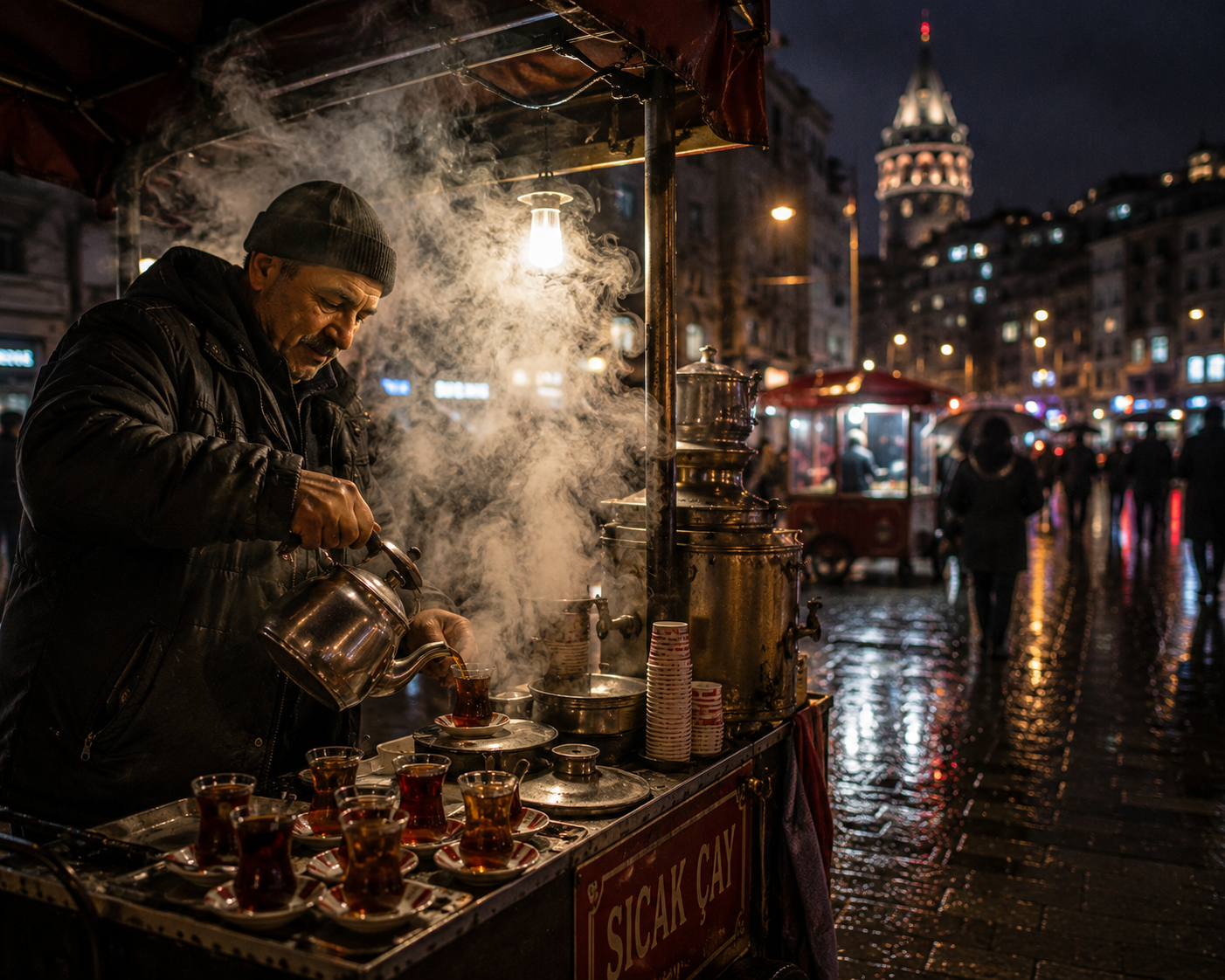
Tea leaves steep slowly in the upper kettle while water simmers below. Nothing here is rushed. Patience becomes part of the flavor.
Healnest Global Stories · Turkey
How a small glass of tea became the emotional heartbeat of a nation — and one of the world’s quietest rituals of healing.
Before dawn reaches Istanbul, the tea fires are already awake.
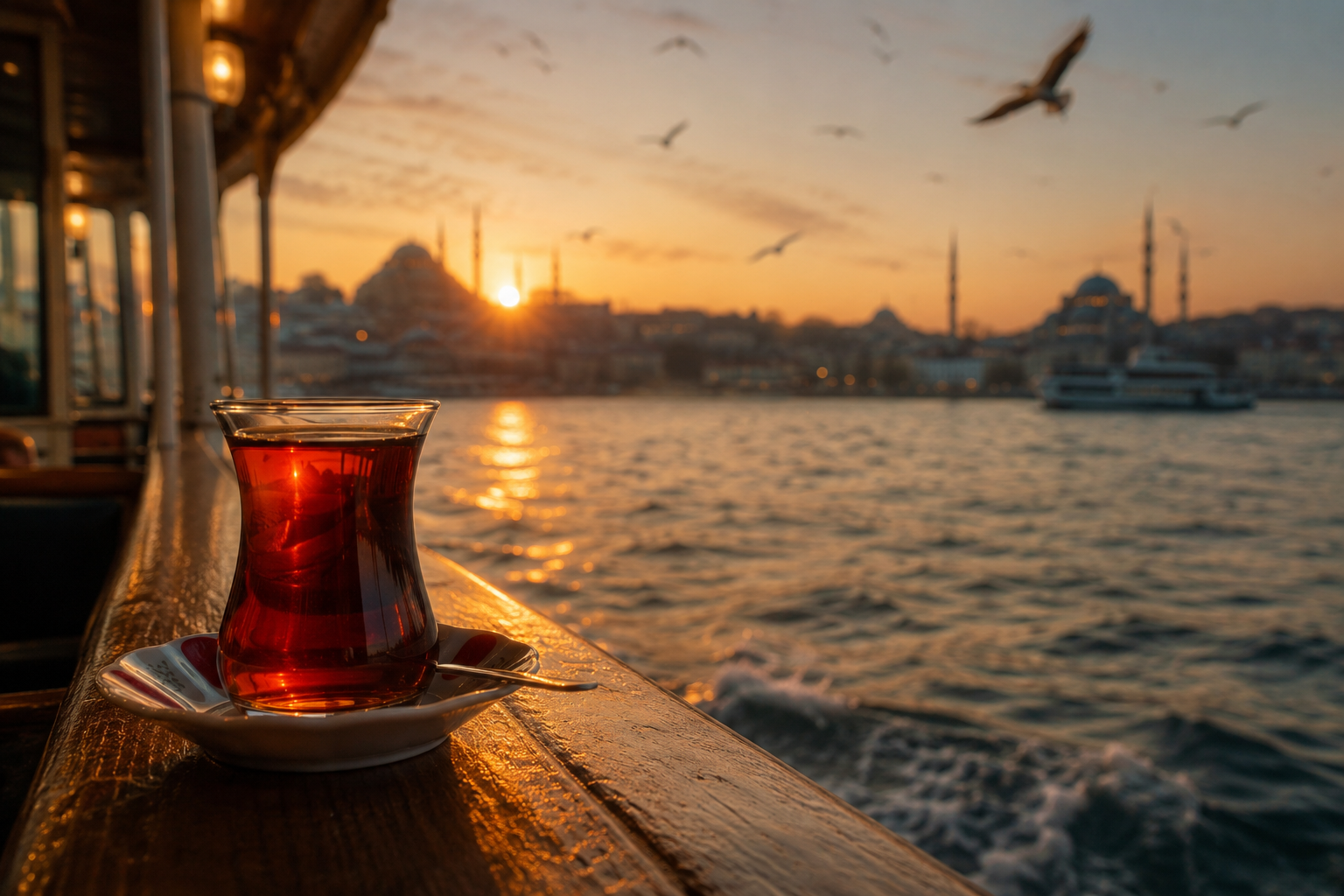
Somewhere along the Bosphorus, ferry workers move through blue morning haze, carrying trays of tulip-shaped glasses that glow amber beneath hanging lights. In the narrow streets behind old markets, spoons touch glass in small silver echoes. In homes above the city hills, kettles begin their slow conversation with steam.
Turkey does not wake suddenly. It wakes gradually — through tea.
Here, tea is not simply consumed. It is offered before questions are asked, before business begins, before grief is spoken aloud, before strangers become familiar.
A Nation Poured Slowly
Modern life moves quickly almost everywhere now. Airports blur into meetings. Conversations disappear into screens. Meals shorten. Silence becomes uncomfortable.
Yet in Turkey, tea still interrupts urgency.
Shopkeepers stop paperwork to pour another glass. Families remain at the table long after dinner has ended. Fishermen sit beside the water at sunrise, warming their hands around steam before speaking.
In Turkey, tea is not a drink. It is time made visible.
History of Çay
Though coffee once dominated Ottoman social life, tea gradually rose into prominence during the final years of the empire and the birth of the modern republic.
When global trade routes shifted and coffee became more expensive, tea emerged not merely as a replacement, but as something more democratic. It was affordable, abundant, and easy to share.
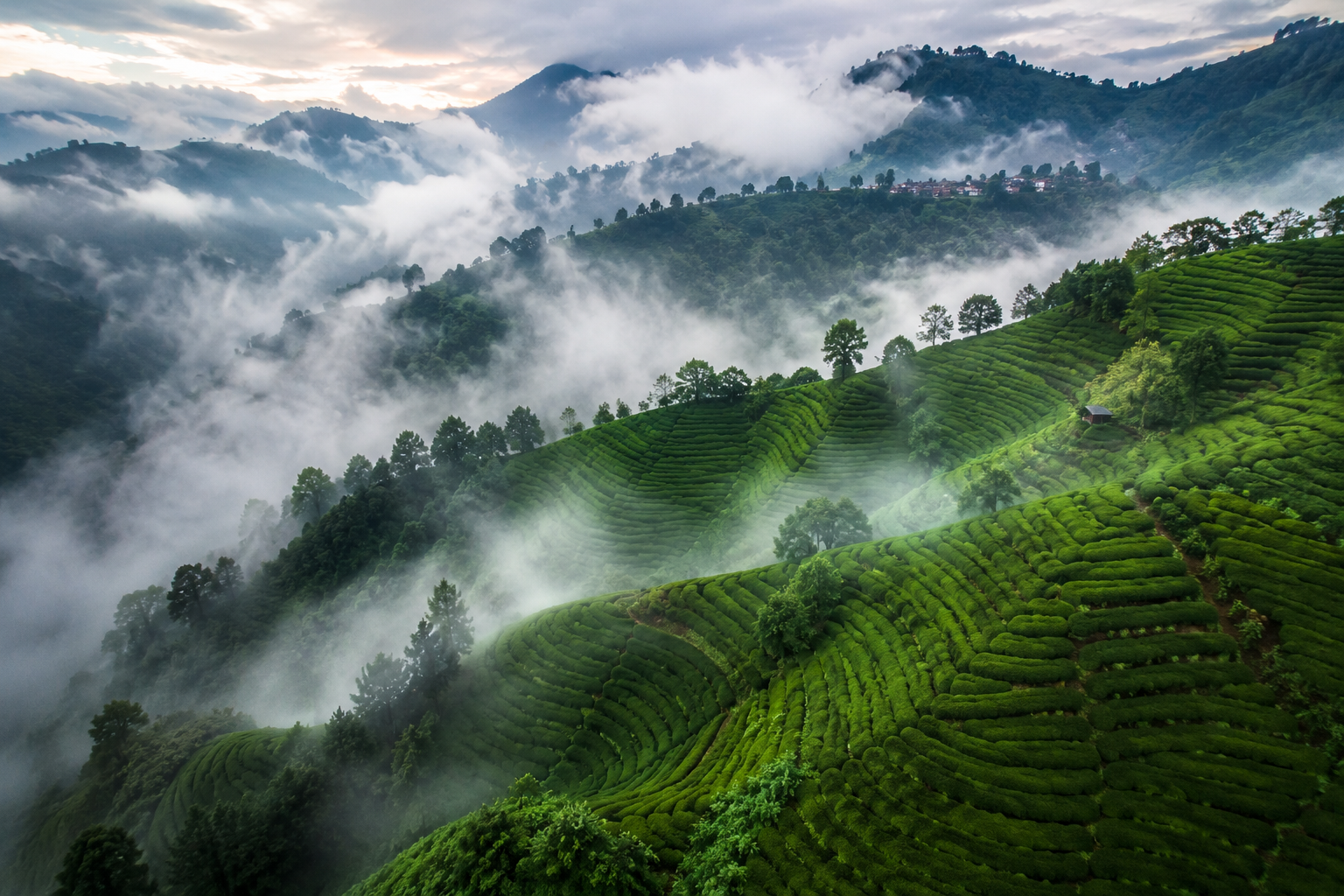
Along the lush Black Sea region of Rize, mist-covered mountains and heavy rainfall created a natural home for tea cultivation. Over time, the drink became woven into Turkish identity.
Unlike coffee, which often carried ceremony and formality, tea belonged to everyone: workers, sailors, students, grandmothers, shopkeepers, politicians, poets, and strangers sitting across from each other for the first time.
The Ritual
The ritual is quiet. Its beauty lives in the refill, the waiting, the softened shoulders, and the permission to remain.
01
Tea leaves steep slowly in the upper kettle while water simmers below. Nothing here is rushed. Patience becomes part of the flavor.
 02
02
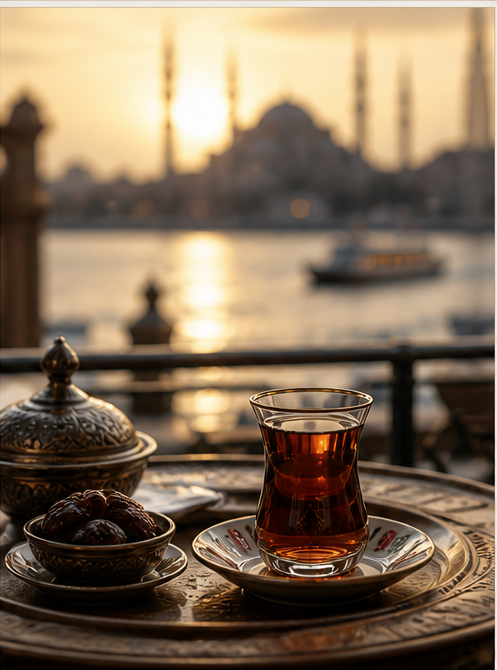
A glass is placed before you before you ask. Hospitality becomes visible, care given without performance.
 03
03
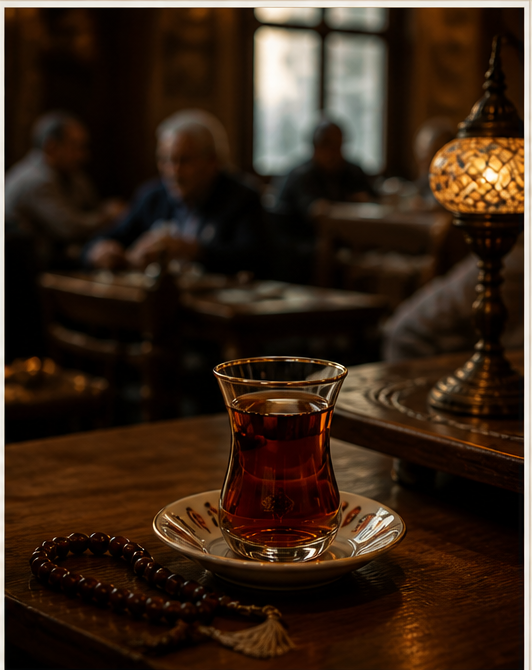
The true ritual is not drinking. It is remaining. Conversation lengthens. Time softens. People become present again.
Tea Houses
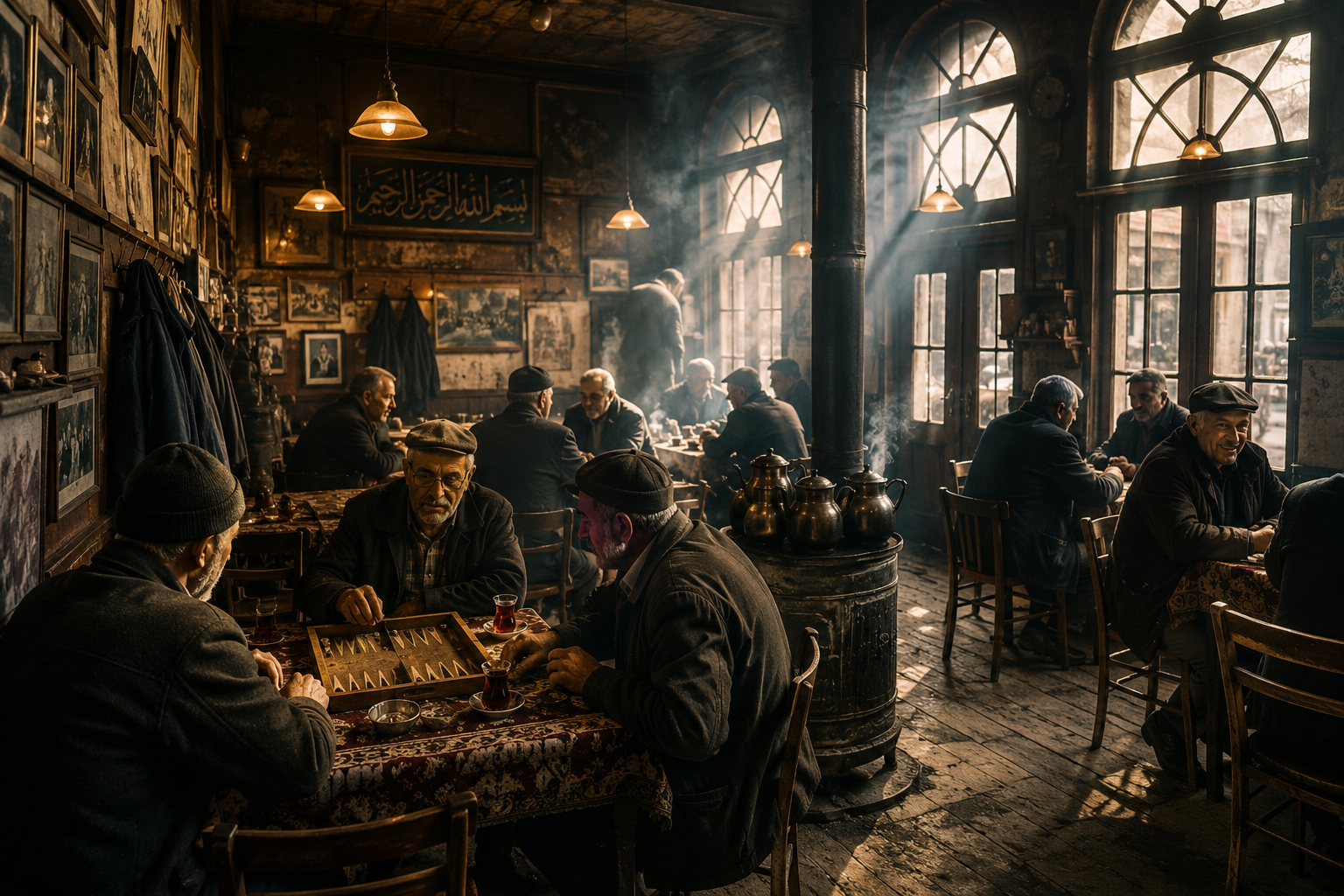
Across Turkey, tea houses remain sacred social spaces. Elderly men sit beneath hanging lamps playing tavla for hours. Students revise exam notes over endless refills. Ferry captains warm themselves after winter crossings.
Some conversations are joyful. Some are political. Some are silent. But the tea remains constant — an anchor holding human connection together.
Women, Memory & Family
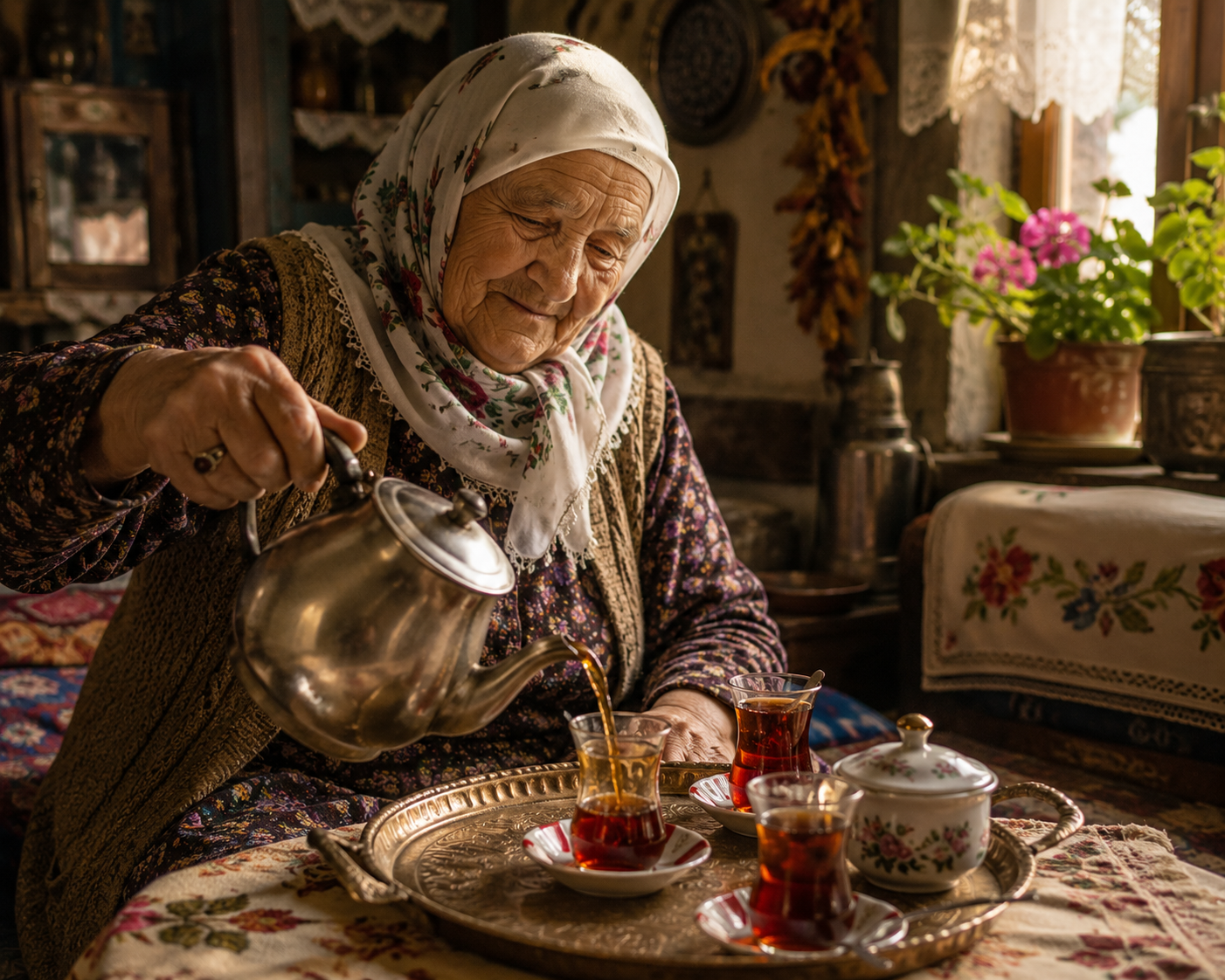
In many Turkish homes, tea is memory itself.
Grandmothers pour it into delicate glasses resting on embroidered trays. Mothers prepare it before difficult conversations. Daughters learn the exact color of the perfect brew simply by watching.
Tea appears after births, after funerals, after arguments, after long journeys home. It becomes less about thirst and more about emotional continuity.
You are not alone here.
Rize · Black Sea Region
Along Turkey’s northeastern coast, mist rolls through emerald terraces. Here, tea grows between clouds and rain, shaped by steep hills and Black Sea air.
The Healing Beneath
The healing power of Turkish tea is not hidden inside ingredients. It lives inside rhythm. Slowness. Presence. Human closeness.
In a world increasingly designed for speed, tea becomes a small rebellion against emotional exhaustion. One glass invites people to sit longer, listen fully, breathe more slowly, and remember their own humanity.
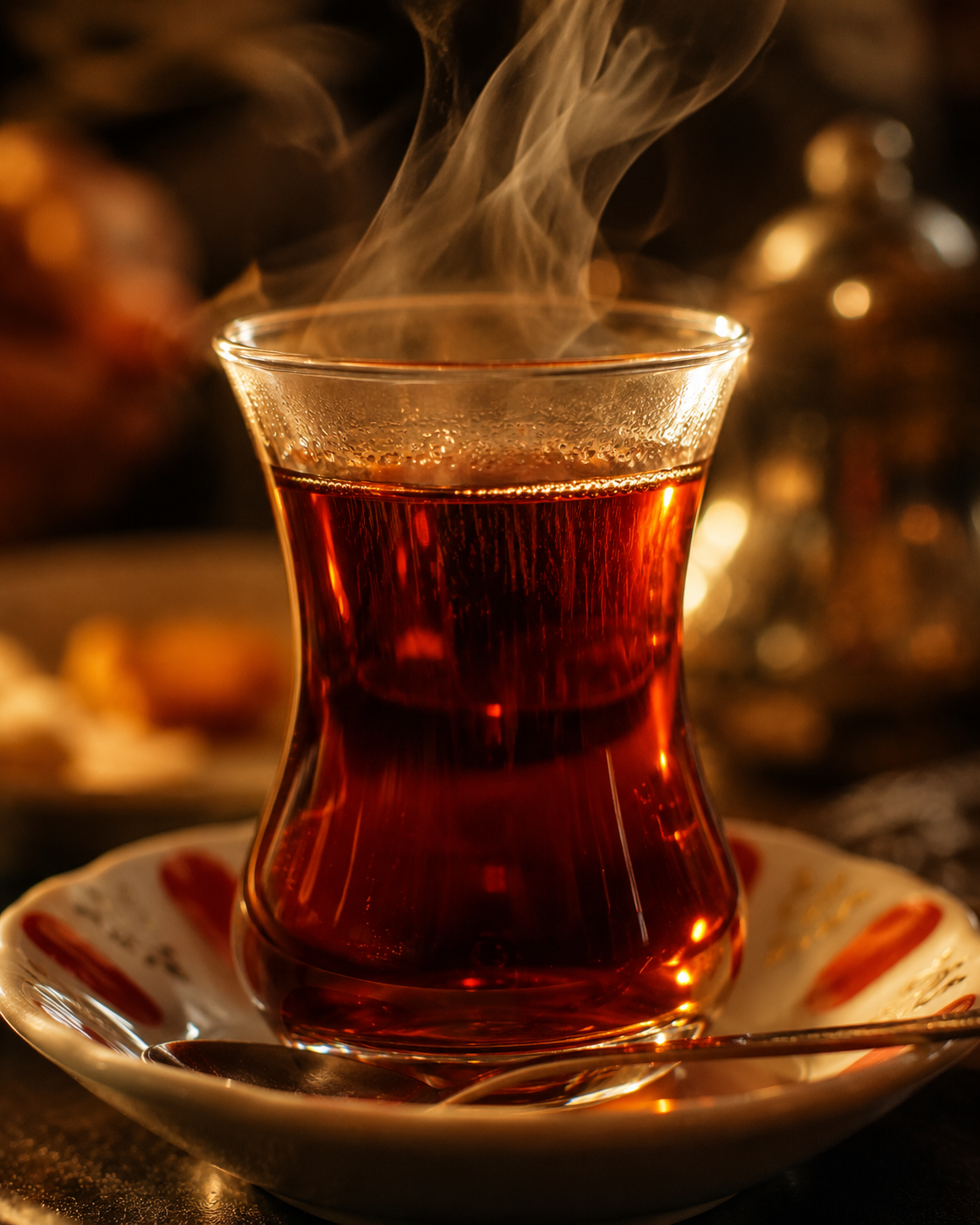
Sometimes healing does not arrive dramatically. Sometimes it arrives quietly, carried through steam.
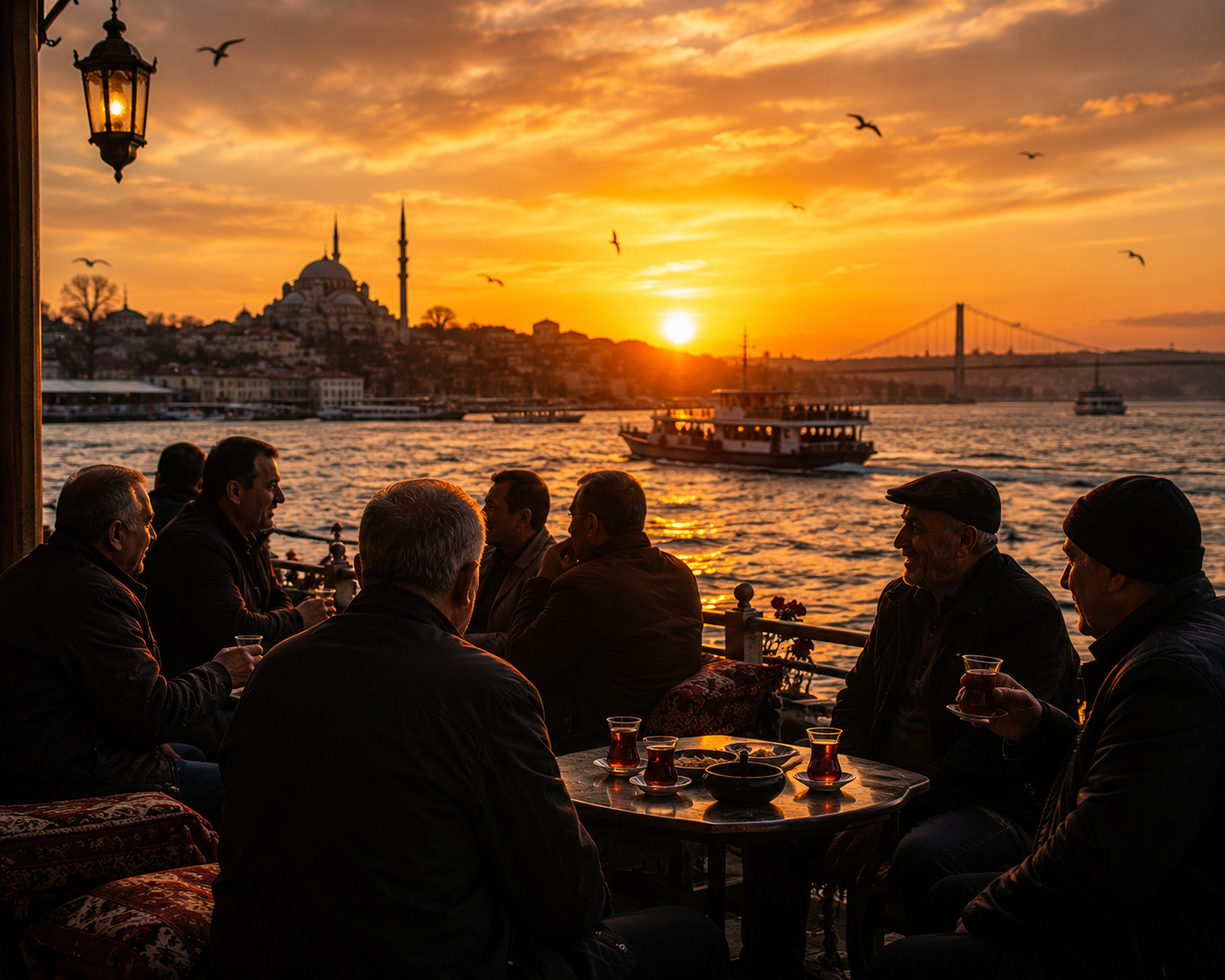
After Dark
Rain gathers on café windows. Streets glow in amber reflections. Somewhere near the water, another glass is poured — not loudly, not ceremonially, but with the old tenderness of a country that still knows how to make room for people.
Quiet Realization
It is warmth offered before words. Time shared without urgency. Care given without performance.