Do not hurry.
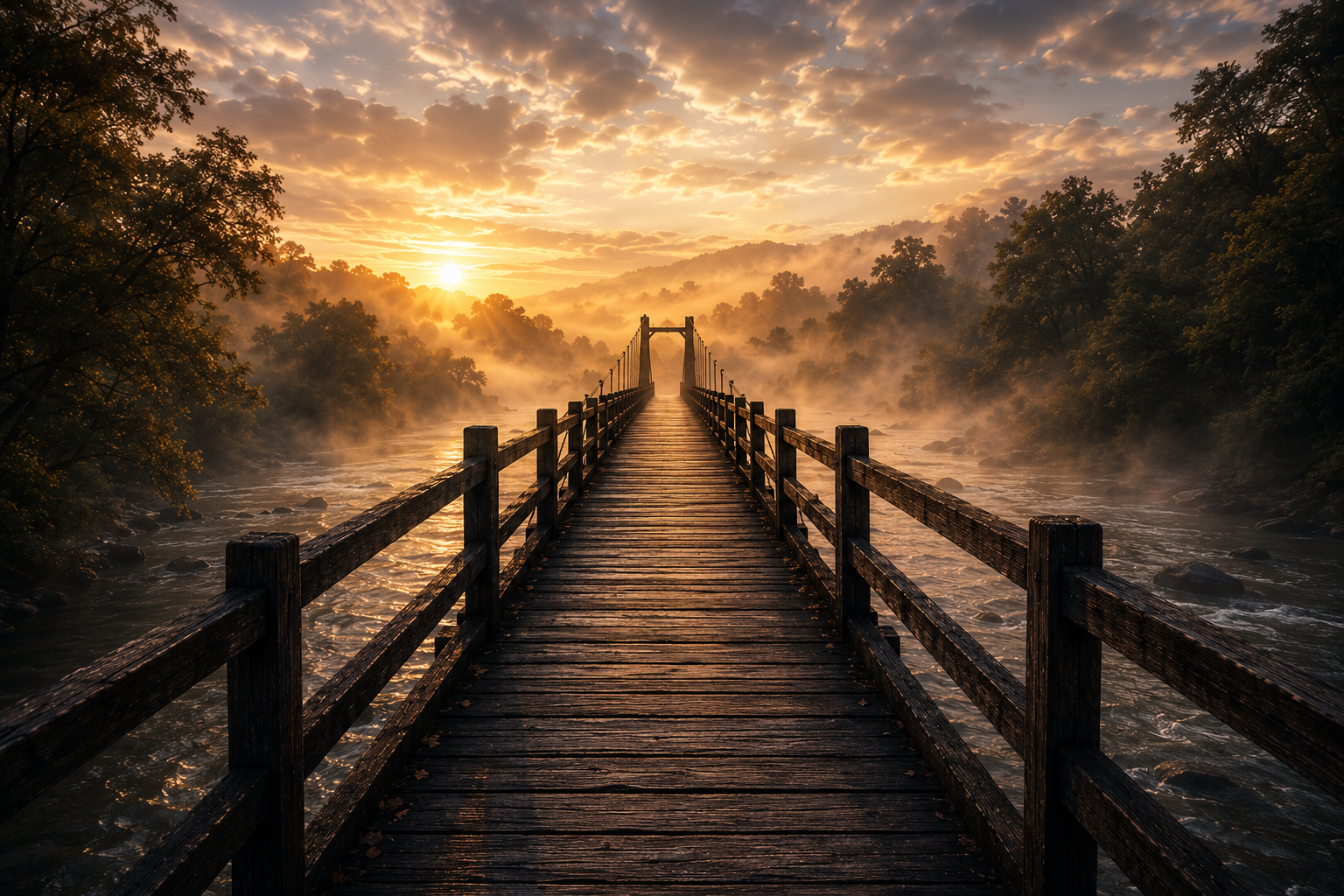
The bridge has been waiting longer than your fear.
Dear Friend,
I have stood here longer than most arguments.
Longer than governments.
Longer than family feuds.
Longer than diets.
The diets disappeared first.
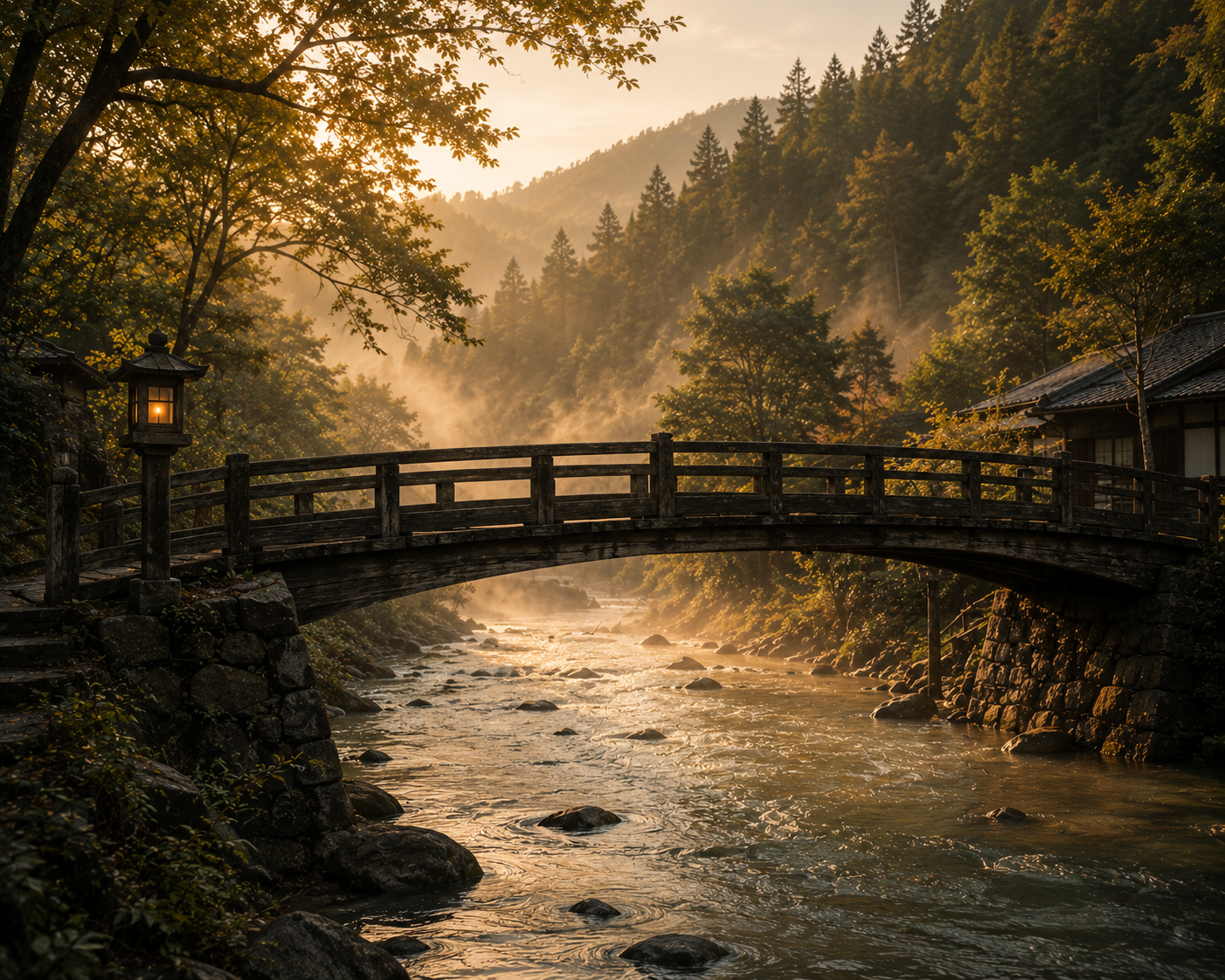
People think bridges watch rivers.
We do not.
Rivers are wonderfully predictable. They arrive, they leave, they keep becoming themselves without asking for applause.
Humans are different.
Humans arrive carrying laptops, secrets, umbrellas, childhood disappointments, unfinished conversations, reusable coffee cups, and the deeply suspicious belief that one more notification might explain their life.
Oddly enough, the coffee cup is usually the lightest thing they carry.
I have never asked anyone where they were going.
That has never been my business.
My work is simpler.
I help people leave.
Sometimes they know what they are leaving.
Mostly, they do not.
First crossing
Every bridge remembers different footsteps.
I remember a businessman who crossed me every morning.
His shoes were polished. His eyes were not.
He trusted markets, airport announcements, machines, quarterly reports, and strangers online who reviewed hotels with the emotional intensity usually reserved for betrayal.
But he did not trust rest.
Rest looked suspicious to him. Like a lazy cousin of failure.
Every morning, he crossed me carrying importance like a heavy briefcase.
One day, halfway across, he stopped.
Not because I shook.
Because he did.
He looked down at the river and realised something embarrassing.
For years, he had been rushing toward a life he never had time to live.
Some people do not need a new road. They need permission to stop running on the old one.
I said nothing.
Good bridges know when silence is better than advice.
Humans, sadly, are still working on this skill.
The handrail
Nobody thanks the handrail until the day they need one.
Support is often like that. Quiet. Unphotographed. Waiting beside the trembling part of us.
I remember an old woman.
She crossed slowly, holding the railing as if it were the hand of someone she missed.
People behind her were impatient, because modern life has somehow convinced us that even grief should maintain acceptable walking speed.
She did not hurry.
She had hurried enough in this life.
At the middle of the bridge, she closed her eyes.
Perhaps she remembered a kitchen.
Perhaps a voice.
Perhaps a chair that had stayed empty so long it had become part of the furniture of her heart.
Then she whispered something I kept forever.
“I am still here.”
There are sentences too small for history books and too large for the human chest.
That was one of them.
Rivers never argue with bridges.
They do not say, “You are blocking my view.”
They do not file complaints with the valley.
They simply keep moving.
Humans could learn something here.
We are remarkable creatures.
We can remember an embarrassing sentence from 1998 with perfect lighting, exact tone, and full emotional surround sound.
Yet we walk into a room and forget why we came.
The mind is not always a temple.
Some days it is a cupboard with all the wires tangled.
Still, I admire humans.
Not because they are strong.
Strength is often overrated and usually photographed from flattering angles.
I admire them because they keep crossing.
After promises break.
After names disappear from phone screens.
After countries change.
After children grow up.
After the body becomes less obedient.
After the future stops looking like the brochure.
They still arrive.
Standing at one end of something uncertain.
Pretending they are only looking at the view.
What was left behind
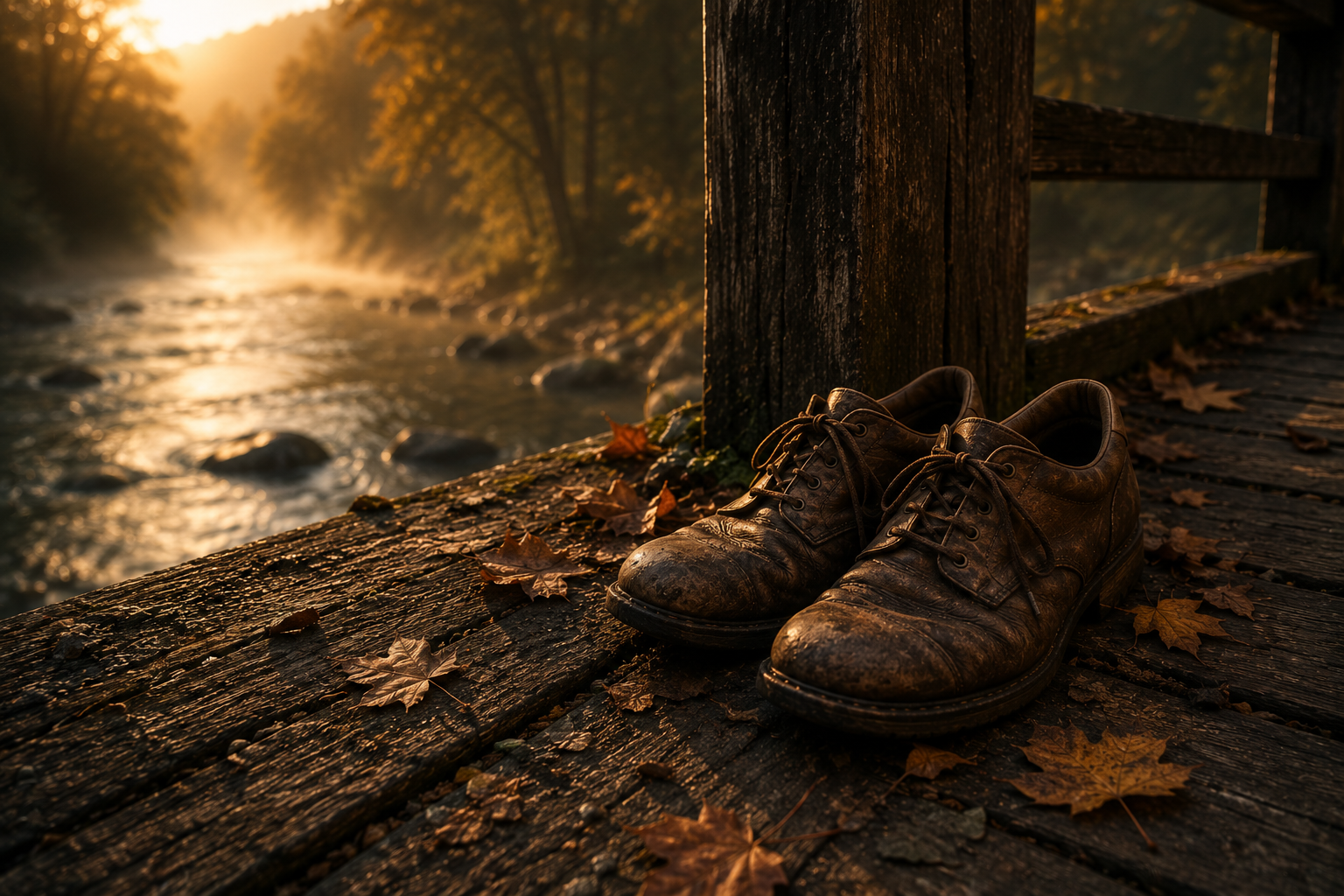
On the other side, I found an old pair of shoes.
Not dramatic. Not sacred. Just shoes. The kind someone removes when they are finally tired of running from themselves.
The shoes had been waiting longer than anyone.
Nobody looked for them.
Nobody photographed them.
Nobody wondered who finally decided, “I have walked enough in this direction.”
Perhaps growing older is not only collecting years.
Perhaps it is quietly removing unnecessary shoes.
The shoes of proving.
The shoes of pleasing.
The shoes of pretending not to care.
The shoes of walking toward people who had already closed their doors.
We wear so many things because once, somewhere, someone told us we needed them.
Ambition.
Politeness.
Silence.
Success.
A face that says, “I am fine,” even while the soul is sitting in the corner filing a formal complaint.
One day, if we are lucky, we remove something.
Not loudly.
Not for applause.
Just because the feet are tired and the road ahead deserves honesty.
The story kept quietly
Sometimes we write to remember. Sometimes we write so we may finally forget.
A little girl once stopped halfway across me.
She looked into the water and waved.
There was nobody there.
At least, nobody the adults could see.
Children are wonderfully impolite about invisible things.
They speak to dolls, clouds, shadows, dead grandparents, imaginary horses, and occasionally to furniture with more respect than adults give actual people.
Adults call this imagination.
Children call it normal.
Years later, that same girl returned as a woman.
She did not wave this time.
She stood in the same place and looked down for a long while.
I wondered if she remembered.
Then she smiled.
Not a large smile.
The small kind.
The kind that means a lost room inside the heart has opened again.
People think memory lives behind them.
It does not.
Memory is always walking nearby, pretending not to follow.
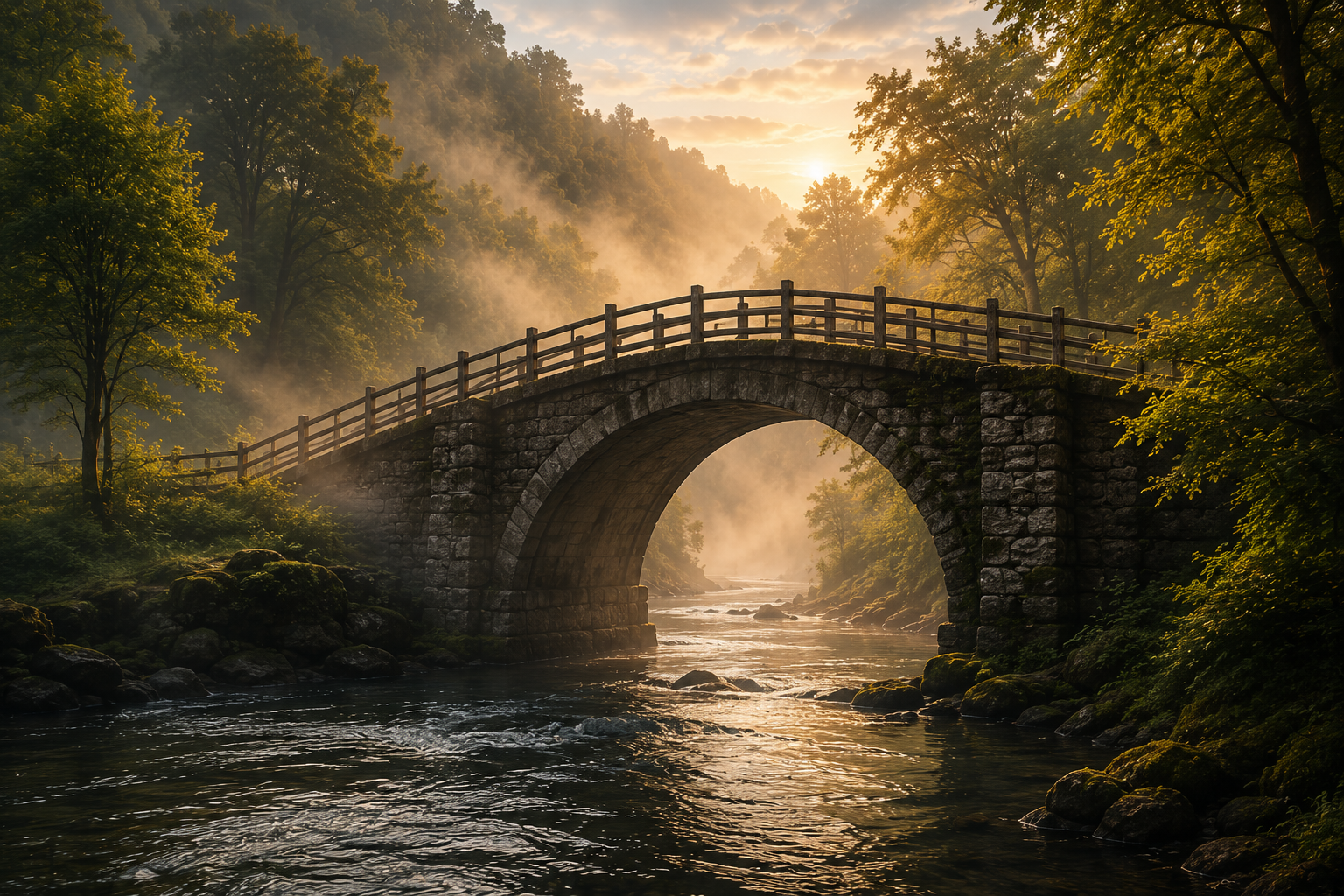
People think bridges connect places.
After centuries of watching,
I suspect they separate identities.
Nobody walks off a bridge exactly the person who walked on.
The distance may be small.
The change rarely asks permission.
One side holds the person before the apology.
The other holds the person after.
One side holds the person before the diagnosis.
The other holds the person who learns the names of medicines and still notices the moon.
One side holds the person before leaving home.
The other holds the person who learns that belonging can be rebuilt, though never with the same furniture.
One side holds the person who believes they cannot survive the loss.
The other holds the person who does survive it, then feels almost guilty for laughing again.
Please do not feel guilty.
Joy has never been disrespectful to grief.
They know each other well.
They often sit at the same table, passing salt in silence.
The bridge was never connecting two places. It was connecting two versions of the same soul.
Evening arrives
Some decisions deserve tea before answers.
Modern life prefers notifications. Old souls preferred kettles. I am not entirely convinced civilisation improved this arrangement.
I have seen flowers left here.
Letters.
Coins.
A school ribbon.
A wedding ring.
One umbrella, abandoned with great drama during a storm, as if the umbrella itself had betrayed the family.
Humans leave objects when they cannot leave feelings.
They say goodbye to a place because saying goodbye to a person is too large.
They throw a stone into the river because anger needs movement.
They press a hand to the railing because love, when it has nowhere else to go, still looks for a surface.
I keep these things.
Not the objects.
Objects go missing.
Rain takes some. Birds investigate others. Children, the world's finest archaeologists, relocate everything.
I keep the moment.
The breath before leaving.
The hand that trembled.
The sentence not spoken.
The part of someone that stayed behind because the rest of them had to continue.
Yesterday, someone left flowers.
Twenty years ago, someone left anger.
Last Tuesday, a little boy left a paper boat.
This morning, perhaps, you left something too.
You simply have not discovered what it was yet.
Do not worry. The bridge noticed.