Healnest Global Stories · Papua New Guinea
When the Skin Remembers Who You Are
In Papua New Guinea, tribal body painting is not decoration. It is identity, ceremony, memory — and a quiet return to belonging.
There are places where identity is written on paper. And there are places where identity is worn on the skin.
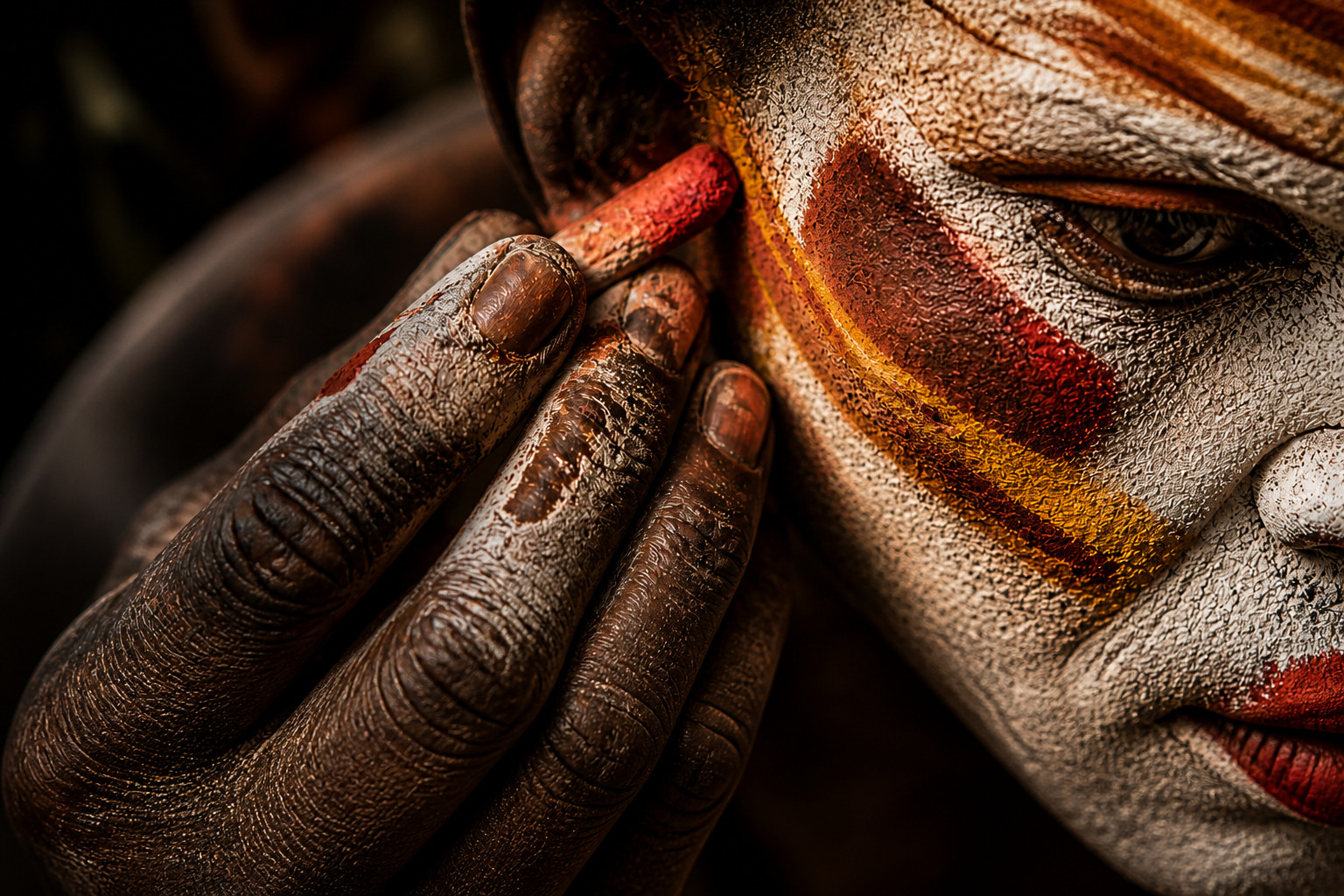
Skin before speech
In Papua New Guinea, before a word is spoken, before a name is introduced, the body may speak first. A face, a shoulder, a chest, a line drawn across the skin — these can tell a story of place, family, ceremony, courage, transition, and memory.
To an outsider, the colors may first appear as spectacle. Beautiful, yes. Striking, certainly. The kind of visual richness that makes cameras rise almost automatically. But beauty is only the doorway.
Beyond it lies something deeper: belonging. The body is not treated as something to hide, correct, or endlessly improve. It becomes a surface of recognition. A person is not merely decorated. A person is seen.
This is not fashion. It is remembrance made visible.
Earth pigments, ash, clay, charcoal, crushed plants, natural minerals — materials taken from the land become signs of identity. The same ground that feeds the community also marks the body. The same landscape that surrounds a person becomes part of how that person is presented to the world.
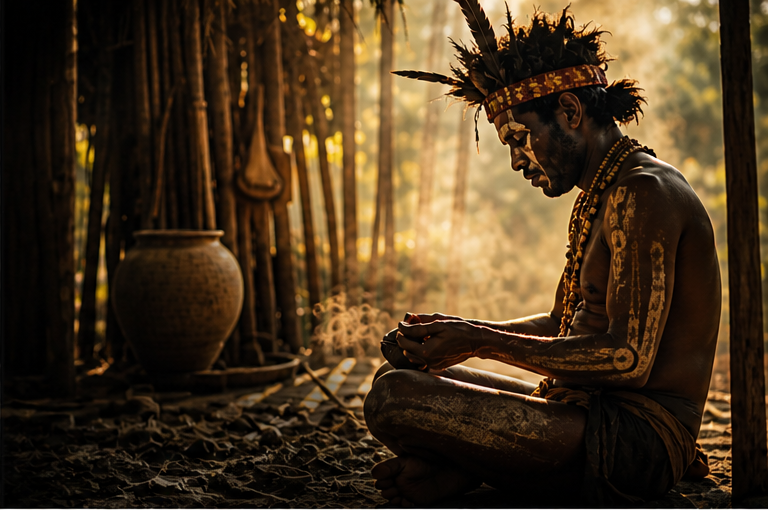
Not costume. Continuity.
What appears as performance to the visitor may be, for the community, a living archive of ancestry, place, and pride.
The painting begins before the paint
The most powerful moment may not be the final appearance. It may be the quiet preparation before it. The sitting still. The slowing of the breath. The surrender to another person’s hands.
Paint is applied with care. Not hurried. Not casual. A line arrives. Then another. Color gathers. The face changes. But strangely, it does not feel like a disguise.
It feels like an unveiling.
“I see you. I remember who you are. I prepare you for who you must be.”
The silent message of ritual touchIn many modern lives, touch has become functional. A handshake. A medical check. A hurried pat on the back. But ritual touch is different. It says: you are not alone in becoming yourself.
A young person stepping into adulthood. A dancer entering ceremony. A community member standing before others with pride. The painted body becomes more than an individual body. It becomes a shared statement: this person belongs somewhere.
Earth, spirit, strength
Colors and markings differ across communities and occasions. Still, many traditional palettes carry emotional weight — drawn from land, spirit, protection, vitality, and ancestral memory.
Red
A color of life force, blood, energy, and human warmth. Red does not whisper. It announces that life is present.
White
A color often connected with spirit, ash, light, and the unseen. White can feel like a bridge between body and mystery.
Black
A grounding color of protection, depth, seriousness, and strength. Black gives the design its silence and authority.
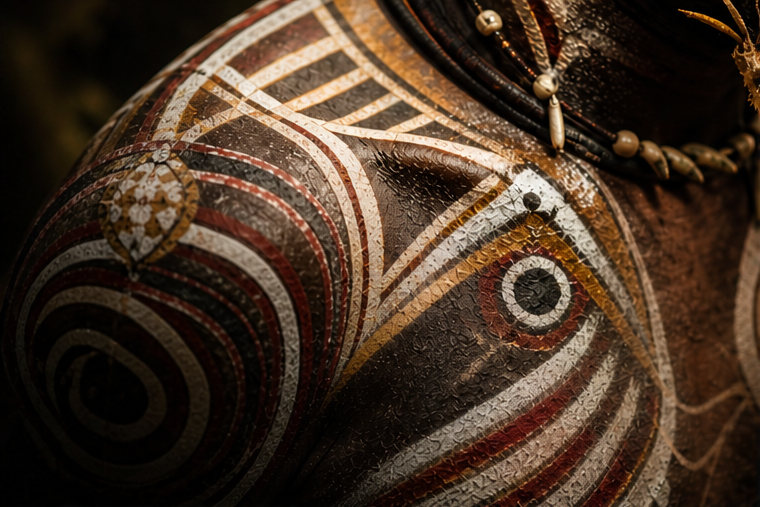
Maps drawn on the body
Some markings echo rivers. Some carry the feeling of mountains, leaves, birds, masks, bones, fire, or ancestral memory. Some may be understood only by those within the tradition itself.
And perhaps that is part of their power. Not everything sacred must explain itself to the camera.
In a world that asks everything to be instantly understandable, searchable, captioned, and conveniently packaged, these markings remind us that identity is not always a public document.
Some parts of who we are are meant to be honored, not consumed.
The painted body becomes a map — of lineage, place, ceremony, confidence, and continuity. It says: I come from somewhere. I stand within something. I carry more than myself.
The courage to be visible
Many of us know the exhaustion of editing ourselves. We soften our accents. Hide our tenderness. Reduce our stories into polite sentences. We become smaller, smoother, easier to accept.
And then we wonder why we feel disconnected.
This is where the wisdom of body painting touches something universal. It reminds us that healing is not always about becoming calmer, quieter, or more acceptable. Sometimes healing is the brave act of becoming visible again.
To wear identity on the skin is to say: I will not disappear from myself.
Even when the paint washes away, the memory of being seen remains.
A small ritual of remembering
This is not an imitation of Papua New Guinea’s sacred traditions. It is a quiet personal reflection inspired by the deeper idea: that identity can be honored through the body, with care and humility.
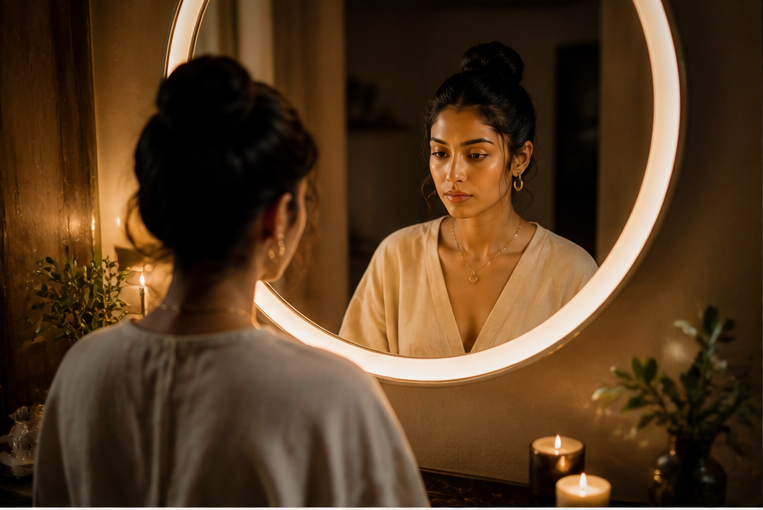
Stand before a mirror
Not to judge the body. Not to inspect age, shape, or tiredness. Simply arrive before yourself honestly.

Touch one place gently
Your wrist, your chest, your forehead, or your hand. Choose a place that feels quietly meaningful.

Make one simple mark
Use water, natural oil, or nothing at all — even an invisible mark can carry intention.
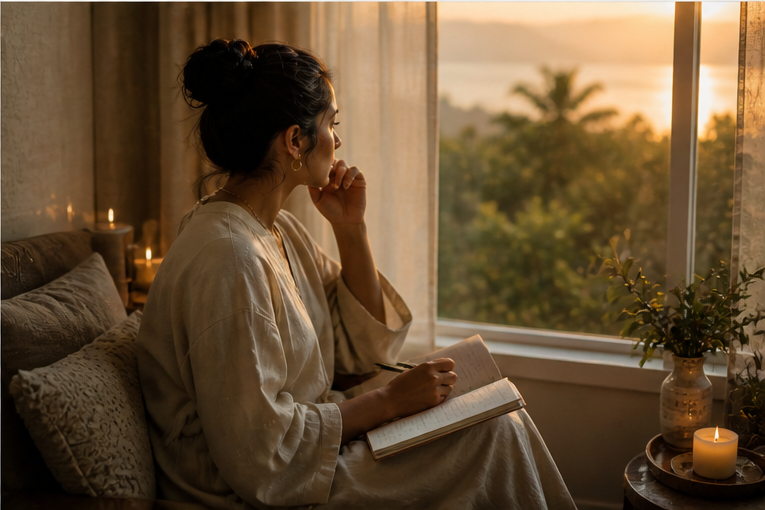
Ask one question
“Who am I when I am not trying to become acceptable to everyone?” Let the answer arrive slowly.
Who are you when nobody asks you to shrink?
We live in a world that often rewards polish more than presence. Smoothness more than truth. Neutrality more than character.
But the painted body of Papua New Guinea offers another kind of wisdom: identity is not something to apologize for. It is something to remember, carry, and sometimes — with dignity — reveal.
You do not need to become someone else.
Sometimes healing begins when we stop polishing ourselves into silence. Sometimes it begins when we return to the original pattern — the one life placed inside us before the world taught us to hide it.