History & Origins of Meditation
Long before apps, courses, cushions and clever instructions, human beings sat beside fire, river, forest and sky, trying to understand the strange weather inside the mind.
The first meditation probably had no name.
Before kingdoms. Before scriptures. Before anyone decided to turn peace into a method with bullet points. People watched fire. They listened to rain. They sat beside the dying. They looked at stars and noticed that the mind, despite all its noise, could sometimes become very still. Meditation began there — not as a technique, but as a human response to wonder.
A Quiet Timeline
Not a dry list of dates. A slow walk through the places where human beings gave silence a shape.
Fire, forest, sky
Early humans learned attention from survival: listening, waiting, watching without naming everything.
Dhyāna
India gave inner observation one of its oldest philosophical homes through contemplation, breath and inquiry.
The practical path
Meditation became a direct way to observe suffering, craving, compassion and liberation.
Chan to Zen
Silence became mountain, brushstroke, tea, garden, posture and the discipline of direct seeing.
Contemplation
In monastic life, stillness became prayer, listening and a sacred interior room.
The brain is measured
Neuroscience began studying what ancient cultures had long practiced: attention changes us.
Where inner seeing found language.
India did not invent silence, but it gave silence a grammar. Through early contemplative traditions, the human mind was treated not as a machine to control, but as a field to observe.
Words such as dhyāna pointed toward meditation as deep attention — a way of turning inward without abandoning the world.
The body sat still so the inner world could finally be heard.
Silence became practical compassion.
The Buddha did not offer meditation as decoration. He offered it as a way to understand suffering at its root.
Breath, awareness, compassion and clear seeing became tools for ordinary people — not only scholars, priests or the spiritually fashionable.
To sit was not to escape pain. It was to stop being ruled by it.
Silence learned the beauty of simplicity.
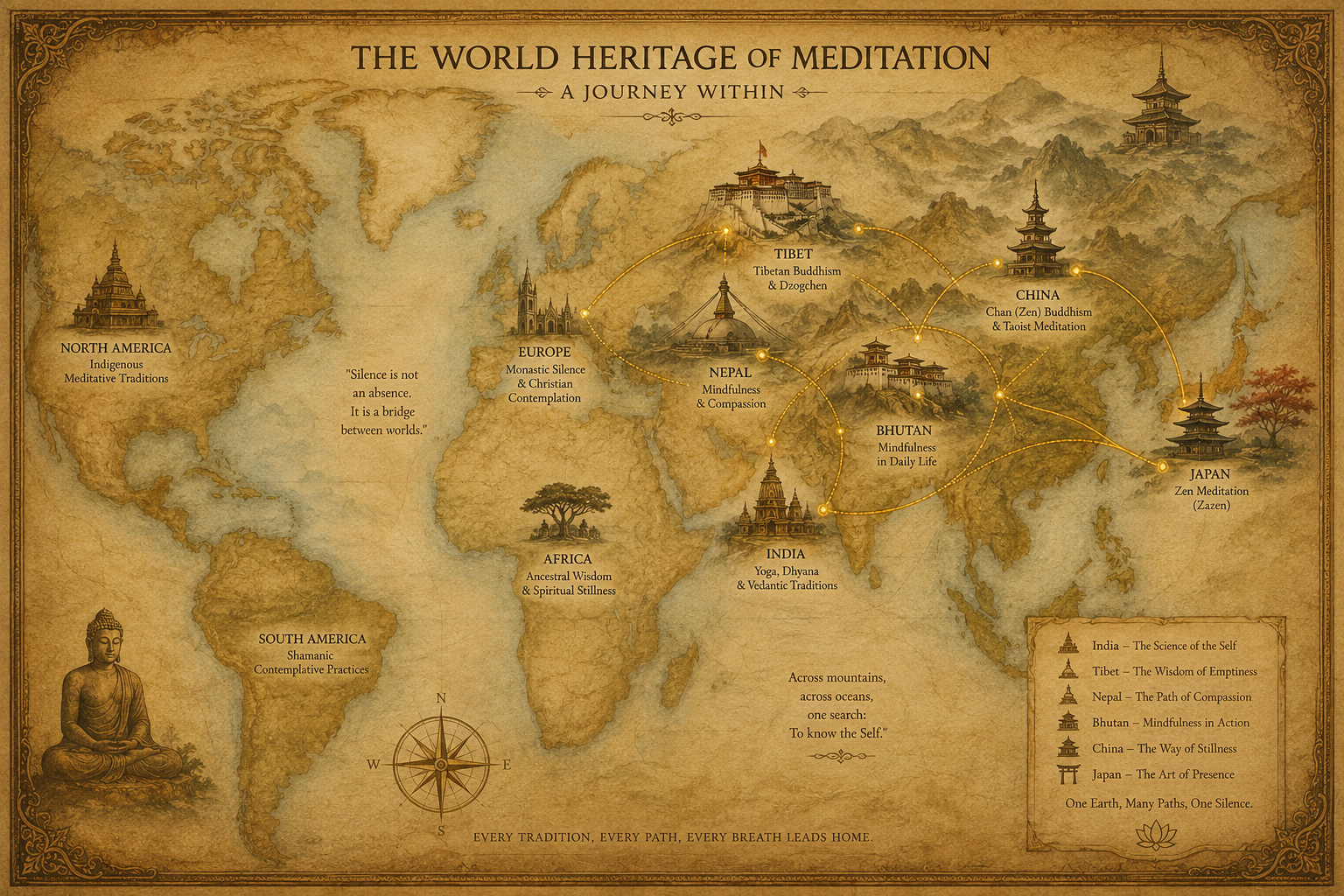
As contemplative traditions travelled, they changed language, clothing and architecture — but not their deepest invitation.
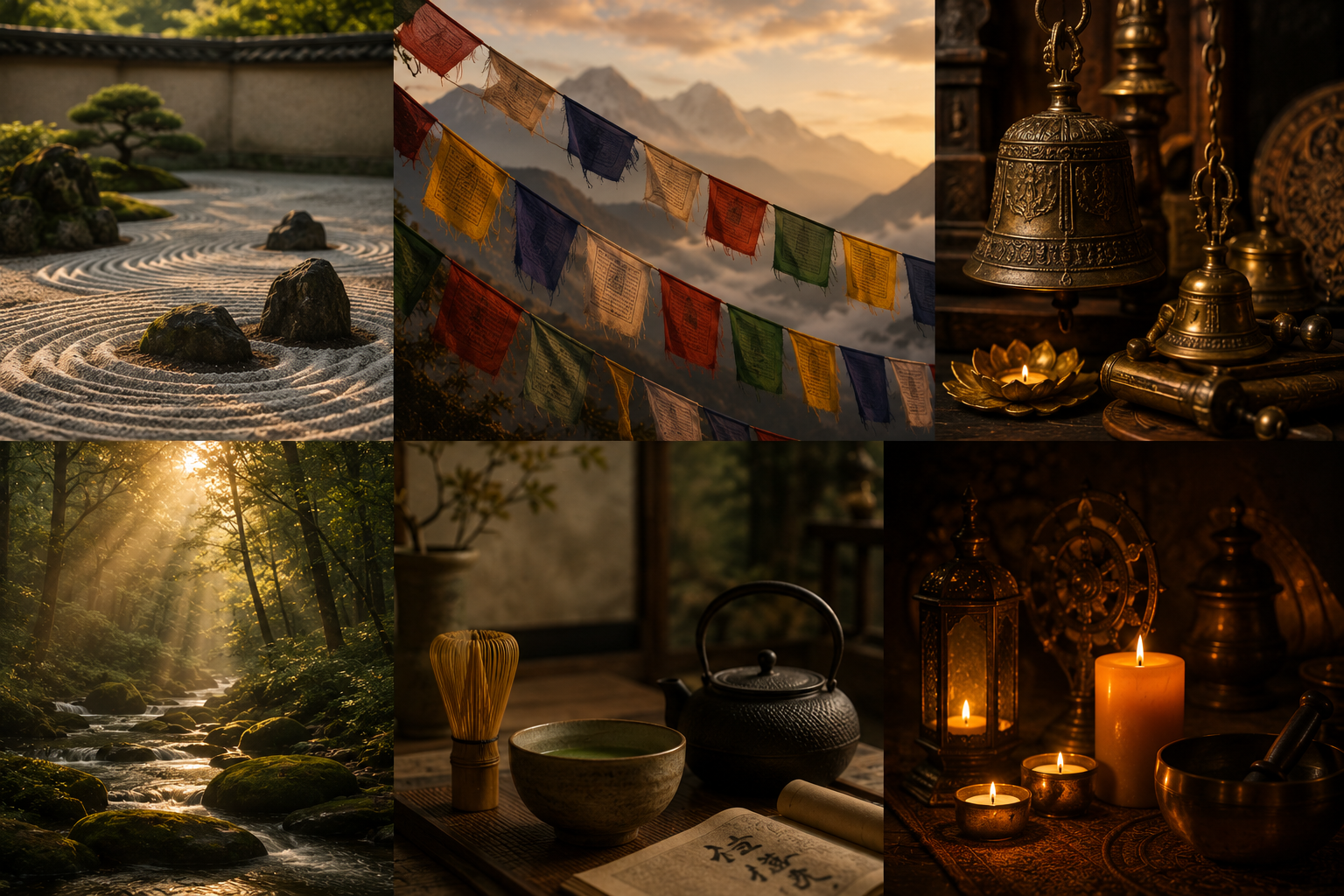
In Japan, Zen became visible through gardens, tea, calligraphy, posture and the radical dignity of doing one thing completely.
A rock garden does not explain peace. It lets you notice your own noise.
The West also built rooms for silence.
In Christian monasteries, contemplation became a life of listening. Prayer was not always speech; sometimes it was stillness, humility and the slow cleaning of the heart.
Across stone corridors and candlelit rooms, human beings practiced the same ancient art: making space for what cannot shout.
Not all silence is empty. Some silence is full of listening.
Many Cultures, One Human Need
Every culture shaped meditation differently. That is not confusion. That is beauty.
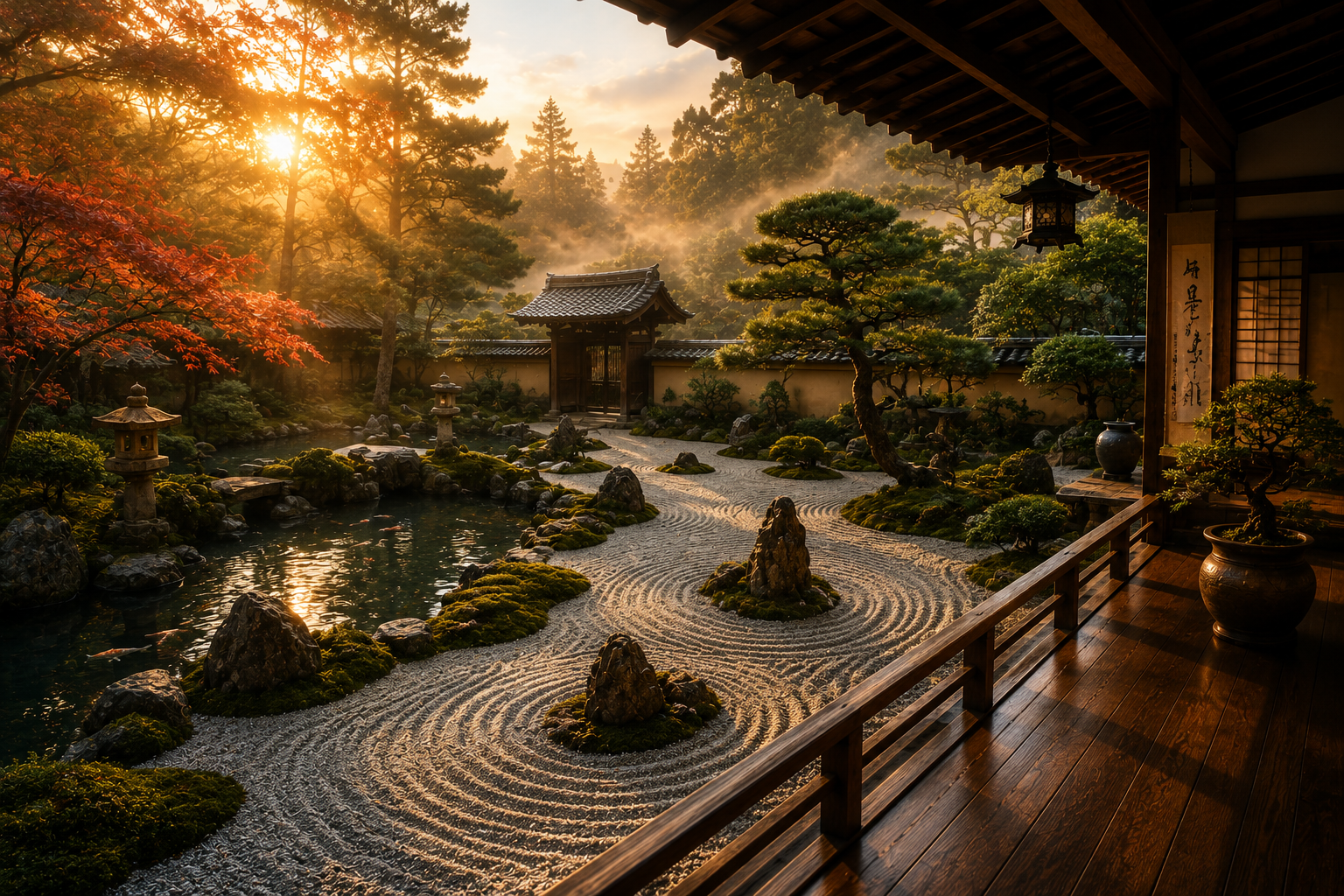
Japan
Zen, gardens, tea and quiet discipline.

Nepal
Mountain silence and prayerful landscapes.
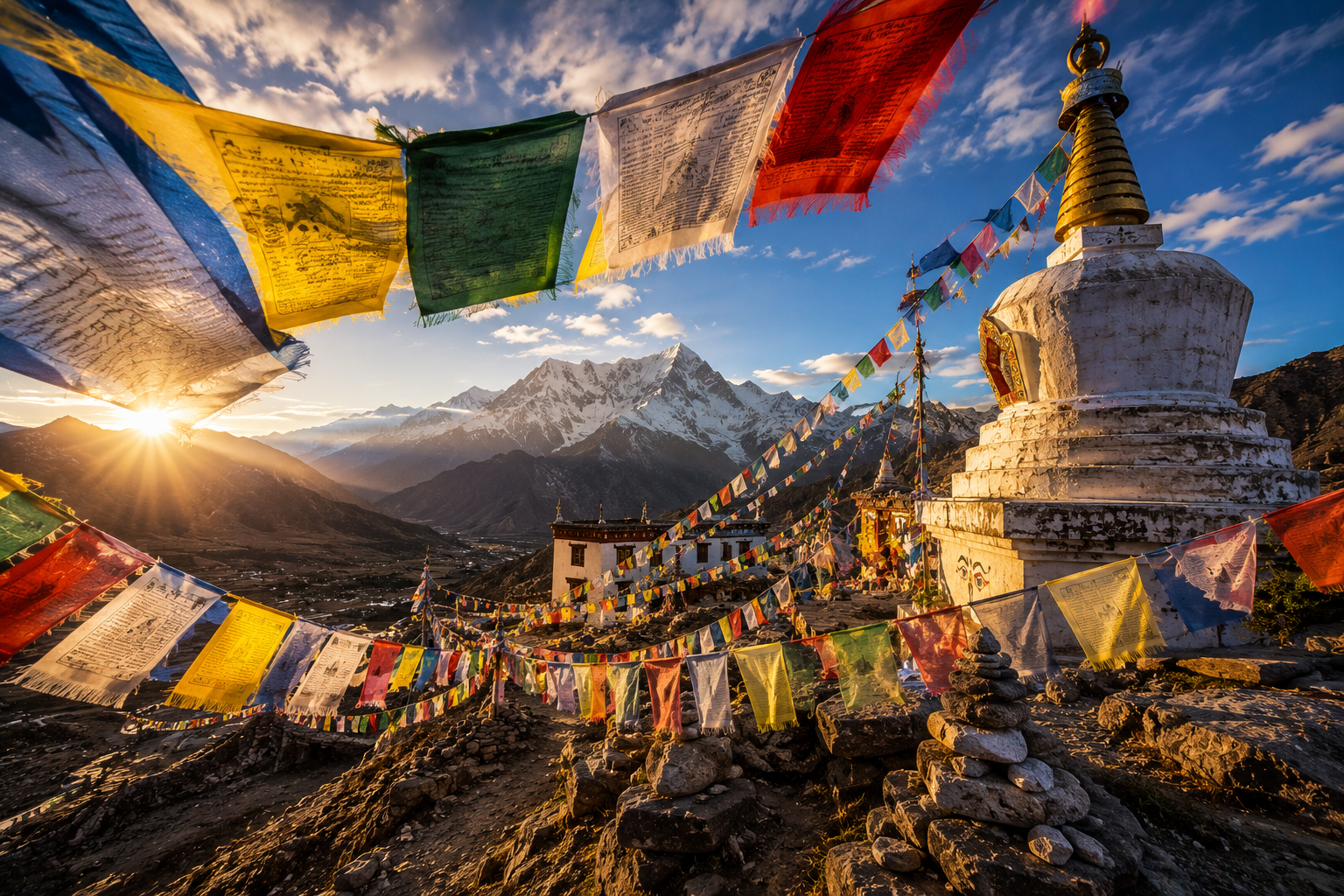
Tibet
Mantra, compassion and sacred visualization.
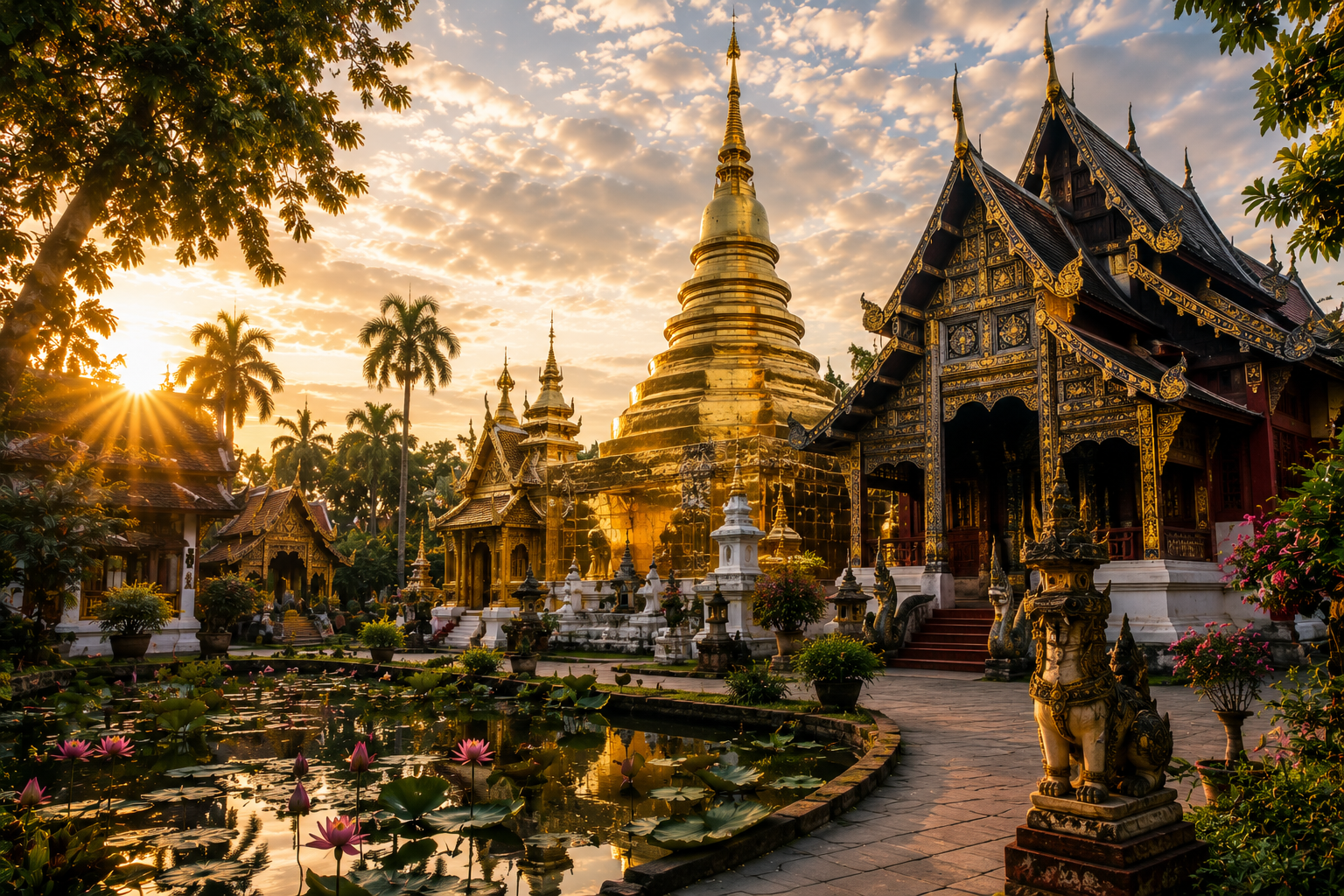
Thailand
Mindfulness, monastic rhythm and gentle observation.
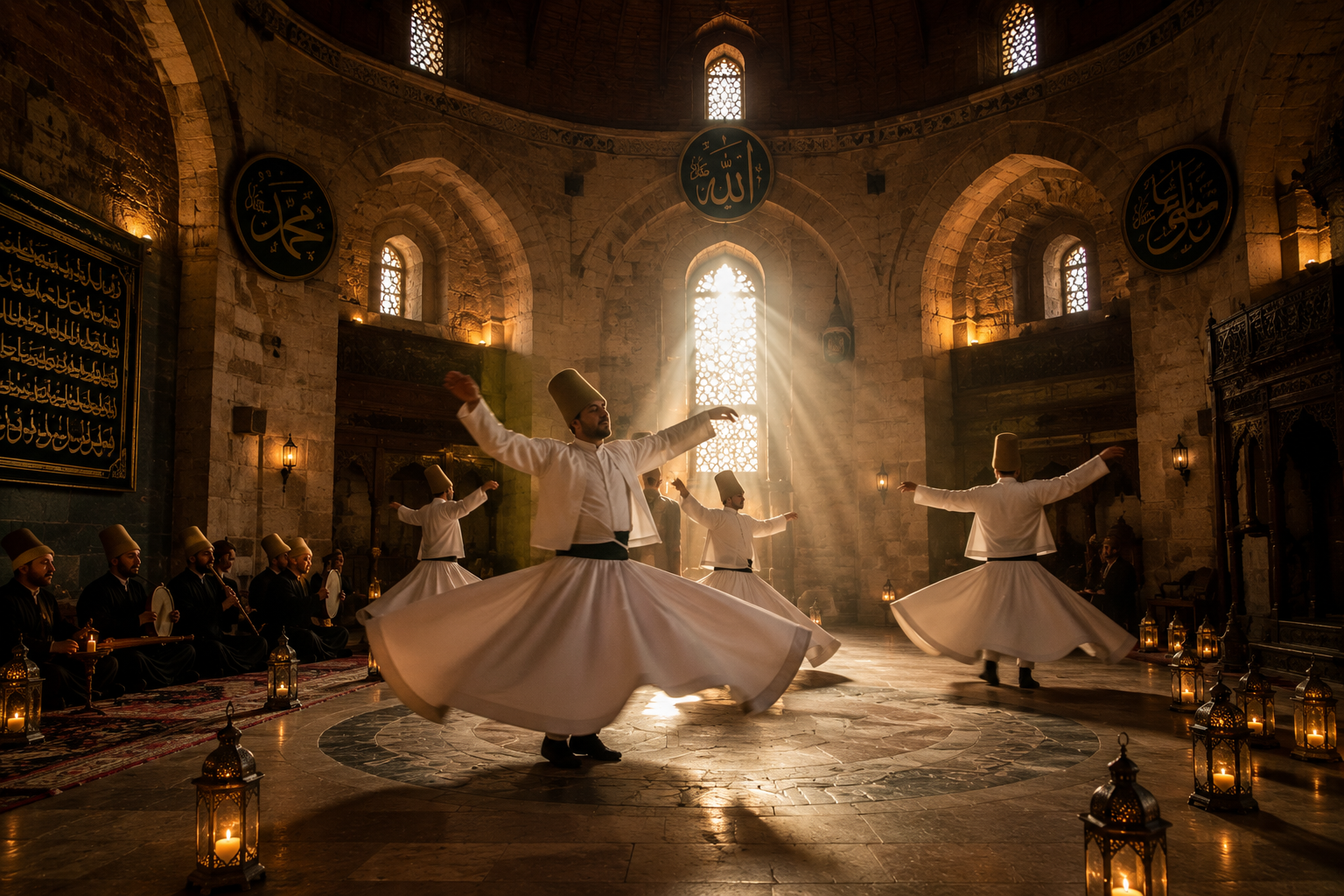
Sufi Worlds
Remembrance, devotion and movement toward the heart.
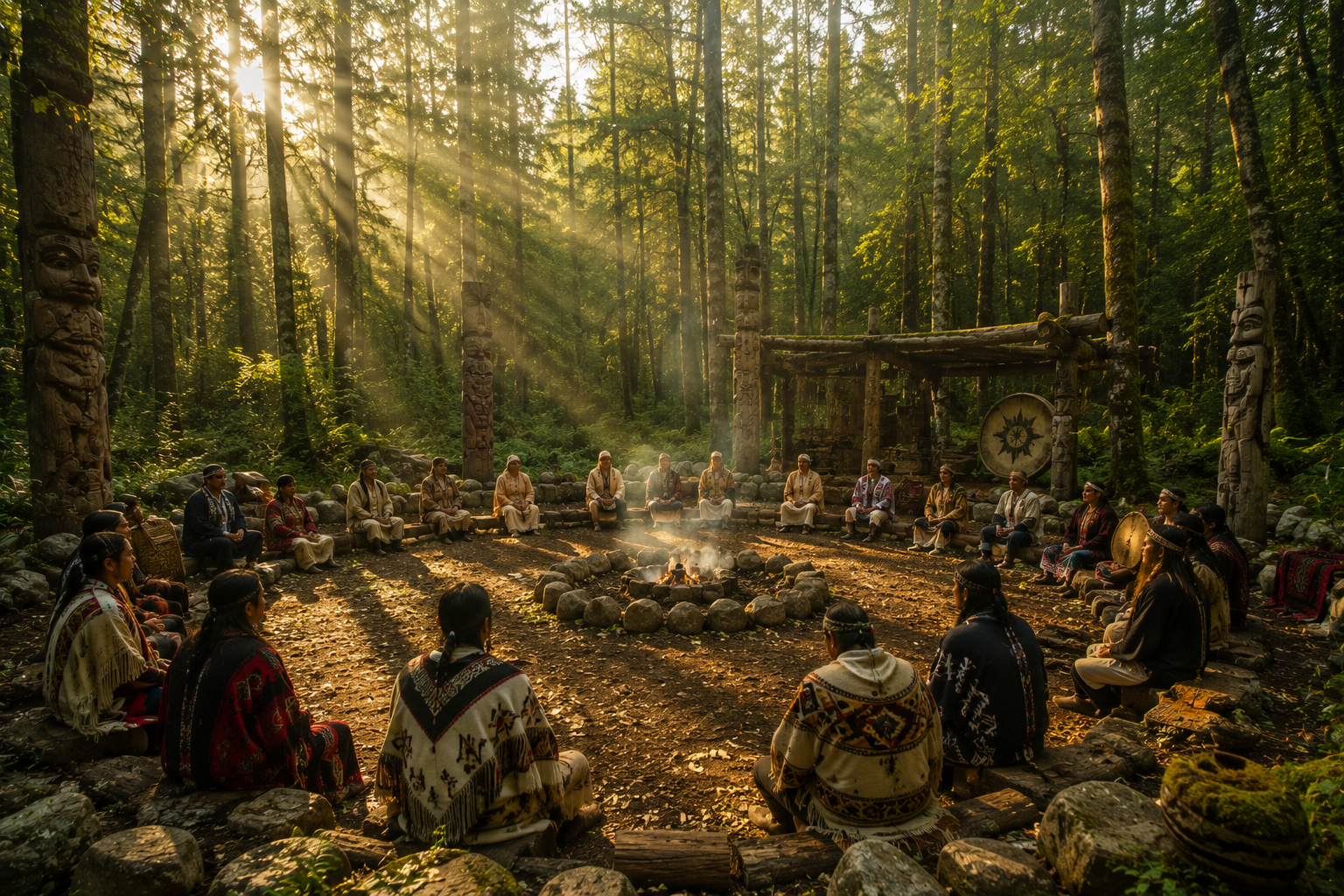
Nature Traditions
Listening to forest, ancestor, animal, sky and earth.
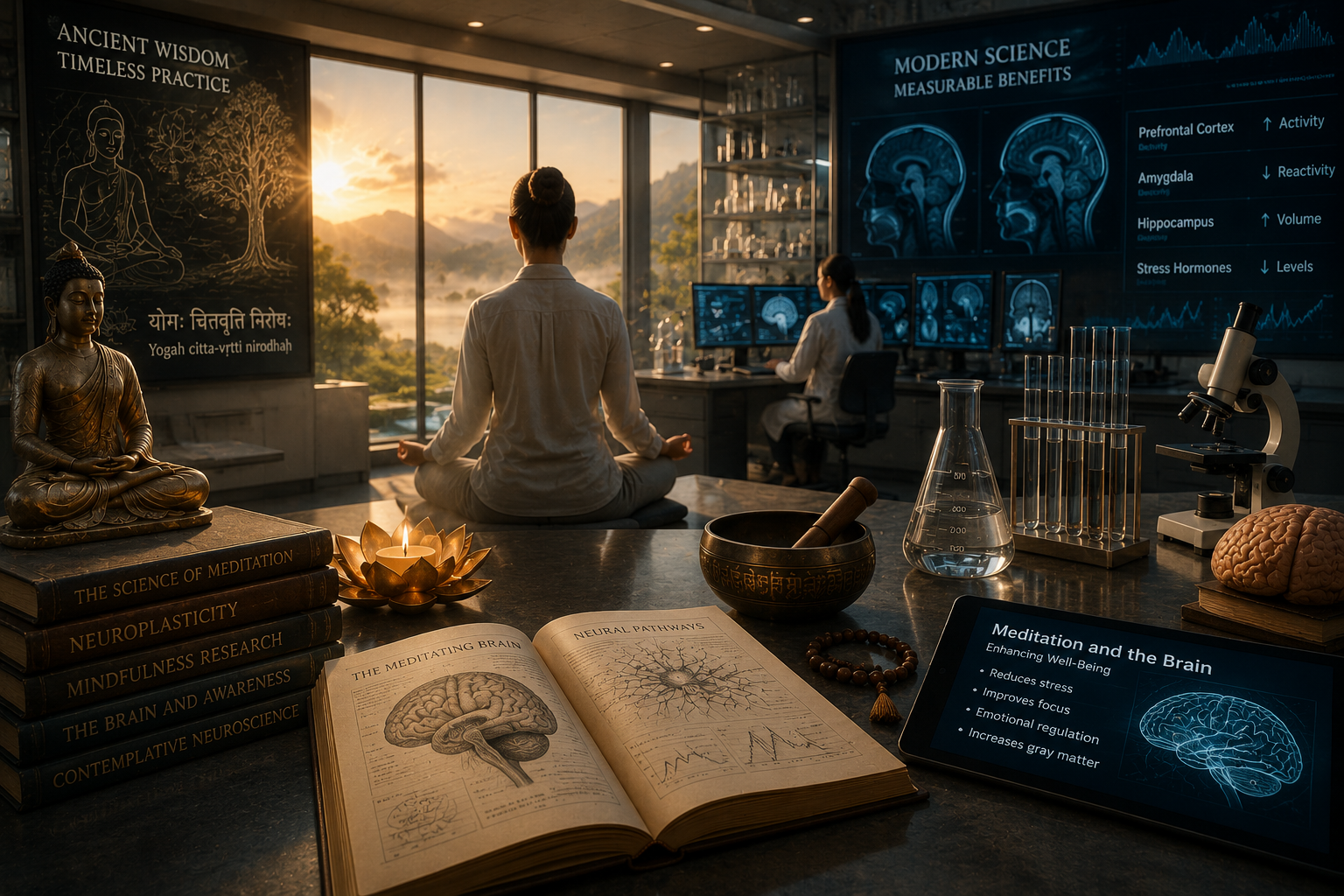
The laboratory finally entered the monastery.
Modern science began measuring attention, stress, sleep, emotion and brain plasticity. Machines arrived very late to a conversation the human heart had been having for thousands of years.
Science does not replace the old wisdom. At its best, it gives new language to something ancient: the mind can be trained, softened and steadied.
The ancient world practiced. The modern world measured.
India called it Dhyāna. China called it Chan. Japan called it Zen. The forest never called it anything. Yet all of them sat beneath the same sky.
One silence, many doorways.
Continue the Journey
Now that we have walked through the origin, we can enter the living cultures of meditation.
 Next Room
 Explore
 Later Room
 Practice