Meditation Around the World
Across mountains, deserts, monasteries, gardens, temples, forests and homes, human beings have always searched for a place where the mind can stop shouting.
Meditation did not belong to one place. It learned the accent of every culture it touched.
In one country, it became a garden. In another, a mountain path. Somewhere else, a prayer, a chant, a candle, a bowl of tea, a drum beneath stars. The names changed. The clothing changed. The invitation remained strangely familiar: come back.
The Atlas of Stillness
Each card opens a different cultural doorway into silence, without reducing any tradition to a slogan.
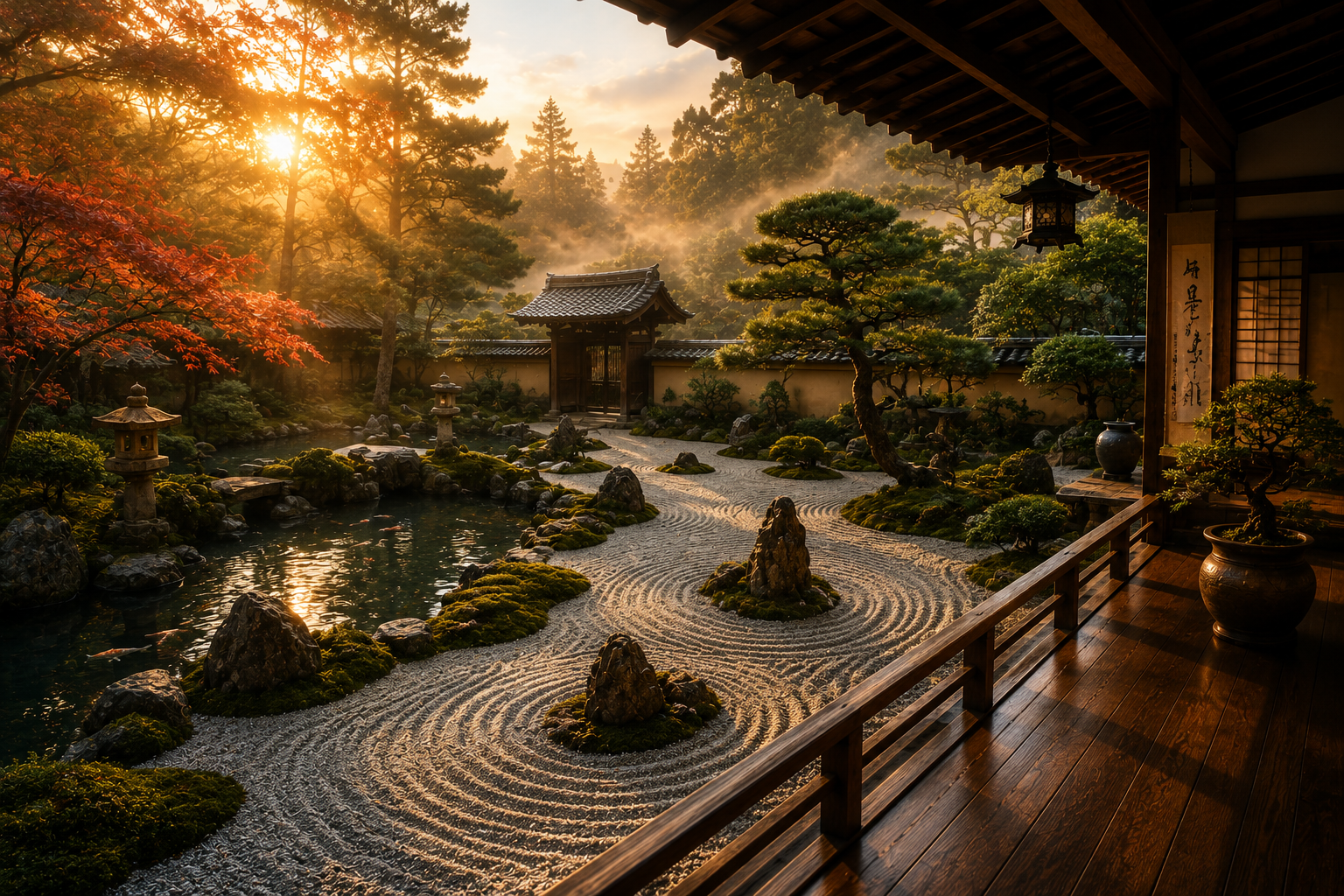
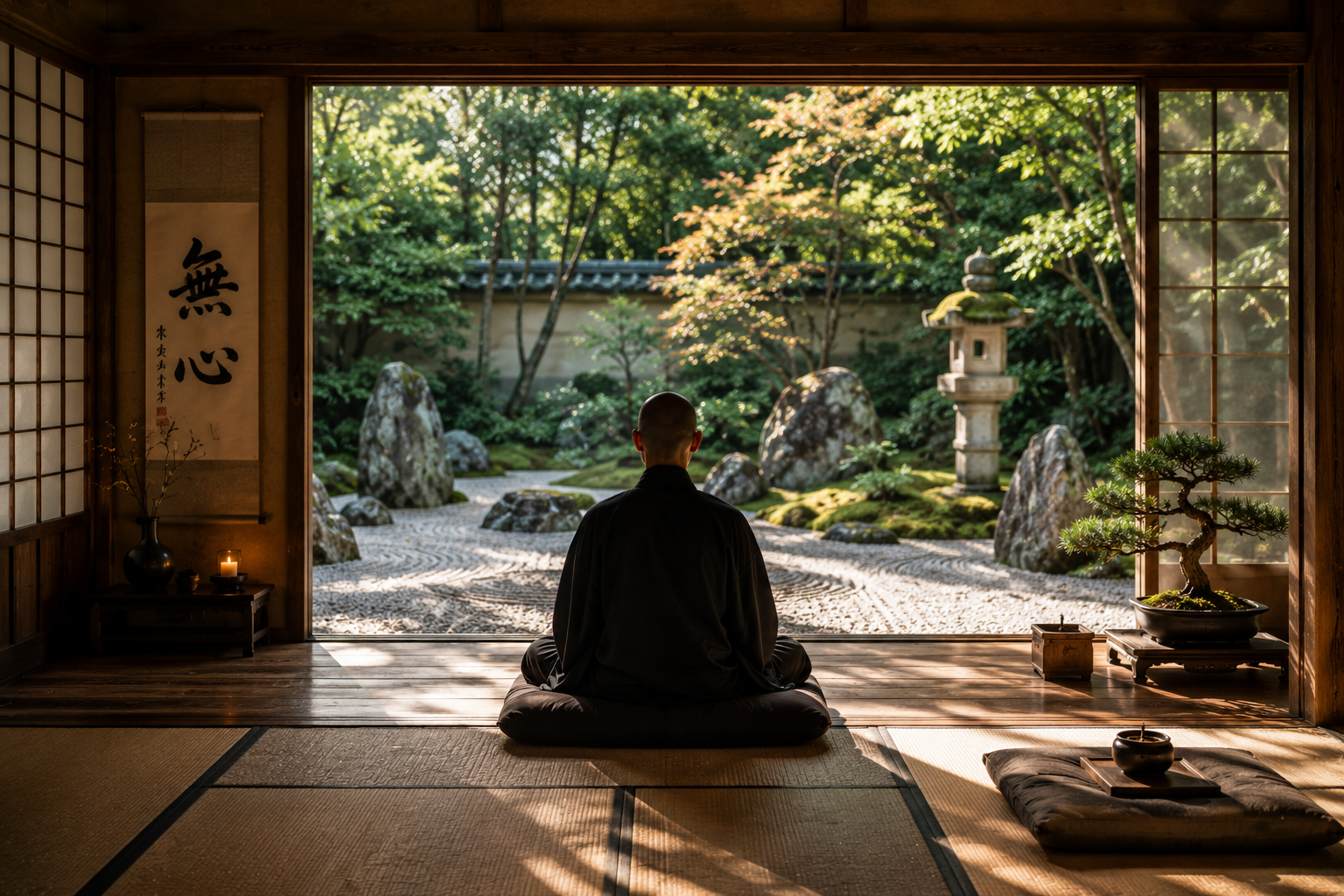
Zen Garden
Silence shaped through stone, moss, tea, brush and the dignity of less.
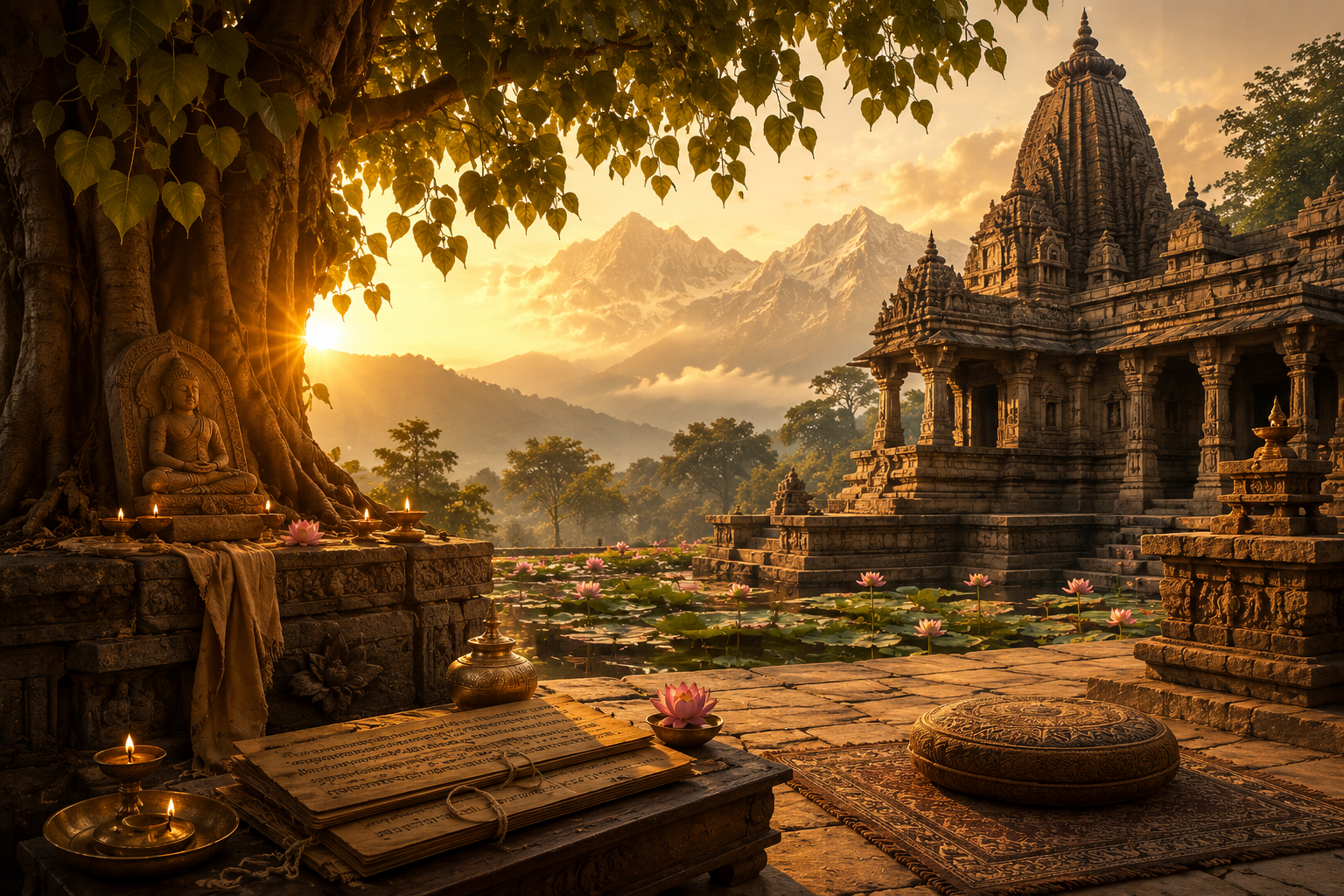
Dhyāna
The inner path of attention, inquiry and breath.
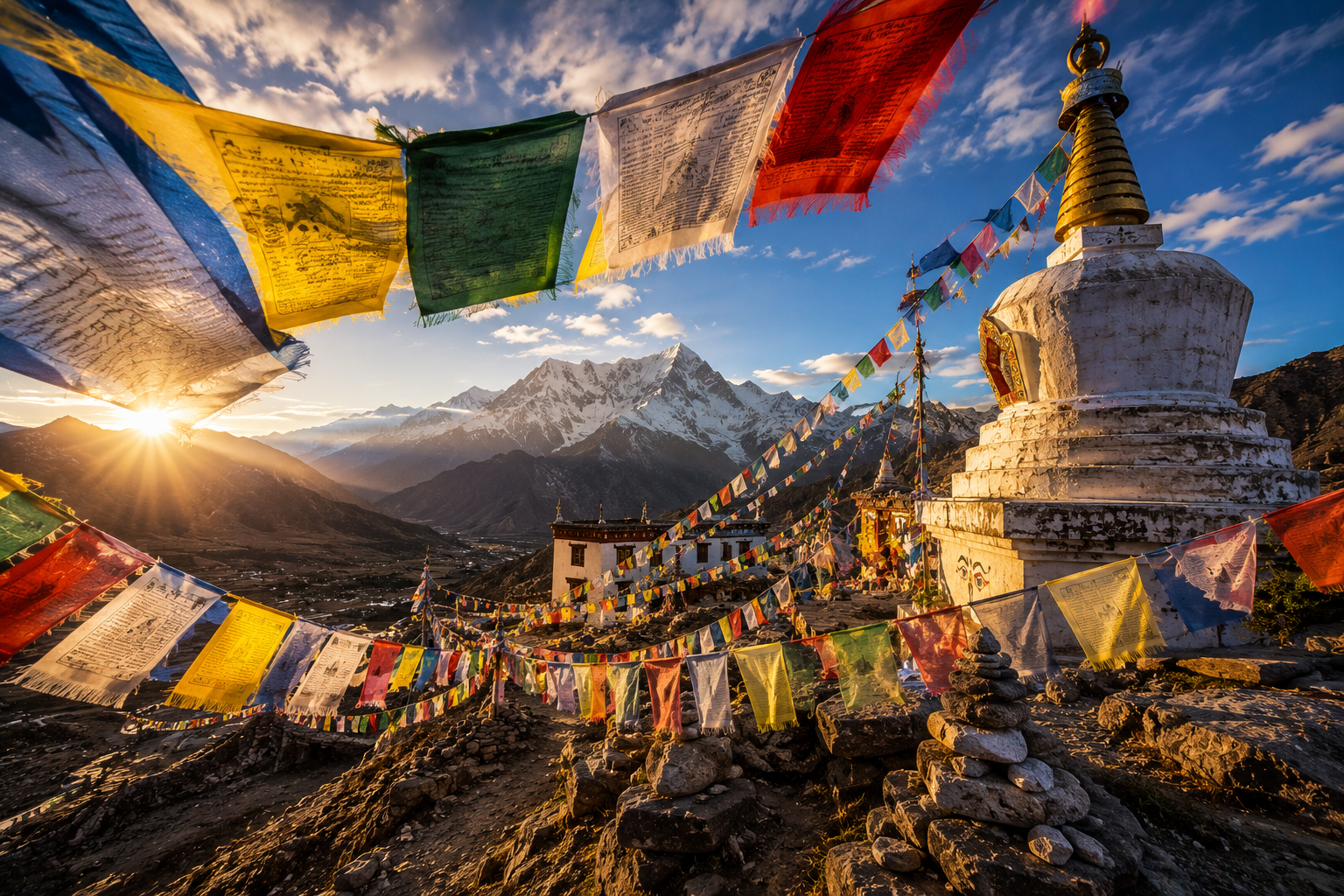
Compassion
Mantra, visualization and the courage of an open heart.
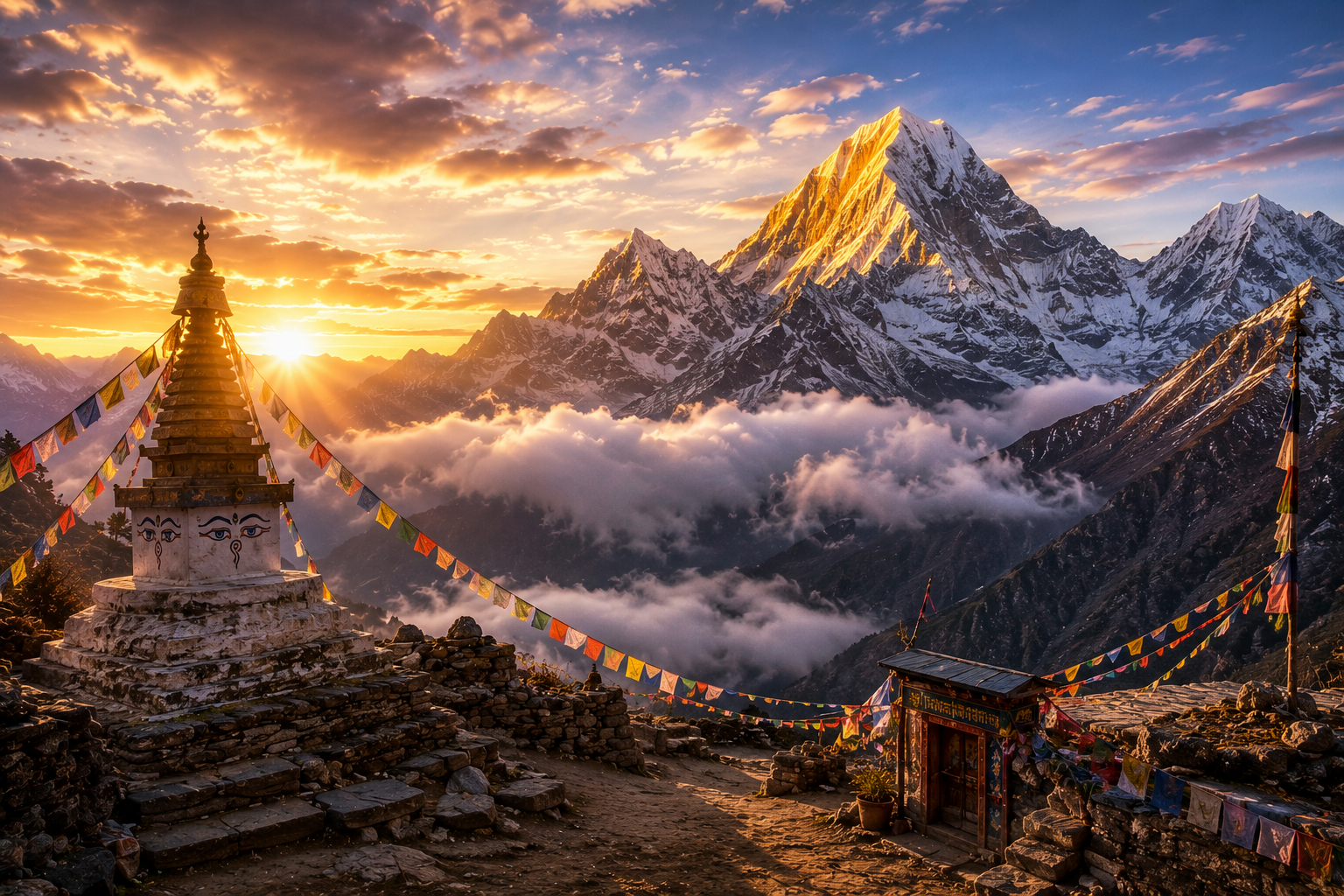
Mountain Prayer
Where altitude teaches humility without giving lectures.
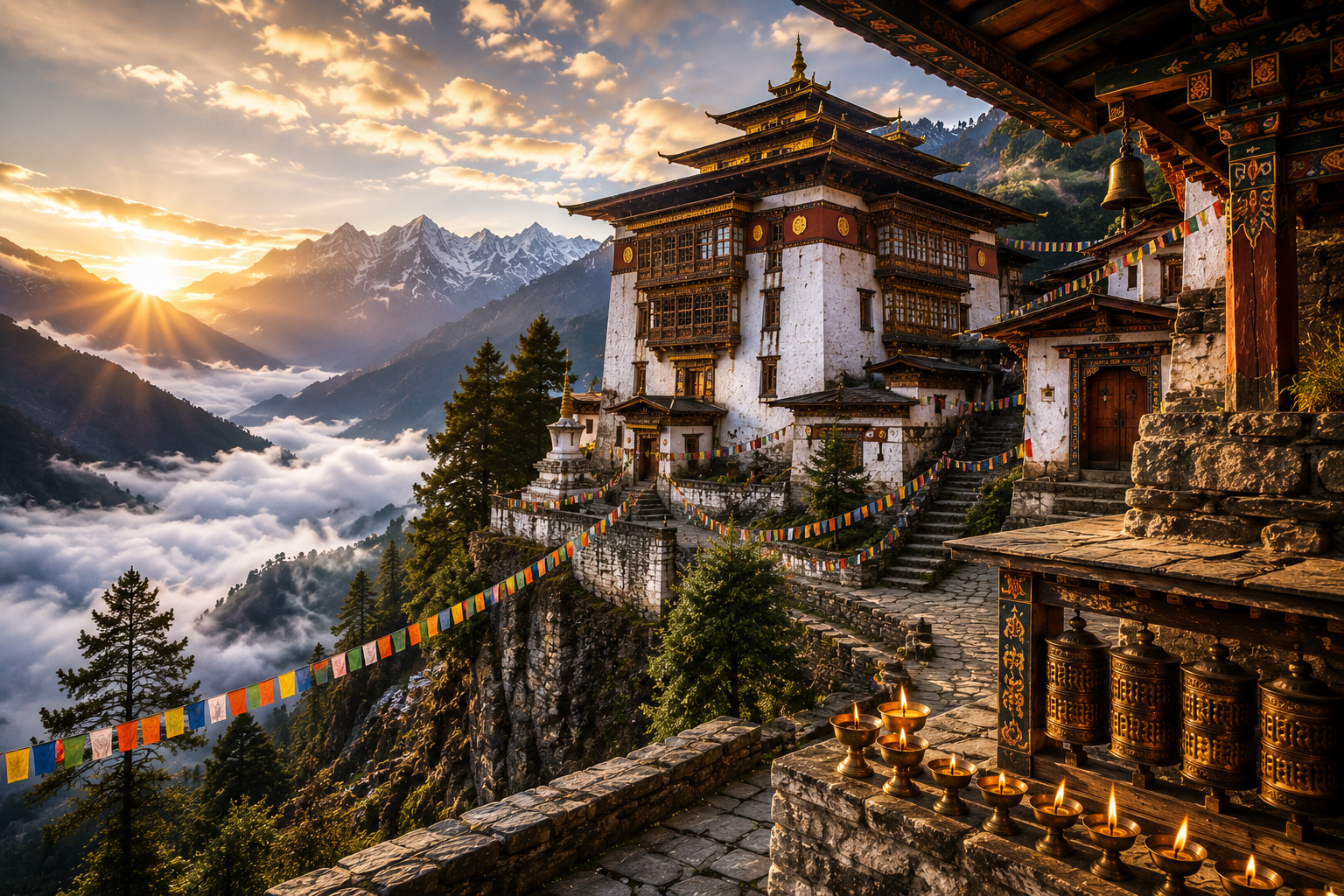
Cliff Monastery
Stillness balanced between sky, rock and devotion.
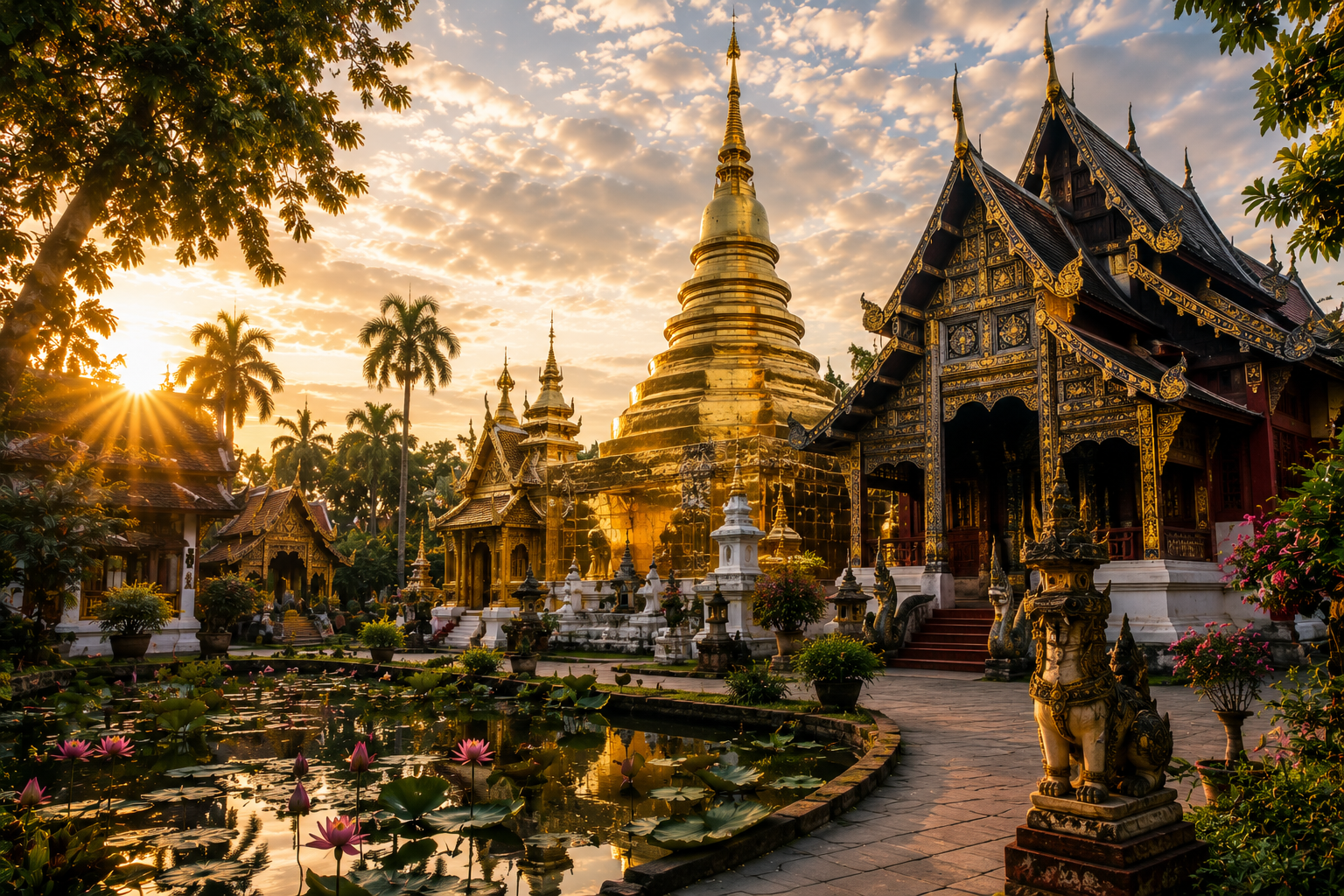
Mindful Rhythm
Monastic simplicity and gentle observation.
Silence became design.
In Japan, meditation did not remain only on the cushion. It entered gardens, tea rooms, calligraphy, architecture, seasonal rituals and the careful placement of empty space.
Zen teaches through reduction. A stone garden says almost nothing, which is exactly why the mind begins confessing everything.
Japan did not decorate silence. It framed it.
Silence became inquiry.
India gave meditation some of its oldest philosophical language. The question was not merely how to relax, but how to understand the self, the mind, suffering, awareness and liberation.
Dhyāna became a doorway into deep attention — not withdrawal from life, but seeing life more clearly.
India asked the mind to look at itself without immediately believing itself.
Silence became compassion.
Tibetan traditions often carry meditation through mantra, visualization, devotion and the cultivation of compassion.
Prayer flags do not shout. They offer themselves to wind. In that simple image lives a whole philosophy: the heart can practice generosity even when nobody is watching.
Compassion is silence that learned how to move.
Silence became altitude.
In Nepal, meditation lives near mountains that make human pride feel very small, which is frankly useful.
The Himalayas do not argue. They simply stand there until the mind remembers it is not the largest thing in the room.
Some landscapes do not teach meditation. They make meditation unavoidable.
Silence became a cliffside prayer.
Bhutan’s monasteries seem to ask a very practical question: what if the soul needs fewer advertisements and more mountains?
Here, stillness is not separate from place. It is carried by altitude, ritual, architecture and the quiet patience of stone.
Some doors to silence are built above clouds.
Silence became gentle discipline.
In Thailand, meditation is often carried through monastic rhythm: walking, sitting, chanting, serving, observing and returning.
The practice does not need drama. It asks for repetition — the deeply unfashionable miracle of doing something quietly again.
Peace is not always a thunderbolt. Sometimes it is a schedule kept gently.
Other Sacred Doorways
Beyond one map or one lineage, silence keeps finding new rooms.
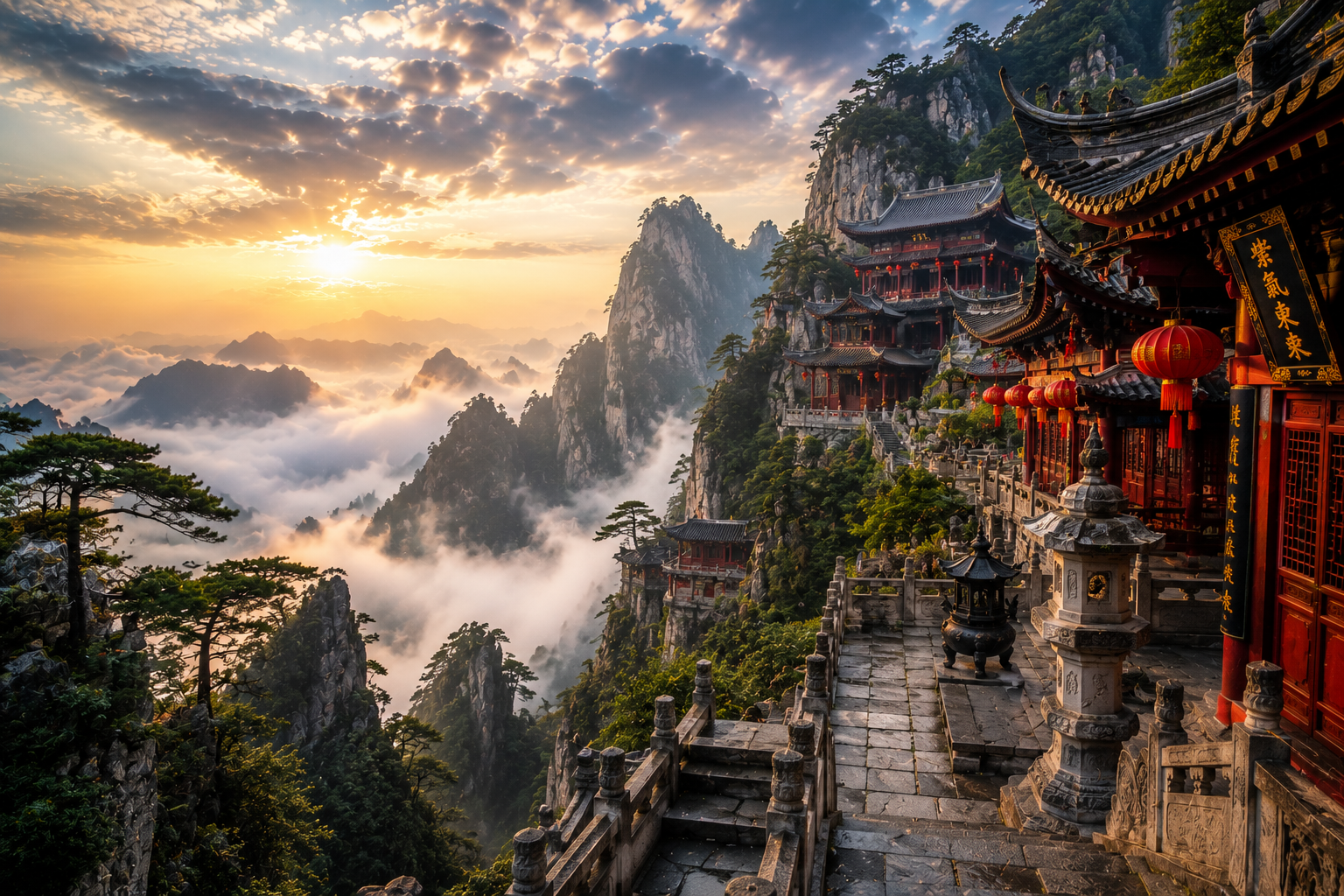
Mountain Temple
Chan, nature, poetry and the wisdom of flowing without forcing.
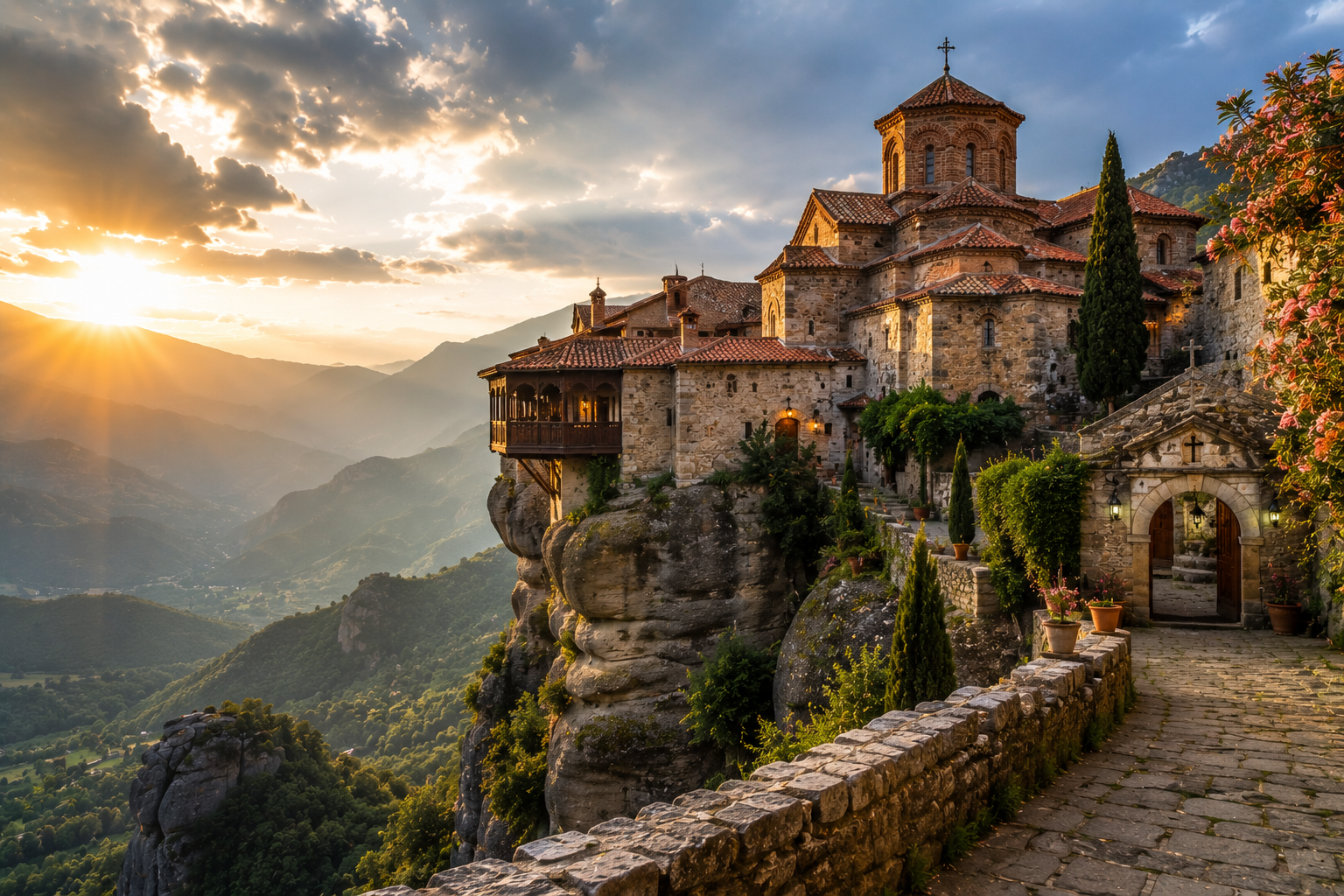
Contemplation
Prayer as listening, not only speaking.
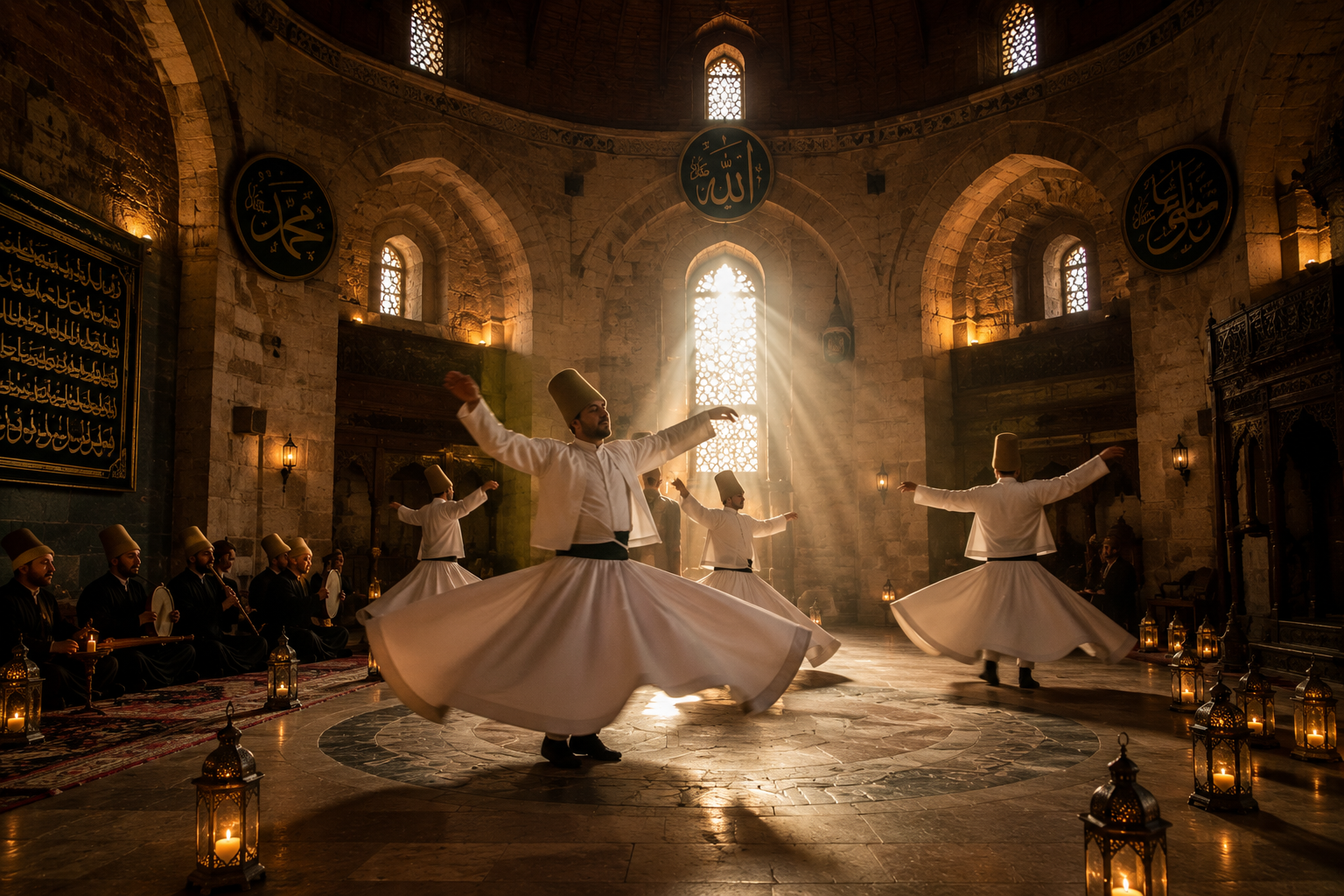
Remembrance
The heart remembering what the mind forgot.
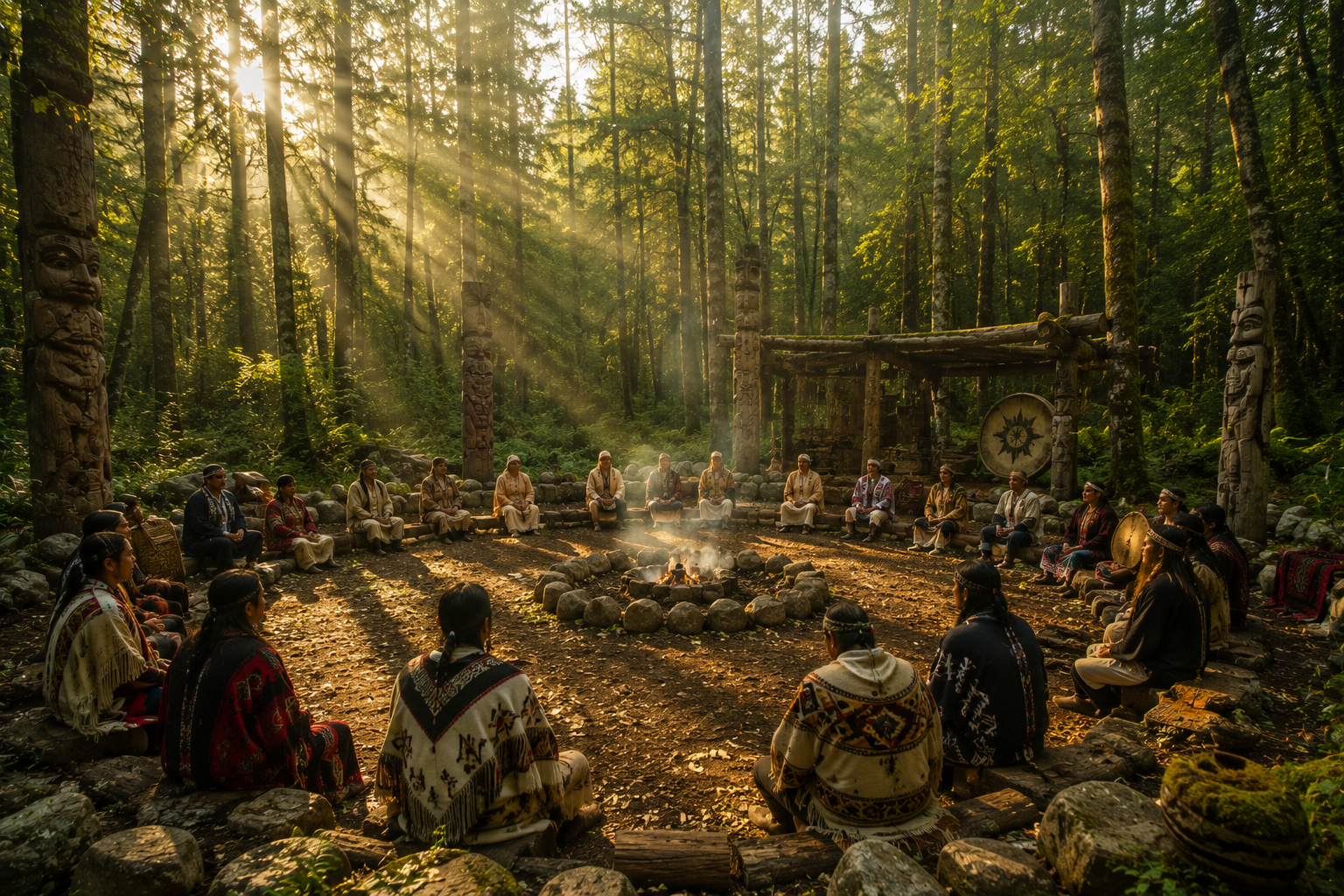
The Listening Circle
Forest, ancestor, animal, sky, fire and earth as teachers of attention.
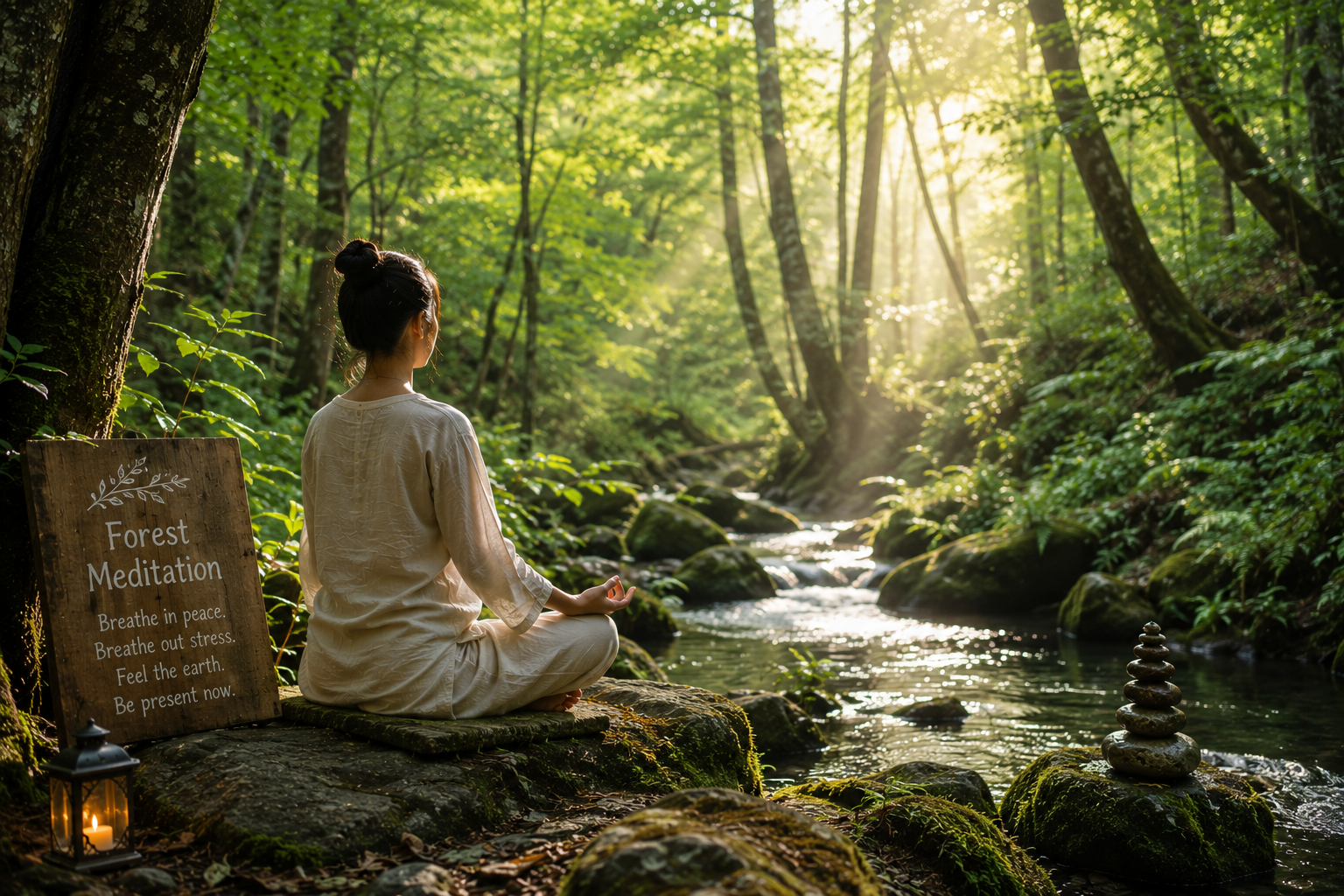
Forest Silence
The oldest monastery was probably made of trees.
No culture owns silence.
India called it dhyāna. China called it Chan. Japan called it Zen. Monasteries called it contemplation. Sufis called it remembrance. The forest never needed a name. Yet all of them point toward the same tender possibility: the mind can return home.
Continue the Journey
After seeing the world map of silence, enter the practices themselves.
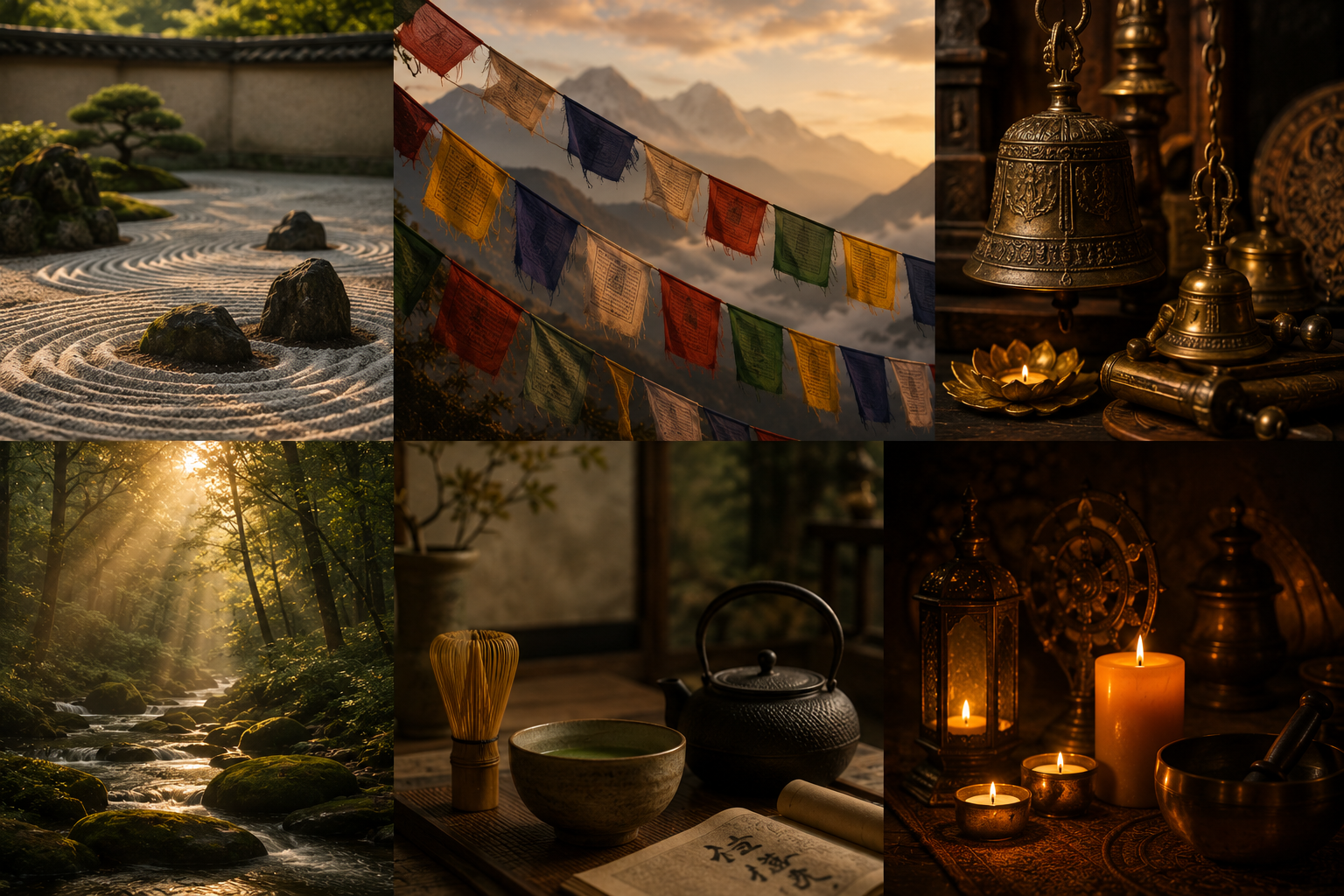 Next Room
 Explore
 Practice
 Listen